When planning for international trade shows, understanding the nuances of booth space is paramount to maximizing your return on investment. This comprehensive guide will walk you through everything from global measurement standards to strategic selection, ensuring your trade show booth dimensions and overall booth setup are perfectly aligned with your objectives.
I. Two Major Global Standard Systems: Imperial vs. Metric.
Before you even consider your desired floor size, it’s crucial to grasp the fundamental differences in “measurement systems” that dictate global trade show layouts. This awareness is key to avoiding costly “compatibility traps” and ensuring your exhibit materials fit seamlessly.
- North American Standard (Imperial): Predominantly used in the US and Canada, this system uses a 10′ x 10′ (approximately 3m x 3m) grid as the base unit. Measurements for booth spaces are typically expressed in feet.
- International Standard (Metric – Europe and Asia): Prevalent across Europe and Asia, this system utilizes a 3m x 3m (approximately 9.8′ x 9.8′) grid as its fundamental unit. All dimensions are measured in meters.
Compatibility Trap: A critical point of caution for exhibitors is the slight disparity between these systems. Shipping custom-built booth construction materials from the US (imperial) to Germany (metric), for instance, can lead to significant installation problems due to a few centimeters of difference. Always verify precise dimensions with the exhibition organizer and your booth builder.
II. Basic Booth Specifications (Standard Sizes)
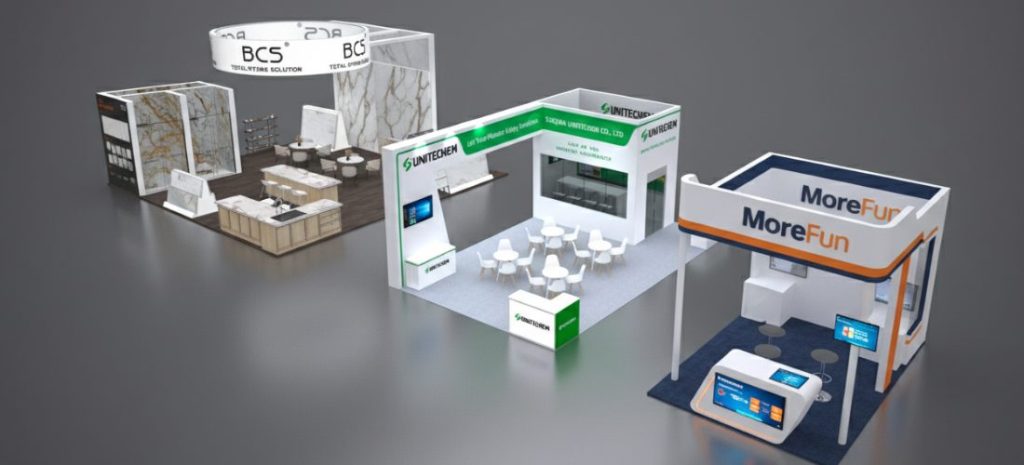
Trade show booths come in a variety of booth size options, catering to different budgets and marketing goals. Understanding these standard trade show booth dimensions is the first step in planning your exhibit.
- Small Booths (Small Scale)
- Tabletop: The simplest option, offering only a 6-8 foot table. These are common at smaller events like job fairs or academic conferences where the focus is on direct, informal interaction.
- 10’x10′ / 3mx3m (Standard): This is the most common “standard unit” globally. It serves as the entry-level booth size for many exhibitors, providing enough floor size for basic displays and lead generation.
- Medium Booths (Medium Scale)
- 10’x20′ / 6mx3m: This configuration doubles the width while maintaining the standard depth. It’s typically used by brands that require a small demonstration area, multiple product displays, or a dedicated meeting space in addition to an information counter.
- 10’x30′ / 9mx3m: A long and narrow booth, ideal for showcasing extensive product lines, a progression of services, or creating a tunnel-like immersive experience.
- Large/Island Booths (Large Scale)
- 20’x20′ / 6mx6m and above: These larger spaces are independent and span across aisles, making them perfect for flagship brand displays, extensive product launches, or creating comprehensive interactive zones. The flexibility in booth setup for these dimensions is significantly higher.
III. Comprehensive Analysis of Booth Physical Types
Beyond just floor size, the physical type of your booth dictates its visibility, accessibility, and potential for interaction. Each type offers distinct advantages for your trade show booth dimensions.
- Inline Booth (Linear/Standard Booth)
- Features: Positioned in a row, an inline booth has three walls (left, right, and back) with only the front open to an aisle.
- Suitable for: Startups with limited budgets, exhibitors focusing on one-way communication, or those primarily looking for lead capture.
- Note: Inline booths are subject to strict “sightline regulations,” typically allowing a high back wall but requiring lower structures towards the front to maintain visibility for neighboring booths.
- Corner Booth
- Features: Located at the intersection of two aisles, offering two open sides.
- Advantages: Provides 50% more physical exposure and traffic flow than an Inline booth, allowing visitors to approach from the front and one side (often diagonally), significantly enhancing your booth setup visibility.
- Perimeter Booth
- Features: Situated on the outermost edge of the exhibition hall, typically backing onto a permanent wall of the venue.
- Hidden Advantage: Many exhibition halls allow wall-facing booths to have significantly higher back panel heights (Height Limit) than those in the central area of the hall (e.g., from a standard 2.5m to 4m+). This offers unique branding and design opportunities for your trade show booth dimensions.
- Peninsula Booth
- Features: Open on three sides, like a protruding peninsula, with one side backing onto another booth or a service area.
- Classification:
- Back-to-back: Two peninsula booths sharing a common back wall.
- End-cap: Located at the end of a row of linear booths, extending into an aisle.
- Advantages: Offers extensive visibility and access from three directions, allowing for a more dynamic booth setup.
- Island Booth
- Features: The most prestigious booth type, open on all four sides and not adjacent to any neighbors. It’s a completely self-contained space.
- Advantages: Offers 360-degree traffic flow, allowing for the construction of the tallest and most complex structures, such as impressive hanging signs or multi-level exhibits. This provides maximum design freedom for any booth size.
IV. Peak Specifications: Double Deck Booth Space
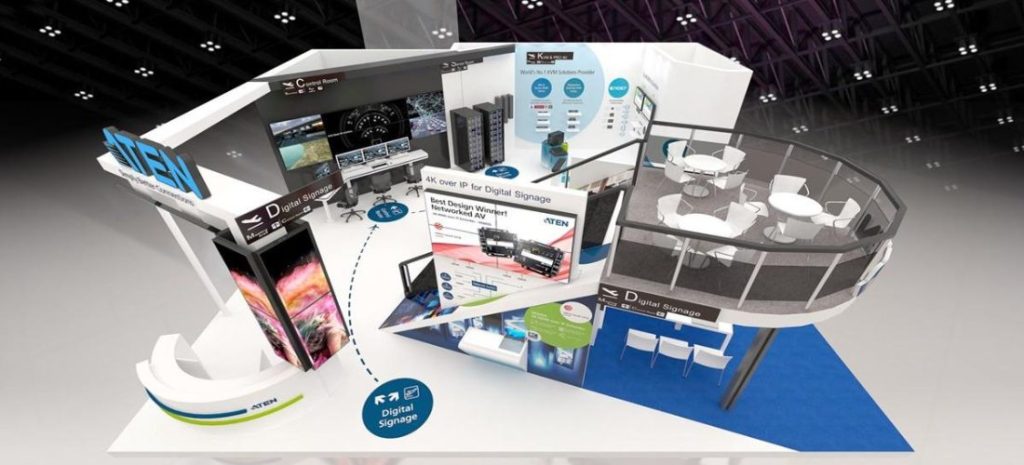
For exhibitors seeking to maximize their presence within a limited floor size, double-deck booths offer an innovative solution.
- Doubling Logic: Within a defined footprint, a double deck booth effectively doubles your usable space by extending upwards. This vertical expansion is ideal for creating private VIP meeting rooms, dedicated presentation theaters, or ample storage areas, separating different functions of your booth setup.
- Design Challenges: The integration of a staircase will sacrifice approximately 4-6 square meters of usable space on the first floor. This must be factored into your trade show booth dimensions planning.
- Global Compliance Differences:
- USA: Requires stringent PE (Professional Engineer) stamping for structural integrity, along with strict fire sprinkler requirements and adherence to ADA (Americans with Disabilities Act) accessibility standards.
- Europe/Asia: While structural approval is also required, accessibility (ADA) requirements can vary significantly by country. It is crucial to consult local regulations when planning your international booth setup.
V. How to Choose the Most Suitable Booth for You? (Decision Matrix)
Selecting the right booth type and booth size is a strategic decision that directly impacts your exhibition outcomes. Use this matrix to align your objectives with the ideal space.
| Brand Testing/Collecting Business Cards | Inline / Tabletop | 10′ x 10′ / 3m x 3m |
| Product Demonstration/Interactive Experience | Corner / Inline | 10′ x 20′ / 6m x 3m |
| Private Negotiations with Major Clients | Island or Double Deck | 20′ x 20′ + / 6m x 6m + |
| Industry Leader/New Product Launch | Island or Double Deck | 30′ x 30′ + / 9m x 9m + |
VI. Pitfall Avoidance Guide: Physical Details Beyond Size. Beyond the general trade show booth dimensions and type, several physical details can significantly impact your booth setup and overall success.
- Structural Obstacles: When reviewing floor plans, you must meticulously confirm whether there are any load-bearing columns, utility access points, or other structural obstacles within your chosen space. These may directly take up valuable 1 square meter or more of your display area.
- Dead Corners: Avoid selecting booth locations near freight doors (which can bring noise, cold drafts, and constant traffic disruption) or restroom entrances (which may lead to unpleasant odors and heavy, non-target foot traffic). These “dead corners” can negatively impact visitor experience.
- Vertical Space: Never just look at the floor size; always confirm the exhibition hall’s height limit (Ceiling Height). This crucial detail determines whether you can utilize overhead signage, towering displays, or even double-deck structures, which are vital components of an impactful booth setup.
VII. Summary
From “Space” to “Experience” Choosing a trade show booth is far more than just buying a piece of land; it’s an investment in “traffic flow” and brand presence. By carefully considering global measurement systems, various trade show booth dimensions and types, and critical physical details, you can strategically select a space that enhances visibility and engagement. Choosing the right booth setup and location can make your ROI (return on investment) 50% successful even before the exhibition doors open, transforming a mere space into a memorable and productive experience for your brand.