
Are your trade shows actually working?
Not “busy booth” working. Not “we scanned a lot of badges” working.
I mean—are they bringing in revenue?
Because I’ve lost count of how many teams I’ve spoken to who walk away from a show feeling good… and six months later, can’t tie a single deal back to it.
That’s the gap in trade show marketing right now.
Plenty of activity. Not enough clarity.
So let’s fix that.
The Real Problem with Trade Show Marketing
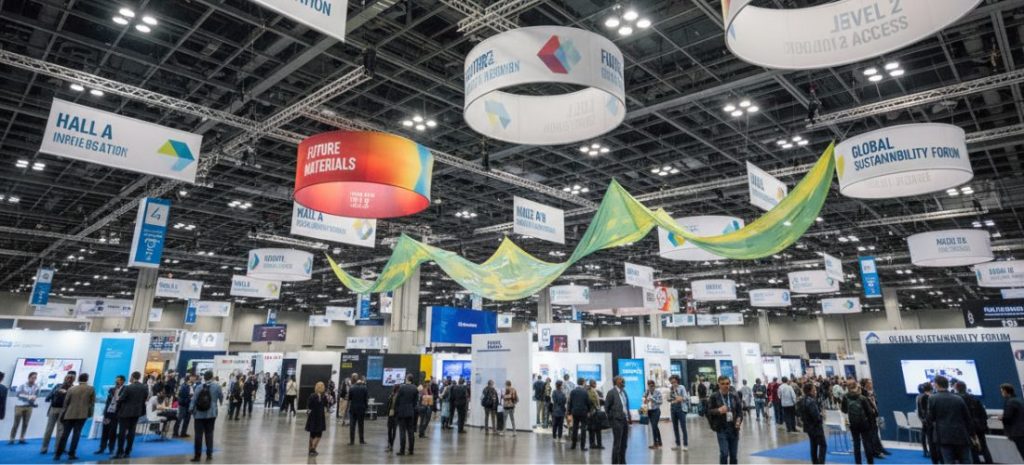
Most teams track the wrong things.
They measure:
- Foot traffic
- Number of conversations
- Giveaways handed out
All of which feel useful. None of which tells you if the show actually worked.
In trade show marketing, the issue isn’t a lack of data.
It’s a lack of meaningful data.
What you need are a few sharp metrics that connect directly to outcomes.
Not ten dashboards. Just five numbers that matter.
1. Cost Per Qualified Lead (Not Just Cost Per Lead)
Let’s start with the obvious one—but slightly adjusted.
Most exhibitors calculate:
But that’s misleading.
If half your leads are students, competitors, or people who just wanted a free tote bag, that number is inflated.
What you actually want is:
Cost per qualified lead
Where “qualified” means:
- Has budget
- Has authority
- Has a real use case
This one shift changes how you evaluate everything in trade show marketing.
Because suddenly, a “low lead volume” booth might actually be performing better.
2. Lead-to-Opportunity Conversion Rate
This is where things start getting uncomfortable.
Out of all the leads you captured:
How many turned into real sales opportunities?
Not email follow-ups.
Not “we’ll keep in touch.”
Actual pipeline.
If your conversion rate is low, it usually points to one of three issues:
- Poor targeting (wrong audience at the booth)
- Weak qualification during conversations
- Messaging that attracts interest but not intent
Others suggest that improving booth staff training here has a bigger impact than redesigning the stand itself.
And honestly, I’ve seen that play out more than once.
3. Pipeline Value Generated per Show
This is where trade show marketing becomes measurable in business terms.
Instead of asking:
“How many leads did we get?”
Ask:
“What’s the total pipeline value created from this show?”
This includes:
- Deals in discussion
- Proposals sent
- Opportunities logged in CRM
If your booth generated $200K in pipeline from a $30K investment, that’s a very different story than “we got 300 leads.”
This metric reframes everything.
4. Average Deal Velocity from Exhibition Leads

Here’s something most teams don’t track—but probably should.
How fast do exhibition leads convert compared to other channels?
In some industries, trade show marketing produces:
- Warmer leads
- Faster decisions
- Shorter sales cycles
But not always.
If exhibition leads take longer to close, it might suggest:
- Early-stage interest
- Lack of urgency
- Or weak follow-up systems
If they close faster, that’s a strong argument to invest more in shows.
Either way, this metric gives you context—not just outcomes.
5. Post-Show Engagement Rate
This is a quiet indicator that tells you whether your booth is actually connected.
Look at:
- Email open rates
- Reply rates
- Meeting bookings after the show
Because if people don’t respond after the event, something probably went wrong during the event.
Maybe the conversations weren’t memorable.
Maybe expectations weren’t set clearly.
In trade show marketing, the real conversion often starts after the booth.
What This Means in Practice
If you step back, these five metrics do something simple:
They connect activity to revenue.
Not perfectly. Not instantly.
But enough to make better decisions.
And maybe that’s the point.
Because most teams aren’t trying to build perfect attribution models.
They’re just trying to answer one question:
“Should we do this show again?”
With the right data, that answer gets easier.
A Practical Suggestion (From What I’ve Seen Work)
If you’re preparing for your next show, try this:
Instead of redesigning your booth first,
Redefine what you’re going to measure.
Set targets like:
Then build everything—messaging, staffing, layout—around hitting those numbers.
It’s not a guarantee.
But it’s a much clearer strategy than “let’s just get more traffic.”
Final Thought
Trade show marketing isn’t broken.
It’s just often measured in ways that don’t reflect reality.
If you focus on the right five data points,
you move from guessing… to managing.
And that’s usually where results start to show up.