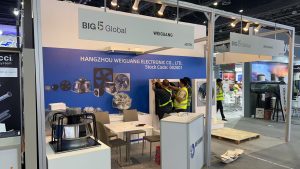
Exhibition display stands are no longer just background structures, sitting inside crowded trade halls.
They’ve become attention filters.
And honestly, most exhibitors still underestimate how quickly visitors judge a booth.
I walked through a crowded trade fair earlier this year where dozens of brands had invested heavily in oversized displays, complex lighting systems, and expensive booth structures. But strangely, many of those stands still felt forgettable once you stepped back into the aisle.
Then there were a few exhibition display stands pulling consistent traffic all day.
Not because they were the biggest.
Because they were easier to understand.
Clear messaging. Open layouts. Strong visuals. Trade show booth backdrop ideas that immediately explained what the company actually did.
And honestly, that difference matters more now because exhibition halls are louder, faster, and far more competitive than they used to be.
Visitors don’t carefully study booths anymore.
They scan them.
Fast.
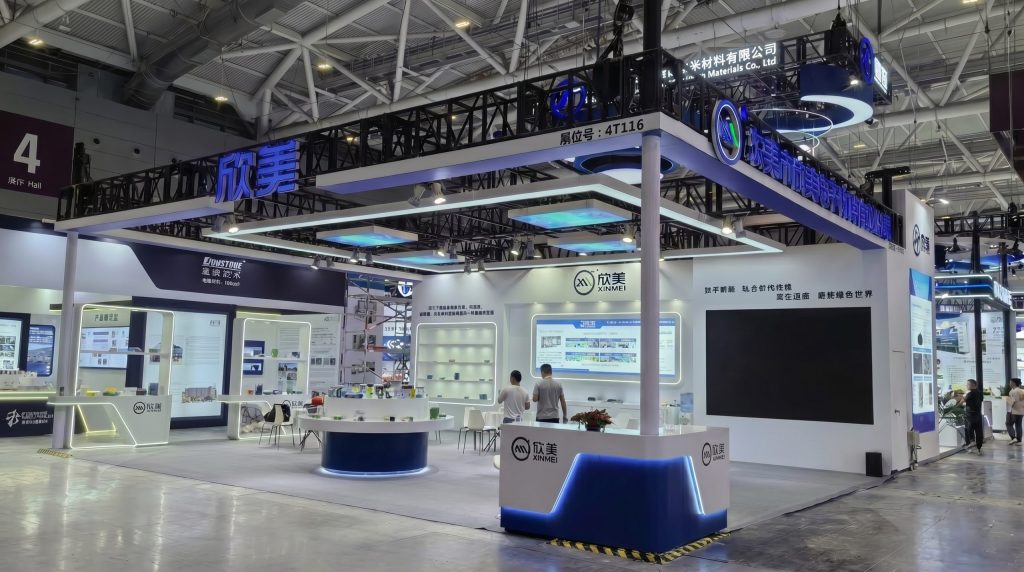
Why are simpler exhibition display stands performing better
A lot of exhibitors still design booths so that visitors will spend five minutes analysing every detail.
That almost never happens.
People make decisions in seconds:
- Does this booth look approachable?
- Can I understand the product quickly?
- Is this relevant to me?
- Is it worth stopping?
That’s why many modern exhibition display stands are becoming cleaner and more focused.
Instead of overwhelming visitors with too much information, smarter booths now prioritise:
- larger graphics
- fewer words
- clearer product displays
- stronger lighting
- open visitor flow
Interestingly, some of the best-performing trade show booth backdrop ideas I’ve seen recently were surprisingly minimal. Large brand visuals. One strong message. Simple colour palettes. Nothing visually chaotic.
And maybe that simplicity works because busy exhibition halls already overload people with information.
Fabric exhibition stands are quietly becoming more popular
This trend has been growing faster over the last few years.
A lot of exhibitors are moving towards fabric exhibition stands because they solve several practical problems at once:
- lighter transport weight
- faster installation
- easier storage
- seamless graphics
- cleaner visual presentation
Others suggest fabric systems also reduce visible panel lines and structural clutter compared with older rigid display systems.
And honestly, visually, many fabric exhibition stands now look far more premium than people expect.
Especially when combined with:
- LED lighting
- curved structures
- tension graphics
- modular display systems
- suspended signage
Visitors usually care less about the material itself and more about whether the stand feels modern and professional.
That’s where fabric systems are quietly outperforming expectations.
trade show booth backdrop ideas now focus more on visibility than decoration
This part is interesting because exhibition strategy is shifting.
A few years ago, many booths focused heavily on decoration.
Now visibility matters more.
The strongest trade show booth backdrop ideas today usually aim to communicate one thing immediately:
What the company helps visitors achieve.
That changes how graphics are designed.
Instead of generic slogans, many brands now use:
- outcome-focused headlines
- oversized product imagery
- simplified messaging
- comparison visuals
- high-contrast colour schemes
Some exhibitors are even reducing text intentionally because visitors rarely stop long enough to read paragraphs inside busy exhibition halls.
And honestly, they’re probably right.
The best exhibition display stands often communicate the entire value proposition within a few seconds.
Maybe attention is now the real exhibition currency
There’s probably a bigger shift happening underneath all this.
Brands used to compete mainly on booth size.
Now they compete for attention.
And attention disappears quickly at trade shows.
That’s why successful exhibition display stands are becoming less about complicated construction and more about clarity, movement, and immediate understanding.
Because visitors usually remember:
- How easy the booth felt
- Whether the message made sense
- Whether the experience felt useful
That’s what creates conversations.
And maybe that’s what good exhibition design was always supposed to do.