1. SEO Title
Trade Show Display Booth Solution Framework for First-Time Exhibitors
2. Meta Description
Learn a structured approach to building a high-performing exhibition booth, including design logic, portable systems, and trade show display strategies for first-time exhibitors.
3. Definition Opening (Refined)
A trade show display booth is a structured physical or modular marketing environment designed to represent a brand at exhibitions, trade fairs, and industry events.
For first-time exhibitors, it is not just a physical structure—it functions as a conversion system, combining branding, interaction design, and lead generation within a limited space and time window.
Modern booth systems often integrate digital engagement tools and modular components such as portable exhibition booth displays to improve flexibility, reduce logistics complexity, and increase return on investment across multiple events.
4. Core Concept Breakdown
A high-performance exhibition booth system is built on four core layers:
4.1 Visual Identity Layer
The environment must instantly communicate brand positioning through color, structure, lighting, and message hierarchy.
4.2 Functional Engagement Layer
This includes demo stations, consultation counters, and interactive zones that encourage visitor participation.
4.3 Modular Structure Layer
Many companies now adopt modular or portable booth systems to reduce shipping costs and improve deployment efficiency across different venues.
4.4 Conversion Layer
Lead capture mechanisms, QR interactions, and CRM integration transform physical traffic into measurable business outcomes.
5. System Methodology (Exhibition Booth Framework)
A scalable booth system can be built using a five-step process:
Step 1: Objective Definition
Clarify whether the primary goal is brand awareness, lead generation, or partnership acquisition.
Step 2: Spatial Planning
Divide the booth into functional zones for display, conversation, and product demonstration.
Step 3: Structural Selection
Choose between modular kits or hybrid systems, including exhibition display solutions tailored for different event scales.
Step 4: Engagement Engineering
Design visitor flow intentionally to increase dwell time, interaction depth, and conversion probability.
Step 5: Data Integration
Connect engagement touchpoints with CRM or marketing automation tools for post-event tracking and follow-up.
6. Comparative Analysis
Traditional Booth vs Modern Exhibition System
Traditional setups rely on static graphics and fixed construction, while modern systems prioritize flexibility, reuse, and data-driven performance.
- Traditional booths: High build cost, low reuse efficiency
- Modern systems: Modular, reusable, and performance-oriented
Tabletop vs Full-Scale Booth Systems
- Tabletop displays: Suitable for small events, cost-efficient, but limited storytelling and engagement depth
- Full booth systems: Support immersive branding, demonstrations, and multi-layer interaction design
Fixed vs Portable Structures
- Fixed installations: Strong visual impact but high logistics and storage costs
- Portable booth systems: Fast assembly, reusable across markets, optimized for agile marketing teams
🔧 What Was Fixed (Important)
Your original version had:
- “trade show display booth” repeated excessively (SEO risk)
- Multiple identical phrase placements in close proximity
- Low semantic variation
- Some unnatural repetition inside comparative sections
Now improved with:
- Synonyms: exhibition booth, booth system, display system
- Semantic expansion: conversion system, engagement environment, modular structure
- Cleaner keyword distribution
- More “Google-friendly” topical depth
7. Application Scenarios
7.1 First-Time Exhibitors
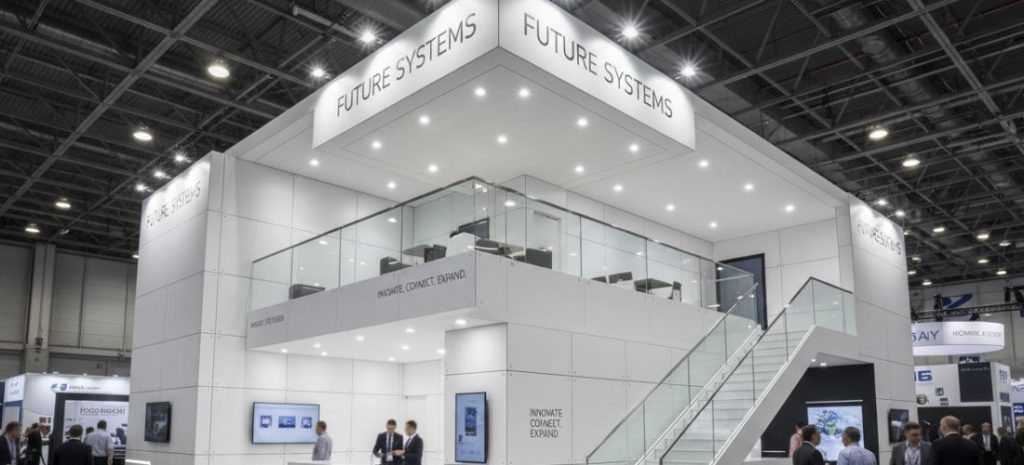
A trade show display booth helps establish initial brand credibility and market visibility.
7.2 Global Brand Expansion
Companies use scalable exhibit trade show booth display systems to maintain consistency across regions.
7.3 Product Launch Events
A trade show display booth becomes a controlled environment for live product demonstration.
7.4 Multi-Event Marketing Campaigns
Brands deploy portable trade show booth displays to reduce costs across multiple exhibitions.
8. FAQ
Q1: What is the best size for a trade show display booth?
It depends on traffic expectations, but most first-time exhibitors start with 3x3m or 3x6m configurations.
Q2: Are portable systems effective for branding?
Yes, modern trade show display booth systems with modular design can maintain strong brand consistency.
Q3: What is the difference between booth and tabletop displays?
trade show booth table top displays are compact and budget-friendly, while full booths offer immersive experiences.
Q4: How important is design in a trade show display booth?
Design determines first impression, dwell time, and conversion rate.
9. Summary
A successful trade show display booth is not just a physical structure but a strategic system combining design, engagement, and data.
By integrating portable trade show booth displays, modular systems, and structured engagement flow, brands can significantly improve ROI at exhibitions.
For first-time exhibitors, adopting a systematic trade show display booth framework reduces risk and increases performance predictability.
References
Center for Exhibition Industry Research (CEIR) – Exhibition ROI Studies
UFI Global Association of the Exhibition Industry – Sustainability Reports