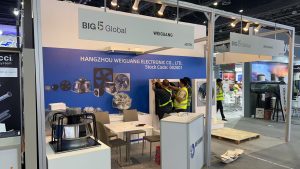
Beyond the Booth: Dismantling the Invisible Tax of US Trade Show Drayage
nnFor most US-based exhibitors, these fees, usually known as drayage or material handling, represent a “black box” in the budget. Drayage isn’t just an unavoidable expense. Process it with caution; it’s a variable cost that can be managed in many cases.
To master this cost, we must move beyond “logistics” and into the realm of “strategic planning.” This article serves as a comprehensive manual for you to dismantle the drayage trap and save event budget.
What is Drayage?
In the broader business and logistics field, drayage refers to the short-distance (extremely short) transport of goods, typically moving a container from a port to a rail yard or warehouse. However, within the microcosm of the US event industry, the definition narrows down.
In the event industry, drayage or Material Handling is the service of receiving your freight at the venue’s loading dock, transporting it to your designated booth space, removing and storing your empty crates during the event, and returning those crates at the end of the show for reloading onto your outbound carrier.
It is important to understand that in the US, this is almost always an oligopoly service. Unlike your choice of booth designer or lead-generation software, you cannot hire a third-party “discount drayage” firm. The General Service Contractor (GSC) firms are granted exclusive rights by the venue or the show organiser. This exclusivity is where the frustration begins; exhibitors often feel captive to a pricing model that feels disconnected from the actual labour performed.
nnIt is perhaps the most painful irony in the American event industry. You can ship a 300-pound crate from manufacturing hubs in New Jersey to the doors of McCormick Place in Chicago for a few hundred dollars. And then the moment that crate crosses the threshold of the loading dock to travel the final hundred feet to your booth floor, the price doubles, triples, or even quadruples. You see the line item, you wince, and you pay it, assuming it is simply the inevitable friction of doing business.

What is the Drayage Process?
To manage these costs, one must first visualise the chain of custody. The drayage process is a four-stage relay race where every hand-off is a potential “fee trigger.”
nnStage 1: Inbound Receiving
Whether your goods arrive at the Advanced Warehouse or Direct-to-Site, the process begins when your carrier (FedEx, UPS, or an LTL firm) arrives at the Marshalling Yard. Here, they wait for a dock assignment. Once at the dock, the GSC’s labour unloads the truck. At this point, the “Weight Ticket” is the most important document in your universe. If your carrier doesn’t have a certified weight, the GSC will estimate the actual weight, and their estimates rarely favour the exhibitor.
Stage 2: To-Booth Delivery
Once off the truck, the freight is moved via forklift to your booth space. If you have arrived early to set up, you may find your crates already waiting; if not, you are at the mercy of the GSC’s delivery schedule. The efficiency of this stage often depends on the “density” of your shipment; a single large crate is moved much faster than twenty loose boxes.
Stage 3: Empty Storage and Management
After you unpack, you place “Empty” stickers on your crates. The GSC hauls these to an off-site or back-of-house storage area. This is a critical “invisible” service: you aren’t just paying for movement; you are paying for the real estate your empty crates occupy for three days.
Stage 4: Outbound Reloading
After the “carpet pull” (the moment the show ends and the aisles are cleared), the GSC returns your crates. You pack up, and they haul the freight back to the dock to meet your outbound carrier. If your carrier is late, you may be hit with “Forced Freight” fees, where the GSC moves your goods onto their preferred carrier at a massive markup.
nnWhy Do Drayage Costs Vary?
If you’ve ever compared bills between a show in Las Vegas and one in New York, you’ve likely noticed a staggering variance. Why does moving the same 500-pound crate cost $600 at one show and $1,200 at another? The variance is driven by three major factors: Geography, Timing, and Density.
1. The Geography of Union Labour
Maybe the most significant driver is the local union contract. In “Right-to-Work” states, the base rates for material handling are often lower. Conversely, in Tier-1 event cities like Chicago, Philadelphia, or NYC, the union labour rates are significantly higher.
Furthermore, the “work rules” change. In some cities, the GSC can charge a “Special Handling” fee if the truck isn’t a standard dock-height trailer, simply because it requires more manual labour to unload.
2. The CWT (Hundredweight) Trap
The US industry bills by the CWT, or hundredweight (100 lbs). Almost every GSC applies a 200-pound minimum per shipment.
Consider the “Small Shipment Penalty.” If you send five separate boxes via UPS, each weighing 25 lbs, a novice might expect to pay for 125 lbs of handling. In reality, the GSC sees five separate shipments, applies the 200-lb minimum to each, and bills you for 1,000 lbs. You are paying for 875 lbs of “ghost weight.” If you send those same boxes shrink-wrapped on a single pallet, the bill drops to a 200-lb minimum. You’ve just saved 80% of your fee by using $2 worth of plastic wrap.
3. Straight Time (ST) vs. Overtime (OT)
Trade show labour typically operates on an 8:00 AM to 4:30 PM window, Monday through Friday. If your freight is touched outside these hours, including weekends, holidays, late-night move-ins. You will start to see a surcharge of 30% to 50%.
If this show’s move-in starts on a Sunday, you are almost guaranteed to pay OT rates unless you use the Advanced Warehouse strategy. The GSC doesn’t care when you want the freight moved; they care when the union clock is ticking.
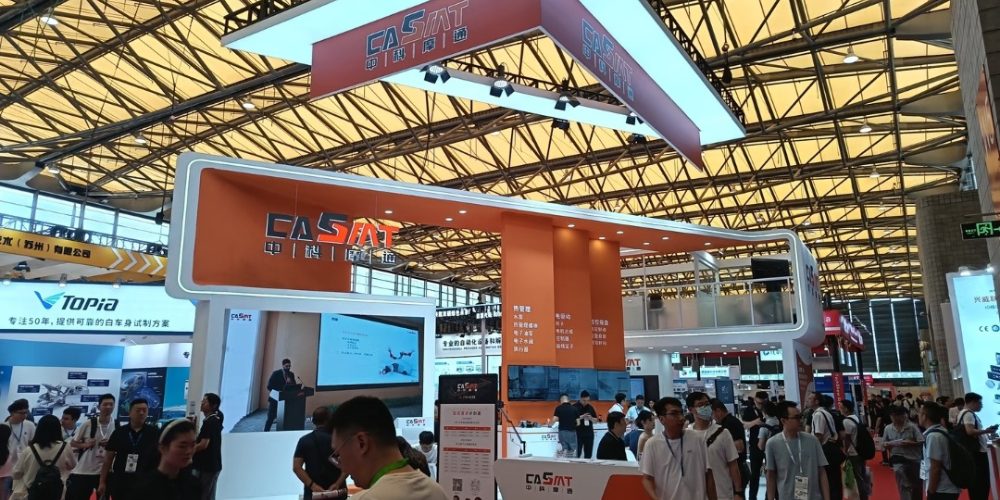
Strategic Analysis: Advanced Warehouse vs. Direct-to-Site
There is a common wisdom among budget-conscious exhibitors that shipping “Direct-to-Show-Site” is the cheaper option. After all, the base rate for direct shipping is often $10 to $20 lower per CWT.
But this is where many US exhibitors fall into the Temporal Trap. Direct shipping is a high-variance gamble. If your carrier arrives at 2:00 PM but gets stuck in a four-hour queue at the Marshalling Yard, they won’t hit the dock until 6:00 PM. At that point, your “cheap” direct shipment is hit with an OT surcharge because it’s being unloaded after 4:30 PM.
By contrast, the Advanced Warehouse is essentially a strategic hedge. While the base rate is higher, it gives the GSC a 30-day window to move your goods. Because they want to protect their own margins, they will almost always move your freight from the warehouse to the hall during Straight Time hours. Your crates are waiting in your booth when you arrive, and you have eliminated the risk of a $3,000 overtime surprise. For any show with a complex move-in schedule, the Advanced Warehouse is the superior ROI choice.
nnThe ‘Special Handling’ Black Box
Perhaps the most contentious area of drayage is the “Special Handling” fee. This is a discretionary surcharge applied to shipments that require extra care, are “unstackable,” or are delivered in a way that disrupts the forklift flow.
The language in exhibitor manuals is often intentionally vague. “Shipments requiring additional handling” could mean anything from a crate that is too tall to a van that isn’t dock-height. If we consider the GSC’s perspective, any shipment that breaks the “flow” of their forklift line is a candidate for this fee.
Tactical Counter-Measures:
- Flat-top Flight Cases: Avoid peaked-roof crates. If a forklift driver can’t stack another crate on top of yours, you’ll likely see a “Non-Stackable” surcharge.
- Avoid the ‘Carpet’ Fee: Never ship your booth carpet as a standalone item if you can avoid it. Many contractors flag carpet for special handling because it’s awkward to move. If it’s integrated into your main crate or palletised securely, it often disappears into the standard CWT rate.
- The ‘Stacked’ Shipment: Ensure your Bill of Lading (BOL) explicitly states that the load is “Stackable.” If the GSC disagrees, you have a paper trail to dispute the surcharge.
Physical Engineering: The Weight vs. Volume Tradeoff
In a world of $150/CWT fees, every 100 lbs you shave off your booth is a $150 dividend. Many American firms are still using heavy, 1990s-style custom wood crates. These are drayage nightmares.
The ROI of Lightweighting: If a new tension-fabric display costs $10,000 but weighs 800 lbs less than your current wooden build, and you attend four shows a year, you are saving $4,800 in drayage annually (assuming a $150/CWT rate). The new booth pays for itself in just over two years purely on drayage savings.
Furthermore, consider the Pallet vs. Crate debate. Crates provide more protection but often add 100-200 lbs of dead weight. If your goods are durable, switching to heavy-duty plastic flight cases or “honeycomb” cardboard pallets can significantly reduce the billable weight without sacrificing security.
The POV Loophole: A Hidden Asset for Local Exhibitors
For smaller exhibitors or those with local offices, the Personally Owned Vehicle (POV) policy is the ultimate drayage-killer. In cities like Las Vegas, Orlando, or Chicago, exhibitors are often allowed to unload their own vehicles.
There’s a caveat: the rules are hyper-local.
Las Vegas: You can often use a two-wheeled luggage cart, but not a four-wheeled dolly.
Chicago: You can carry anything you can manage in one trip by hand, but the moment you use a cart, you may trigger a union jurisdiction.
If you can design your booth to be “hand-portable” (using modular fabric and collapsible frames), you can theoretically reduce your drayage to zero. It requires a shift in mindset, which moves away from heavy custom builds toward “pro-sumer” portability.
The Post-Show Audit: Reclaiming Lost Dollars
The most common mistake exhibitors make is treating the drayage bill as a final, unchangeable verdict. It isn’t. GSC staff are under immense pressure during move-in, and mistakes are rampant.
The On-Site Audit Protocol
Request Weight Tickets: Before you leave the show floor, go to the Service Desk and ask for the certified weight tickets for your inbound freight. Compare these to the weights listed on your carrier’s BOL.
Check the ‘Time Stamps’: If you were charged for Overtime (OT), check the time your truck was unloaded. If the driver was at the dock at 3:00 PM but wasn’t unloaded until 5:00 PM due to GSC delays, you have grounds to dispute the OT surcharge.
Review ‘Special Handling’ Labels: If you see a surcharge for special handling, ask for the specific reason. “Because it looked difficult” is not a valid billing reason. If it were palletised and stackable, demand that the fee be removed.
Summary of Actionable Suggestions (SMART Criteria)
To ensure these insights lead to actual savings, exhibitors should adopt the following protocol:
Specific: Consolidate all “small package” shipments into a single palletized unit for every show to ensure you hit the 200-lb minimum only once.
Measurable: Set a target to reduce “billable weight” by 10% year-over-year through the adoption of lightweight fabric materials.
Achievable: Use the Advanced Warehouse for 100% of shows that have a “Sunday Move-in” to guarantee Straight Time rates.
Relevant: Conduct a drayage audit at the Service Desk for every show with a spend of over $5,000 before the show closes.
Time-bound: Review the GSC’s “Quick Facts” sheet 60 days before the show to identify the specific POV and Small Package rules for that venue.
Conclusion: Reclaiming the Loading Dock
Drayage is often called a “necessary evil,” but that’s a lazy generalisation. In reality, it is a set of rules, it is a commercial framework that rewards those who plan for density and penalises those who value convenience over structure.
By shifting from “Direct-to-Site” gambling to “Advanced Warehouse” hedging, and from loose boxes to engineered pallets, the sophisticated exhibitor stops subsidising the GSC’s margins and starts protecting their own. The journey from the loading dock to the booth may only be a hundred feet, but it is the most important strategic mile in your marketing budget.
References & Credibility
Exhibitor Online (2024): “The Annual Material Handling Survey: Trends in CWT Pricing.”
Trade Show News Network (TSNN): “Navigating Union Labour Rules in Tier-1 US Markets.”
Convention Industry Council (CIC): “Manual of Best Practices in Event Logistics.”
HBR Archive: “The Hidden Cost of Monopolistic Services in B2B Environments.”
The McKinsey Quarterly: “Supply Chain Efficiencies in Fragmented Logistics Markets.”