
Why Some Booths Pull Crowds — and Others Don’t
Walk into any major trade show, and you’ll notice something almost immediately.
Some stands are packed. People stop, take photos, and linger longer than expected. Others—sometimes only a few metres away—sit half empty.
And exhibitors notice this too. One marketing director asked me recently: “We spent a decent budget on our exhibition booth. Why didn’t it attract people the way the booth across the aisle did?”
That question usually leads to three things that shape the quality of any exhibition booth: LED screens, ceiling structures, and the materials used in the build.
They might sound like design details. But in reality, they control visibility, perception, and how visitors move through the space.
If those elements work together, the booth feels intentional. If they don’t, even a big budget can feel underwhelming.
LED Screens: The Attention Engine
LED displays have quietly become one of the most powerful tools inside a modern exhibition booth.
Why? Because trade show floors are visually chaotic. Static posters rarely hold attention anymore.
LED screens change that dynamic.
A well-placed screen can:
- showcase product demonstrations
- display motion graphics and brand messaging
- pull attention from across the aisle
Others suggest the real advantage isn’t just motion—it’s storytelling. If a visitor can understand what your brand does in five seconds through video, the booth becomes far more approachable.
That said, more screens don’t automatically mean better results.
I’ve seen booths where huge LED walls overwhelmed the space. Instead of guiding visitors, they distracted them. Balance matters.
In many successful designs, LED screens work best when they support the architecture of the exhibition booth, not compete with it.
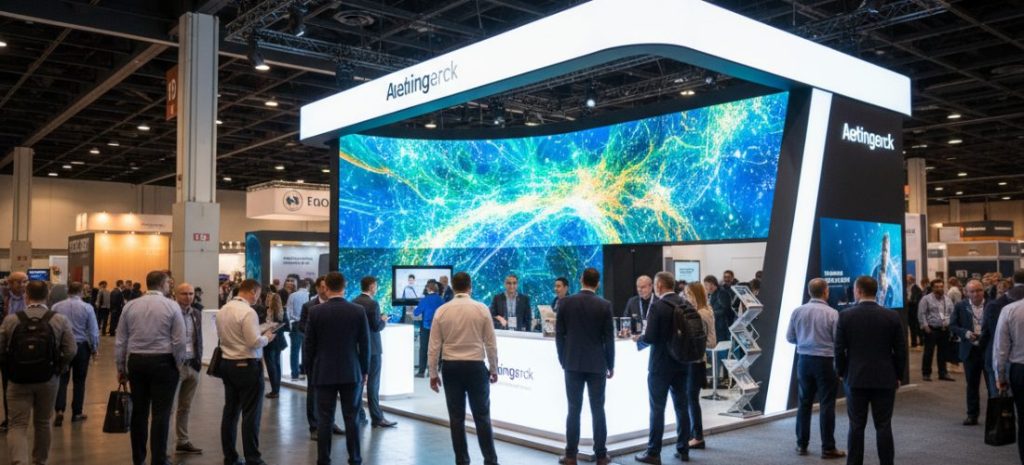
Ceiling Structures: The Silent Attention Magnet
Ceiling structures are one of the most underestimated parts of booth design.
Visitors often scan the hall from a distance. The booths they notice first usually have height and overhead elements.
That might include:
- truss structures
- hanging signage
- lighting frames
- suspended LED rings or banners
These structures serve two purposes.
First, they increase visibility across the exhibition hall.
Second, they help define the booth’s boundaries. Without a ceiling element, even a large exhibition booth can visually disappear into the surrounding stands.
Some designers describe overhead structures as a “visual anchor.” They tell visitors where the booth begins—and give the brand presence above eye level.
Of course, structural regulations vary depending on the venue. Hanging signs, rigging, and suspended lighting often require approval from organisers and venue engineers.
Planning early usually avoids expensive last-minute changes.
Booth Materials: Where Perception Is Built
Materials are where visitors subconsciously judge quality.
Two booths might have identical layouts. Yet one feels premium while the other feels temporary.
The difference often comes down to booth materials.
Common materials in a modern exhibition booth include:
- aluminium modular systems
- wooden structures and panels
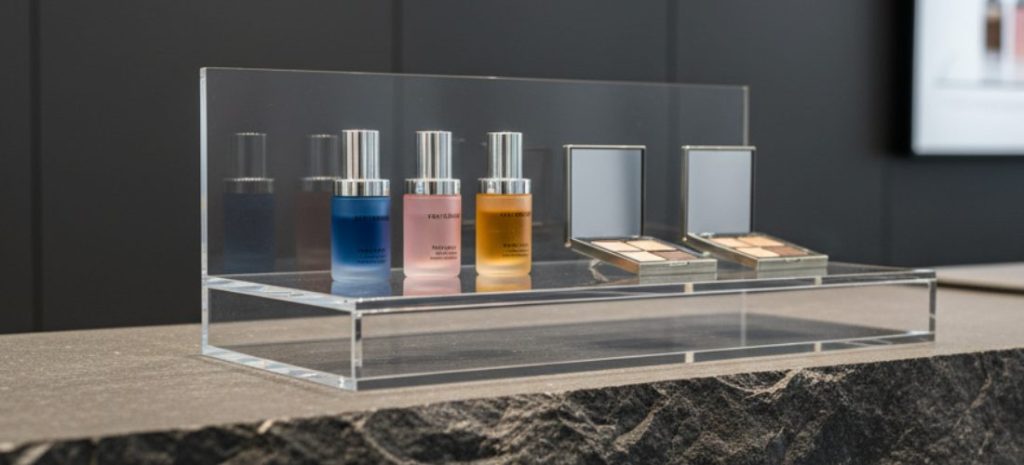
- acrylic displays
- fabric graphics and tension frames
Each serves a different purpose.
Wood, for example, tends to create a more permanent and high-end appearance. Modular aluminium structures are lighter and easier to reuse across multiple shows.
Others suggest the best approach is combining materials strategically—rigid frames for structure, fabric graphics for flexibility, and LED elements for movement.
What matters most is consistency. When materials clash, the booth starts to feel fragmented.
Visitors may not consciously analyse this, but they definitely notice it.
Integrating the Elements: Where Good Booths Become Great
Here’s where things get interesting.
LED screens, ceiling structures, and materials are often designed separately. But the strongest exhibition booth designs treat them as a single system.
For example:
- LED screens integrated into structural frames
- lighting embedded within ceiling trusses
- materials chosen to complement digital displays
When this happens, the booth feels cohesive rather than assembled.
Some exhibitors even design visitor pathways around these elements. Screens draw attention. Overhead structures guide movement. Materials create the environment where conversations happen.
It’s less about decoration—and more about orchestration.
The Budget Reality Most Exhibitors Face
Of course, not every company can build a fully custom stand with large LED walls and elaborate rigging.
And that’s fine.
A well-designed exhibition booth doesn’t necessarily require the most expensive materials or the biggest screens.
What it does require is clarity.
If your booth communicates your brand quickly, attracts attention without overwhelming visitors, and creates comfortable spaces for conversation, it’s doing its job.
Sometimes that comes from clever design rather than bigger budgets.
The Takeaway
When people talk about high-quality trade show booths, they often focus on size.
But from what I’ve observed across international exhibitions, size rarely determines success.
The real difference usually comes down to three elements working together:
- LED screens that attract and inform
- ceiling structures that increase visibility
- booth materials that shape perception
When these elements align, the exhibition booth stops being just a display space. It becomes a branded environment—one that invites people in and encourages them to stay.
And in a crowded exhibition hall, that’s often the difference between being noticed and being ignored.
References
Exhibitor Online – Trade Show Booth Design Insights
UFI – Global Association of the Exhibition Industry
