The Strategic Importance of Trade Show Truss Systems
In the competitive landscape of modern exhibitions, a well-designed booth is paramount for capturing attention and conveying brand messaging. For many exhibitors, the foundational query quickly becomes, “What trade show truss type and what’s cost?” These structures are far more than mere supports; they are the architectural backbone of an exhibit, blending aesthetic appeal with crucial functionality. Truss systems elevate branding, provide secure mounting for lighting and displays, and define spatial flow. Choosing the right truss type necessitates a careful balance between brand identity, ensuring the safety of all components, and adhering to budgetary constraints. This decision is critical for creating an impactful and efficient trade show presence.
Exploring Every Major Trade Show Truss Type
Understanding the diverse trade show truss types is crucial for designing an effective exhibit. Each type offers distinct structural advantages and aesthetic qualities.
The Industry Standard: Box (Square) Trade Show Truss Often considered the industry standard, box truss is characterized by its four-chord design, providing exceptional structural stability. These robust frames, like the popular f34 truss, feature main chords connected by web members, ensuring superior load-bearing capacity. Box truss is ideal for supporting heavy lighting rigs, large LED screens, and intricate overhead ceiling truss configurations, making it a go-to for larger, more demanding exhibits where strength is paramount.
The Space-Saver: Triangular (3-Chord) Trade Show Truss Triangular truss, with its three-chord design, offers a balance of strength and visual appeal. Its inherent geometry provides good stability while often being lighter than box truss. Exhibitors can utilize triangular truss in “apex up” or “apex down” configurations to create different visual effects, adding dynamic lines to a booth. Its weight advantages make it a space-saving and aesthetically pleasing choice for smaller booths or specific design elements where a less bulky appearance is desired.
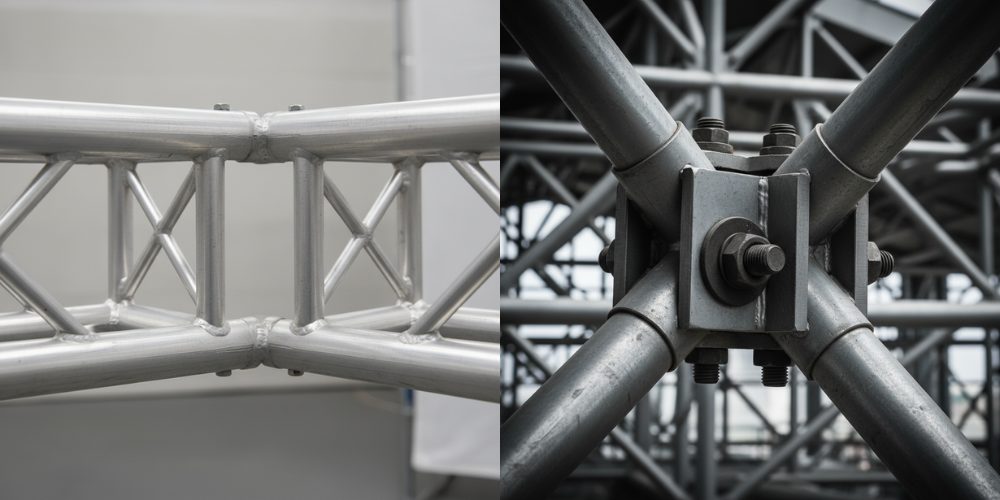
The Low-Profile Choice: Ladder (2-Chord) Flat Truss Ladder truss, also known as flat truss, features a two-chord design, resembling a ladder. While offering a more low-profile look, it still provides adequate structural support for lighter applications. This type is frequently used for simple perimeter frames, banner hanging, or as a support for signage and custom graphics, where minimal visual intrusion is preferred.
Custom and Specialty Shapes: Circular and Curved Truss to create truly unique and memorable exhibits, circular and curved truss systems come into play. These specialized modular framework components allow for fluid, organic shapes that break away from traditional straight lines. Circular truss is excellent for creating central focal points, overhead rings, or immersive 360-degree branding opportunities, drawing visitors into the booth space. Curved truss sections add dynamic movement and architectural interest, perfect for creating semi-private alcoves or eye-catching design features.
Material Analysis: Aluminum vs. Steel Trade Show Truss Type
The choice of material significantly impacts the performance, logistics, and total cost of a trade show truss system. The two primary materials are aluminum and steel, with some emerging composite systems.
Aluminum Truss: Aircraft-grade aluminum is the prevailing material for most trade show applications, primarily due to its exceptional weight-to-strength ratio. Aluminum truss is lightweight, making it highly portable and easier to handle during assembly and dismantle. Its natural corrosion resistance means it won’t rust, ensuring longevity and maintaining a clean aesthetic over many uses. This makes aluminum the industry-standard material for modular framework systems that require frequent shipping and reassembly, offering practical advantages in reducing drayage fees and labor costs.
Steel Truss: Conversely, powder-coated steel truss offers maximum load capacity and superior rigidity, making it suitable for extremely heavy machinery displays, permanent installations, or very large, static structures where weight is less of a concern. While steel is generally more robust, it is significantly heavier than aluminum, leading to higher shipping costs and increased labor for material handling and installation. Steel is also susceptible to corrosion if its protective coating is scratched, requiring more maintenance to preserve its integrity and appearance.
Composite Systems: While not a distinct truss type in itself, the concept of composite materials is influencing modern truss design. High-tech alternatives often involve advanced aluminum alloys or integrated systems that combine lightweight aluminum with specialized connectors or coverings. These innovations aim to offer rapid, lightweight assembly and enhanced durability, further optimizing the balance between structural integrity and exhibition logistics.
Connection Mechanics: Bolt vs. Spigot Trade Show Truss Type
The method of connecting truss sections plays a critical role in assembly speed, structural integrity, and the overall aesthetic of a trade show exhibit.
Bolt Connection Systems: Traditional bolt connection systems involve joining truss sections with nuts and bolts, typically requiring tools like wrenches for assembly. This method provides a highly precise and traditionally reliable connection, known for its exceptional strength and load-bearing capacity. Bolt connection systems offer robust and secure joints, making them a preferred choice for permanent installations or applications where maximum stability and long-term structural integrity are paramount, albeit at the cost of longer setup times and more intensive labor.
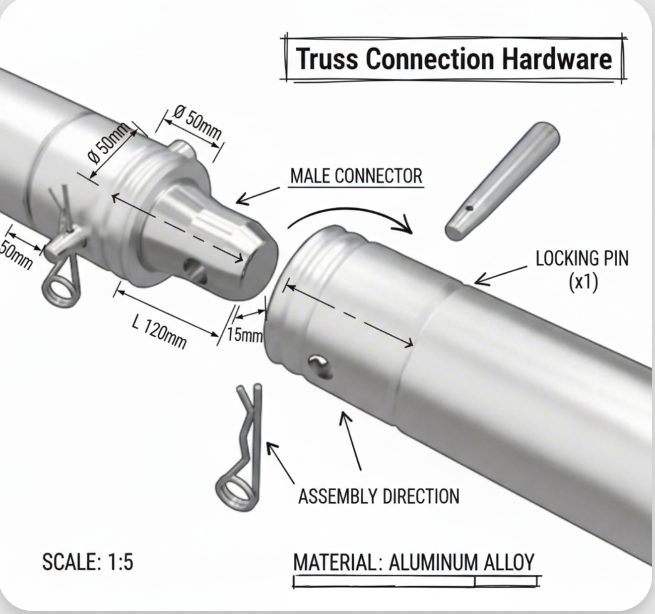
Spigot/Conical Connections: Spigot connection, also known as conical or pin-type connections, prioritize speed and ease of assembly. These systems feature male conical connectors that slide into female receivers, secured by tapered pins and clips. The friction-fit design allows for rapid, tool-less assembly (often requiring only a rubber mallet for a tight fit), significantly reducing installation and dismantle times. Spigot connection systems also offer a more seamless aesthetic due to fewer visible connection points, making them very popular for trade show displays where quick setup and a clean look are desired. While offering good strength, their load capacity can be slightly lower than bolted systems, and repeated assembly might eventually lead to minor wear.
Tool-Less Twist-Lock: The Rise of Modular Orbital Kits An increasingly popular solution for DIY exhibitors is the tool-less twist-lock system, exemplified by modular orbital truss kits. These innovative systems are designed for ultimate user-friendliness, allowing components to be assembled and reconfigured without any tools. The twist-lock mechanism enables extremely rapid setup and dismantle, significantly reducing labor costs and making it highly efficient for exhibitors with frequently changing booth layouts. This modular framework facilitates easy modular reconfiguration for different 10×10 booth layout or larger designs, offering unparalleled flexibility and a strong return on investment for those prioritizing speed, ease of use, and adaptability in their exhibition architecture.
Financial Analysis: Average Trade Show Truss Cost for Purchase
Understanding the capital expenditure (CapEx) associated with purchasing a trade show truss system is vital for long-term planning. Costs vary significantly based on size, complexity, and included features.
10×10 Standard Truss Kit Pricing: For a 10×10 booth layout, entry-level standard truss kits typically range from $2,000 to $6,000. Professional systems, featuring aircraft-grade aluminum and including accessories like lighting, monitor mounts, and custom graphics, can push this range to $5,000-$8,000, with some intricate designs exceeding $10,000. These costs reflect the hardware, design, and often basic graphic packages.
10×20 Modular Truss Display Cost: Stepping up to a 10×20 modular truss display significantly increases the investment. Prices typically range from $4,500 for more basic configurations to $12,000 for comprehensive kits. Highly elaborate 10×20 modular systems with multiple monitor mounts, counters, and extensive custom graphics can reach $20,000 to over $40,000, reflecting the increased material and design complexity of double-width booths.
Large Island 20×20+ Truss Cost: For a large island exhibit measuring 20×20 feet or more, custom configurations and the necessity for overhead rigging escalate costs substantially. These substantial modular framework systems can range from $15,000 to $40,000+, with complex, multi-level designs and extensive ceiling truss elements easily surpassing $50,000. Factors like stamped engineering drawings, specialized lifting equipment, and intricate design terms for curved or circular truss contribute to this higher price point.
Rental Solutions: What’s Cost for Trade Show Truss Rentals?
For exhibitors attending fewer shows or seeking flexibility, renting a trade show truss system can be a cost-effective alternative to outright purchase.
The “Rule of Thumb”: Rental pricing often follows a “rule of thumb” of approximately $100 – $150 per square foot for turnkey solutions, though this can vary widely. This rough estimate provides a starting point for budgeting.
TurnKey Rental Advantages vs. Hardware-Only Rentals: Turnkey rental packages are comprehensive, typically including the truss hardware, custom graphics, shipping and logistics, installation and dismantle (I&D) services, and even on-site supervision. This offers convenience and a predictable total trade show truss cost. Hardware-only rentals, conversely, provide just the truss components, leaving the exhibitor responsible for arranging transport, I&D labor, and graphics, which can introduce hidden factors and variable expenses.
Calculating the “Break-Even” Point: To determine when to stop renting and start buying, exhibitors should calculate the “break-even” point. This involves comparing the cumulative costs of turnkey rentals over several shows against the total cost of purchasing a system, including its associated logistics, maintenance, and storage warehousing fees. A detailed ROI analysis considering the frequency of use and the total cost of ownership versus rental is essential for this decision.
The Hidden Factors Influencing Total Trade Show Truss Cost
Beyond the purchase or rental price, several hidden factors significantly inflate the total trade show truss cost, often surprising unprepared exhibitors.
Drayage and Material Handling: Drayage fees, often synonymous with material handling, are among the most significant hidden costs. These are charges for moving crated exhibit materials from the loading dock to your booth space, storing empty shipping crates, and returning them post-show. Drayage is primarily weight-based (per hundredweight, CWT), meaning that heavy materials like powder-coated steel truss or large, inefficient shipping crates directly translate to higher expenses. Minimum charges and special handling fees for oversized items can further add to the bill.
Shipping and Logistics: Transportation costs, including freight to and from the show, are another major component. Factors influencing this include the total weight and dimensions of your modular truss kit, the shipping distance, and the freight class of the goods. Fuel surcharges and unexpected waiting time charges for trucks at congested show sites can also increase shipping costs.
Labor for Install and Dismantle (I&D): Installation and Dismantle (I&D) labor costs vary drastically by region, with regional union rates in cities like Chicago or New York being substantially higher. Labor is billed hourly, often with minimums and significant overtime rates for evenings and weekends. The complexity of the modular framework and the efficiency of the setup instructions directly impact the time on-site, making clear planning crucial to avoid unexpected union labor rates.
Maintenance and Storage: For owned truss systems, ongoing maintenance to ensure corrosion resistance (especially for steel) and storage warehousing fees between shows represent additional, often overlooked, expenses. These monthly costs for warehousing space must be factored into the overall capital expenditure and long-term ROI calculations.
Conclusion: Optimizing Your ROI Based on Truss Type and Cost
Ultimately, optimizing your ROI in trade show exhibiting hinges on a holistic understanding of trade show truss type and total trade show truss cost. Aligning your booth design and structural choices with long-term marketing goals ensures that every capital expenditure or rental fee contributes to measurable success. The future of modular exhibition architecture points towards highly adaptable, sustainable, and technologically integrated systems that prioritize ease of modular reconfiguration and engaging attendee experiences, ensuring continued relevance and maximum return on investment.