Introduction to Trade Show Installation and Dismantle
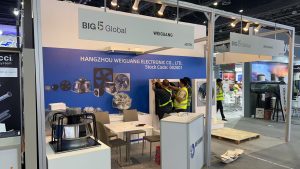
The success of any trade show appearance hinges significantly on the seamless execution of its “I&D” – Installation and Dismantle. This critical lifecycle phase encompasses everything from the initial booth setup to the final exhibit teardown. Professional installation plays a pivotal role in shaping brand perception and maximizing return on investment (ROI). A well-executed setup ensures a polished, inviting presence that immediately resonates with attendees, conveying professionalism and attention to detail. Conversely, a rushed or poorly managed installation can detract from a brand’s image, regardless of the quality of its products or services. The trade show floor operates under strict timelines, creating what is known as the “Zero Hour” challenge. Every minute counts in the frantic period leading up to the show’s opening, where all elements must align perfectly to transform a construction site into a captivating brand experience. Mastering the I&D process is not just about logistics; it’s about safeguarding your brand’s reputation and ensuring your investment yields the desired marketing results.
What is Trade Show Installation and Dismantle (I&D)?
Trade show Installation and dismantling is the specialized process of setting up and taking down an exhibit booth at a trade show or event. Its scope extends far beyond merely “putting up walls,” encompassing a complex array of services crucial for a fully functional and visually appealing booth. This includes the intricate AV integration for screens and sound systems, precise electrical layout and wiring, and the meticulous application of graphics to bring the brand’s vision to life. The process of setup and teardown requires distinct but equally vital skill sets. Installation focuses on precision assembly and aesthetic presentation, while dismantle demands careful deconstruction, packing, and protection of assets for future use. The industry often uses terms like “set-up” and “take-down” interchangeably with I&D, but the latter is the professional and all-encompassing term for these critical labor services. Understanding the nuances of I&D is essential for effective planning and execution, ensuring every component from the flooring installation to the hanging signs is handled with expertise.
Pre-Show Planning for Successful Trade Show Installation and Dismantle
Effective pre-show planning is the cornerstone of a successful trade show installation and dismantle (I&D). The journey begins with a thorough review of the Exhibitor Services Manual (ESM), a comprehensive guide provided by show organizers. This manual is crucial for identifying critical deadlines for labor and utility orders, allowing exhibitors to take advantage of early-bird discounts and avoid costly last-minute charges. It also outlines essential facility rules, including height restrictions, fire marshall compliance, and union regulations, all of which directly impact booth design and on-site activities.
Designing for efficient I&D is paramount. Leveraging modular systems, such as those by beMatrix or Aluvision, can significantly reduce labor hours and overall costs. These systems are engineered for quick assembly and disassembly, offering versatility to reconfigure booth layouts for different shows while minimizing the need for specialized tools and extensive on-site fabrication. The goal is a design that is not only visually striking but also practical for the installation and dismantle process.
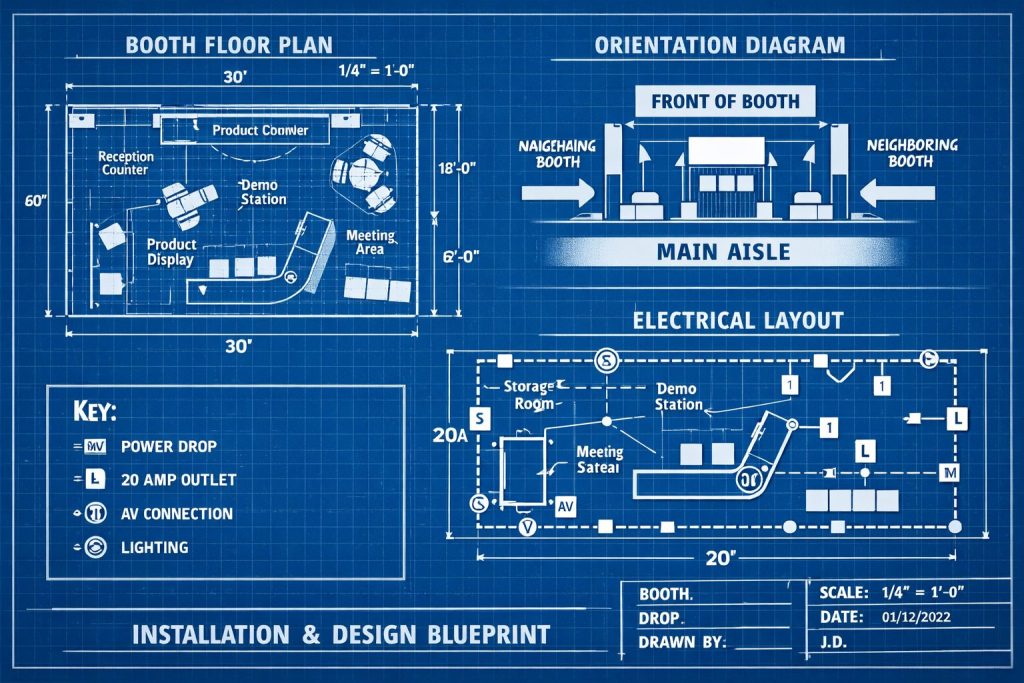
Creating a detailed I&D blueprint is another vital step. This comprehensive document should include precise floor plans, clear orientation diagrams indicating the booth’s front relative to main aisles, and detailed electrical layouts that map out every power drop and outlet. Such blueprints serve as an indispensable guide for the installation crew, preventing errors and expediting the setup process.
Finally, site surveys and robust logistics coordination are indispensable. A site survey, whether virtual or physical, helps to identify potential venue-specific challenges, such as unexpected structural obstructions, limited dock access, or the availability and capacity of freight elevators. Coordinating logistics involves strategic planning for material handling, including when and how your shipping crates will arrive at the marshalling yard or directly on the show floor. Understanding these variables upfront allows for proactive problem-solving and ensures a smoother, more predictable I&D experience.
Navigating Labor and Union Rules for Trade Show Installation and Dismantle
Successfully executing trade show installation and dismantle (I&D) often requires a deep understanding of complex labor and union rules, which vary significantly by region and venue. Union jurisdictions clearly define the tasks that specific trades are permitted to perform. Carpenters, for instance, are typically responsible for the structural booth setup and exhibit teardown, including uncrating and re-crating materials. Electricians handle all power-related tasks, from laying cables to plugging in equipment and installing lighting. Rigging services, performed by specialized riggers, are essential for any overhead work, such as hanging signs or positioning heavy machinery using forklifts. Understanding these distinctions is crucial to avoid costly disputes and ensure compliance with facility rules.
A major financial consideration in I&D labor is the distinction between straight time and overtime. Straight time rates apply during standard working hours (typically Monday through Friday, 8:00 AM to 4:30 PM). Work performed outside these hours, including evenings, early mornings, and Saturdays, is generally billed at overtime rates, often 1.5 times the straight time rate. Sundays and holidays usually incur double time, which can significantly escalate labor costs. Strategic scheduling of labor calls to coincide with straight time hours is a key strategy for minimizing expenses.
Exhibitors also need to be aware of rules regarding what tasks they can perform themselves. The “30-Minute Rule,” or sometimes the “10×10 Rule,” allows exhibitors in smaller booths (e.g., 10×10 or 10×20 feet) to perform light setup work without using tools, provided it can be completed by a full-time company employee within a short timeframe. However, any task requiring tools or specialized equipment generally falls under union jurisdiction, regardless of booth size.
Furthermore, union minimums impact the bottom line. Even if a task takes only a few minutes, labor is typically billed in minimum increments, often one hour for general I&D labor and up to two or four hours for specialized trades like electricians or riggers. This means that a quick task can result in a charge for the full minimum, highlighting the importance of consolidating tasks and efficient planning to make the most of each labor call. Navigating these rules effectively requires meticulous pre-planning and, often, the guidance of experienced labor contractors.
Choosing Your Team for Trade Show Installation and Dismantle
Selecting the right team for your trade show installation and dismantle (I&D) is a critical decision that impacts efficiency, cost, and overall success. Exhibitors generally face a choice between using the General Service Contractor (GSC), the official show-appointed labor, or an Exhibitor Appointed Contractor (EAC), a private labor contractor hired directly by the exhibitor. GSCs offer convenience as they are the default provider, but their labor pool can be inconsistent, with different crews working on your booth each day. This can lead to slower progress and less familiarity with your specific exhibit.
The benefits of utilizing private labor for installation and dismantle are substantial, particularly for complex or custom builds. EACs provide consistency, often deploying the same skilled crews across multiple shows. This familiarity with your booth’s unique components, from its structural integrity to its specialized AV integration, significantly reduces setup time and minimizes the risk of damage during both installation and exhibit teardown. Private contractors often possess specialized skills tailored to custom exhibits, ensuring a higher quality finish and meticulous attention to detail that generic show labor might overlook.
A key advantage of engaging an EAC is the role of the on-site I&D supervisor. This dedicated field manager acts as your project lead on the show floor, orchestrating all aspects of the installation and dismantle process. They coordinate with other vendors, manage timelines, troubleshoot unforeseen challenges, and ensure that your booth adheres to the I&D blueprint and facility rules. The supervisor is instrumental in managing “wait time” for labor and other services, effectively controlling costs and ensuring that your investment in a skilled labor contractor translates into a seamless, stress-free experience. Their presence offers a single point of contact and invaluable peace of mind, allowing your team to focus on their marketing objectives rather than logistical headaches.
Budgeting and Cost Management for Trade Show Installation and Dismantle
Effective budgeting and rigorous cost management are paramount for controlling expenses related to trade show installation and dismantle (I&D). One of the most significant and often underestimated costs is material handling, commonly known as drayage. These fees are charged by the general service contractor to move your freight from the loading dock to your booth space and then back to the dock for outbound shipping. Drayage costs are typically billed by weight (hundredweight) and are heavily influenced by how efficiently your shipping crates are packed. Consolidating items onto pallets and minimizing the number of loose boxes can significantly reduce these charges, as multiple small shipments may incur minimum weight penalties for each piece.
Beyond drayage, hidden fees in I&D labor can quickly inflate your budget. These often stem from unexpected equipment rentals, such as forklifts, or charges for “wait time” if your labor crew is idle due to delayed freight or uncoordinated scheduling. Avoiding “double-time” traps by understanding straight time versus overtime rates is critical. Work performed outside standard hours (evenings, weekends, and holidays) can cost significantly more, sometimes doubling the hourly rate. Careful scheduling to align labor calls with standard straight time windows is a primary strategy for cost savings.
Scheduling for efficiency is a nuanced art. It involves balancing the arrival times of your shipping crates with the start times of your labor crews. Opting for advance warehouse shipping, where your materials are delivered to a warehouse weeks before the show and then moved to your booth prior to your arrival, can eliminate costly “wait time” charges for your labor team. While advance warehousing may have higher drayage rates, it often proves more economical than paying an entire crew to stand by while waiting for direct-to-show site freight to clear the marshalling yard. Proactive planning and coordination are essential to ensure a smooth, cost-effective I&D process.
A Step-by-Step Guide to the Trade Show Installation Process
The trade show installation process is a meticulous, multi-stage operation designed to transform an empty floor space into a dynamic brand environment. It begins with receiving and unpacking crates. Upon arrival, it’s crucial to immediately check the inventory list against the contents of your shipping crates and inspect for any transit damage. This early verification can prevent costly delays and ensure all components are present before assembly begins.
Following the initial inventory, the foundation of the booth is established with the flooring and electrical layout. Electricians will mark and lay down all necessary wiring according to the detailed floor plan, ensuring power is available where needed for lights, devices, and interactive displays. The flooring installation, whether carpet, vinyl, or raised platforms, then proceeds, carefully concealing the electrical infrastructure beneath.
Structural assembly and rigging are next. This phase involves erecting the main framework of the booth. For exhibits requiring hanging signs or ceiling truss structures, rigging services are engaged early in the process when the show floor is relatively clear. Strict safety protocols are followed to ensure the secure suspension of heavy components from the venue ceiling.
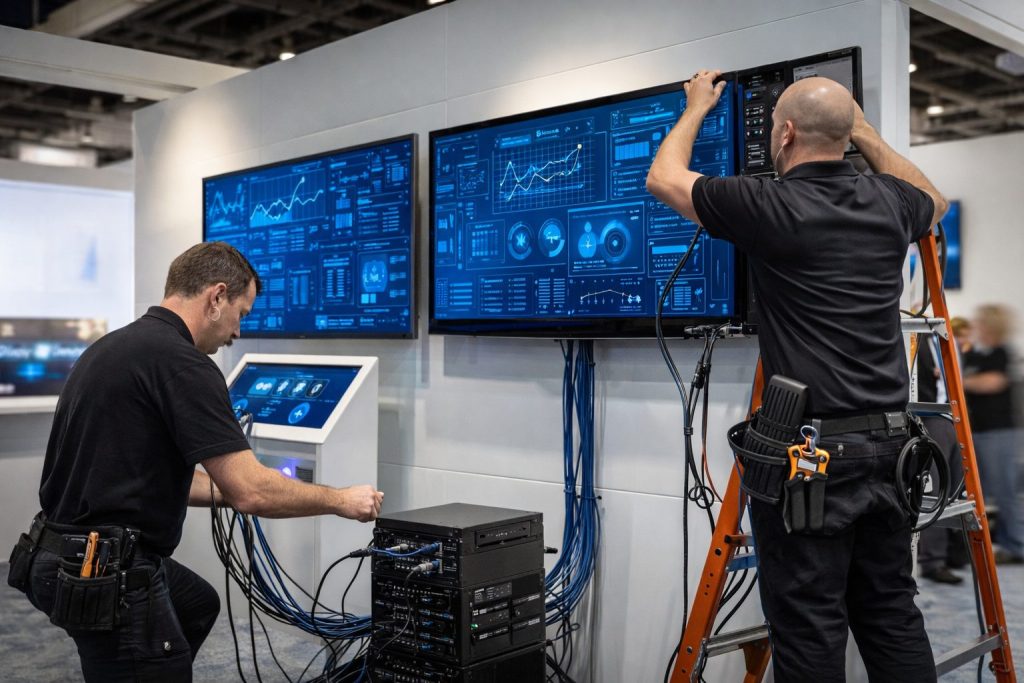
Once the main structure is in place, attention turns to graphics, AV integration, and finish work. Graphics are carefully applied to ensure seamless branding and visual appeal. AV technicians install monitors, sound systems, and interactive elements, meticulously managing cable runs for a clean, professional look. The finish work involves adding furniture, detailing, and a thorough cleaning to achieve that “white-glove” final appearance.
The installation culminates in the final walkthrough. This critical step involves a comprehensive inspection of the entire booth. Every electrical outlet, interactive display, and lighting fixture is tested to ensure full functionality. The aesthetics are also scrutinized for any imperfections, wrinkles, or misalignments. Only after a satisfactory walkthrough is the booth deemed ready, allowing the exhibitor to focus on engaging attendees and achieving their marketing objectives.
The Systematic Process of Trade Show Dismantle and Takedown
The post-show dismantle and takedown phase can often feel like chaos, but a systematic approach is crucial to protect your investment and prepare for future events. Navigating the “break-down” window immediately after the show closes requires careful planning. The aisles are typically cleared first, followed by the return of empty shipping crates to your booth space. This period can involve significant waiting time, so it’s vital to have your team ready to spring into action as soon as your materials arrive.
Careful breakdown and packing are paramount to preventing damage to reusable assets. Components should be disassembled in reverse order of installation, starting with graphics and sensitive AV equipment, followed by structural elements. Each piece should be inspected, cleaned, and meticulously packed into its designated shipping crates, ensuring adequate padding and protection. This meticulous approach safeguards your exhibit for its next use, directly impacting long-term cost efficiency.
Efficient labeling and color-coding of crates are game-changers for future installations. Clearly marking each crate with its contents, specific booth section (e.g., “Wall A,” “AV Cabinet”), and even a color-coding system can make the next show’s installation process significantly faster, potentially reducing setup time by 30% or more. This organized approach minimizes “search time” for labor and reduces the risk of missing components.
Finally, managing the Bill of Lading (BOL) is a critical administrative task for securing outbound shipping. The BOL is a legal document between you and your carrier, detailing the contents and destination of your shipment. It must be accurately completed and submitted to the show’s general service contractor at their service desk to ensure your freight is picked up correctly from the marshalling yard. Failure to properly manage the BOL can lead to delays, additional storage fees, or even “forced freight,” where the show contractor ships your materials via their preferred (and often more expensive) carrier. A diligent approach to dismantle safeguards your assets and streamlines future trade show logistics.
Ensuring Safety and Compliance During Installation and Dismantle
Ensuring safety and compliance is paramount throughout the trade show installation and dismantle (I&D) process, as show floors are active construction zones. Comprehensive risk assessments and emergency planning are essential to prepare for potential accidents. This includes identifying common hazards such as working at heights, moving heavy machinery, and electrical risks, and establishing clear protocols for emergency responses.
Personal Protective Equipment (PPE) is a mandatory requirement for all I&D crews. This typically includes hard hats for overhead work, high-visibility vests to ensure workers are seen amidst equipment movement, and closed-toe, sturdy footwear to protect against falling objects or punctures. Adherence to PPE standards is not just a best practice but a crucial aspect of overall facility rules and worker safety regulations.
Maintaining structural integrity is critical, particularly for larger or multi-level exhibits. Any hanging signs or substantial ceiling truss structures must be installed by certified riggers, and complex designs often require engineering certifications to ensure they meet load-bearing capacities and venue safety codes. Fire Marshal compliance is another non-negotiable aspect. All booth materials, especially fabrics and drapes, must be flame retardant, and certificates of flame retardancy must be readily available. Fire marshals also enforce strict rules regarding clear egress paths, storage of materials within the booth, and the use of approved electrical equipment to prevent fire hazards. Strict adherence to these facility rules not only protects personnel but also safeguards your investment and ensures uninterrupted show operations.
Frequently Asked Questions About Trade Show Installation & Dismantle (I&D)
What does I&D stand for in trade shows?
I&D is an industry acronym for Installation and Dismantle. It refers to the entire process of setting up and taking down an exhibit booth at a trade show, including labor, logistics, and coordination of various services.
How much does trade show labor cost per hour?
Trade show labor costs vary by region, union jurisdiction, and time of day. Straight time (weekday business hours) typically ranges from $100–$235 per hour per person. Overtime (evenings and Saturdays) can range from $150–$350 per hour, while double time (Sundays and holidays) can exceed $400 per hour.
Union minimums—usually two to four hours—apply regardless of actual work duration.
What is an EAC (Exhibitor Appointed Contractor)?
An Exhibitor Appointed Contractor (EAC) is a private labor contractor hired directly by an exhibitor for services such as booth installation or dismantle, rather than using the show’s General Service Contractor (GSC).
EACs often provide consistent crews with specialized skills for custom exhibits, but they cannot perform exclusive services such as drayage or primary electrical connections.
Can I set up my own trade show booth without union labor?
This depends on the venue’s facility rules and local union regulations. Some right-to-work states allow exhibitors more flexibility.
In many cases, exhibitors may self-install small booths (such as 10×10 or 10×20) if the work is performed by full-time company employees, uses no power tools, and is completed within a limited timeframe (often 30–60 minutes). Larger or more complex booths almost always require union labor.
What happens to my empty crates during the show?
After your exhibit is installed, you apply “EMPTY” labels (available at the service desk) to your shipping crates. The General Service Contractor then removes and stores the empty crates in a designated marshalling yard or off-site facility.
Crates are returned to your booth only after the show closes for dismantle. This storage service is typically included in your material handling (drayage) fees.
Conclusion
Mastering trade show installation and dismantle is crucial for a stress-free event. Proper planning, skilled labor, and meticulous execution of booth setup and exhibit teardown maximize marketing results, protect your investment, and ensure a professional brand presentation from start to finish.
Recommended External Links
- Exhibition Services & Contractors Association (ESCA) :Industry standards for exhibition service contractors
- Link: esca.org
- EDPA (Experiential Designers & Producers Association):Best practices for exhibit design and build
- Link: edpa.com
- OSHA Safety Guidelines for Trade Shows:Workplace safety requirements for convention centers
- Link: osha.gov