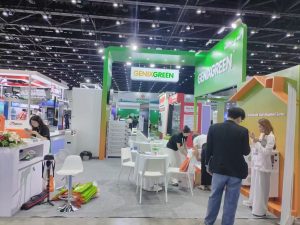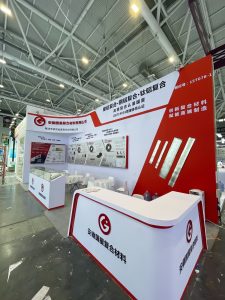
Are you sure your booth will actually work… in real life?
Not in a render. Not in a PDF.
On the show floor.
Because I’ve seen this too many times:
A team spends weeks perfecting a beautiful design… and then something breaks during installation.
Measurements don’t align.
Graphics don’t fit.
Or worse — the booth looks nothing like the concept.
That gap?
It usually comes down to one thing:
Weak exhibition construction planning.
Let’s break down what actually happens between a nice design and a booth that works.
The real problem: design is easy, execution is not
Most teams focus heavily on design. That makes sense. It’s visible. It’s exciting.
But exhibition construction is where things either hold together… or fall apart.
From what I’ve observed across multiple shows, the issues usually come from:
- Incomplete construction drawings
- Miscommunication between design and fabrication teams
- Ignoring venue-specific rules (especially in the US and Europe)
- Underestimating on-site assembly complexity
The result?
A booth that looks good on paper — but struggles in reality.
Step 1: Construction drawings — where ideas get tested
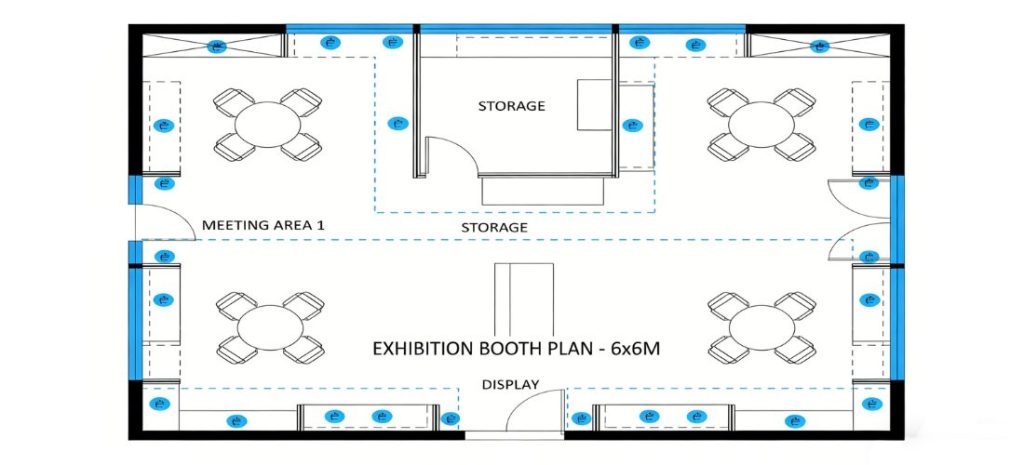
This is where things get real.
Construction drawings are not just technical documents.
They’re the bridge between design intent and physical build.
A solid exhibition construction drawing set should include:
- Dimensions (and I mean exact dimensions)
- Material specifications
- Structural details (load-bearing, joints, connections)
- Electrical layouts (lighting, screens, power points)
- Graphics placement
If any of these are vague, you’re gambling.
Some teams assume the builder will “figure it out.”
Sometimes they do. Sometimes they don’t.
And when they don’t, you’re paying for it on-site.
Step 2: Fabrication — where cost and quality collide
This is where exhibition construction becomes a business decision, not just a design one.
You’re balancing:
- Cost
- Speed
- Finish quality
If production happens in China (which is common), you get cost advantages.
But you also introduce:
- Shipping timelines
- Customs risks
- Coordination gaps
If it’s local fabrication, things move faster — but budgets increase.
There’s no perfect option.
Just trade-offs.
What matters is clarity:
- Are materials confirmed?
- Are the finishes approved?
- Has anything been prototyped?
Because once fabrication starts, changes get expensive — fast.
Step 3: Logistics — the hidden risk layer
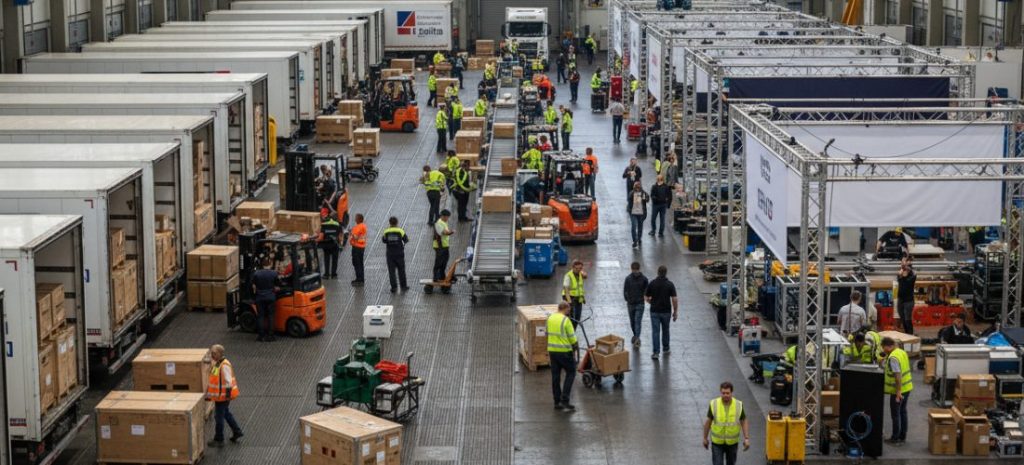
No one talks about this enough.
Exhibition construction doesn’t end when the booth is built.
It has to arrive — intact — and on time.
This includes:
- Packing strategy
- Freight (air vs sea)
- Customs clearance
- Drayage (in the US, this alone can surprise you)
I’ve seen booths delayed because one document was missing.
One.
If your timeline is tight, logistics becomes your biggest risk.
Step 4: On-site assembly — where everything is exposed
This is the moment of truth.
On-site assembly is where:
- Drawings meet reality
- Teams deal with time pressure
- Problems can’t be hidden anymore
In markets like the US, you also deal with:
- Union labour rules
- Strict installation windows
- Overtime costs
A few common issues I’ve seen:
- Parts don’t fit (tolerance issues)
- Graphics arrive damaged
- Electrical layouts don’t match the venue supply
- Teams improvising under pressure
Good exhibition construction planning reduces these risks.
It doesn’t eliminate them.
What actually works (from what I’ve seen)
If you want exhibition construction to run smoothly, a few things consistently help:
Exhibition Construction Key Principles
Not less detail — more. Ambiguity is expensive later. The more precise you are at the beginning, the fewer surprises you pay for on-site.
If your designer and builder aren’t talking from day one, expect friction. Misalignment here usually turns into delays and rework.
Every venue has quirks. Power supply, height restrictions, rigging rules — they often matter more than your concept itself.
Some designs look great but are painful to assemble. That cost always shows up on-site, usually under time pressure.
Because something usually does. Buffer time and budget accordingly — it’s not pessimism, it’s operational reality.
A final thought
Maybe this sounds obvious. Maybe not.
But exhibition construction is not just about building a booth.
It’s about building something that:
- Can be transported
- Can be installed under pressure
- Can perform in a real environment
And still look like the original idea.
That’s harder than it sounds.