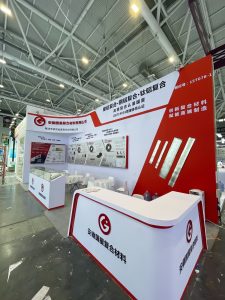
Why do some brands leave trade shows with pipelines full, while others walk away with nothing but a stack of badges and a drained budget?
I’ve asked this question more times than I can count, usually standing somewhere between a half-built booth and a stressed marketing manager trying to explain ROI that hasn’t shown up yet.
And here’s the uncomfortable truth: most companies still treat trade shows like a design exercise, not a Trade Show Marketing system. That gap is where exposure is lost, budgets disappear, and competitors quietly win.
The real problem isn’t attendance — it’s attention
Trade shows are crowded now. Not just physically, but mentally.
Everyone is “showing up.” Few are actually standing out.
In my experience covering events across Europe and the US, I’ve noticed something consistent: brands assume foot traffic equals visibility. But foot traffic is just noise unless it’s structured.
Some suggest the issue is booth design. Others blame location. But honestly, it’s usually neither.
It’s the lack of a coordinated Trade Show Marketing strategy that connects:
- pre-show awareness
- on-site engagement
- post-show follow-up
Without that chain, exposure breaks instantly.
Trade show exposure isn’t built at the show
This is where most companies get it wrong.
The strongest campaigns I’ve seen start weeks before the event, sometimes earlier. The booth is just the physical endpoint of a longer narrative.
Good Trade Show Marketing behaves more like a campaign funnel than an event tactic.
Before the show:
- LinkedIn outreach is active, not passive
- Media partners are already warmed up
- Key visitors are pre-booked, not “hopefully dropping by”
During the show:
- Content is captured, not just consumed
- Conversations are structured, not random
- Messaging is tight enough that even a 30-second interaction means something
After the show:
- Follow-ups happen in hours, not weeks
- Media coverage is reused, not forgotten
If this part is missing, exposure decays fast. Maybe even within days.

Media partnerships are the part that most brands underuse
Here’s something I’ve seen repeatedly: companies invest heavily in booths but treat media like an afterthought.
That’s backwards.
Media partnerships extend Trade Show Marketing beyond the hall. They turn a physical moment into something searchable, shareable, and repeatable.
The best exhibitors I’ve observed don’t just invite media in — they co-create with them:
- live interviews inside the booth
- product walkthroughs filmed on-site
- short-form video distributed during the event
Others suggest this is “nice to have,” but in reality, it’s becoming the difference between being remembered and being replaced.
Booth strategy still matters — just not in the way people think
Yes, design matters. But not in a decorative sense.
The question isn’t “does it look good?”
It’s:
- Can someone understand it in 5 seconds?
- Does it invite conversation or block it?
- Does it support Trade Show Marketing goals or just branding ego?
I’ve seen minimal booths outperform expensive builds simply because they made it easier for people to stop, talk, and stay.
Space is not the strategy. Behaviour inside the space is.
The integration problem nobody talks about
Here’s the quiet failure point: teams don’t talk to each other.
Marketing handles messaging. Sales handles leads. Agencies handle design. PR handles media.
And at the centre of all that? A trade show that is supposed to unify everything.
But it rarely does.
Strong Trade Show Marketing happens when:
- Messaging is shared across teams
- media partners understand sales goals
- Booth staff are trained like frontline marketers
If one part breaks, exposure weakens across the board.
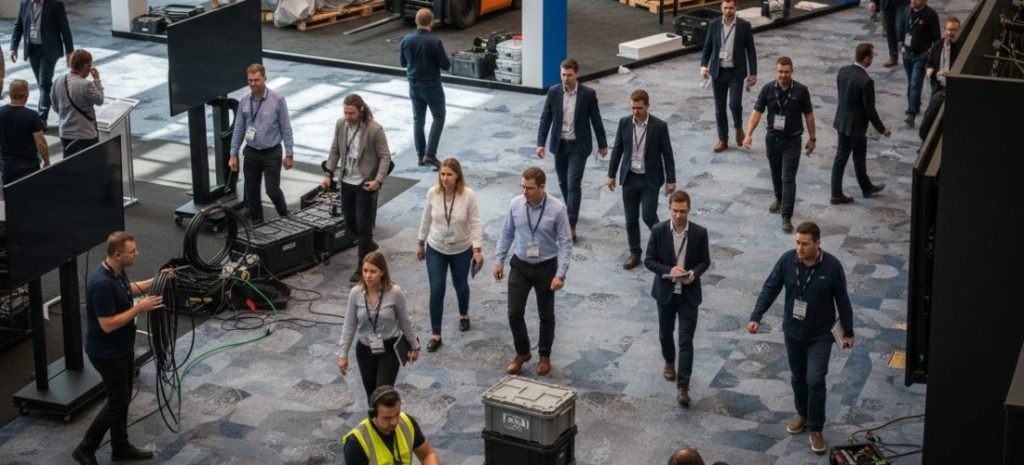
What actually works (based on what I’ve seen repeatedly)
If I strip away all the noise, the most effective exhibitors tend to do a few simple things:
They don’t overcomplicate the booth.
They don’t rely on foot traffic alone.
They treat media as distribution, not decoration.
And they obsess over follow-up speed.
It’s not flashy. It’s consistent.
And consistency beats creativity more often than people admit.
Final thought
Trade shows are still worth it, but only if you stop treating them like isolated events.
They are marketing ecosystems.
And Trade Show Marketing isn’t about being seen — it’s about being remembered long enough to convert attention into action.
If that chain is missing, no booth design or budget will fix it.
References
- Harvard Business Review (Marketing Strategy & Event ROI frameworks)
- CEIR (Centre for Exhibition Industry Research) – Trade show performance reports
- Event Marketing Institute – B2B event engagement studies