The part no one wants to talk about
How many hours did your team spend waiting at the loading dock last show?
How much did “just a simple setup” actually cost once drayage, overtime, and last-minute fixes hit?
And the bigger one—why does exhibition setup always feel harder than it should be?
I’ve been on enough show floors to know this: most teams don’t fail because of bad booth design. They fail in the move-in and move-out. The part that looks operational, but quietly decides your ROI.
This is where timelines slip, budgets stretch, and stress shows up early.
The real problem: It’s not logistics. It’s coordination.
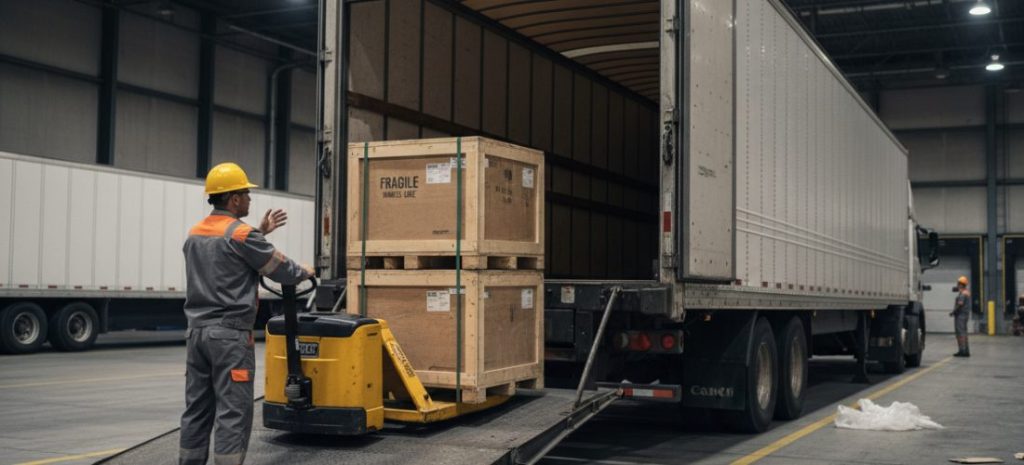
On paper, exhibition setup sounds simple—ship, install, dismantle, done.
In reality, it’s a coordination problem across:
- Venue rules (often unclear until too late)
- Labour unions and scheduling windows
- Freight delays and drayage handling
- Booth design complexity vs install time
- Internal misalignment between marketing and ops
I’ve seen beautifully designed booths become liabilities because they took 10 hours to assemble in a venue that allowed six.
Others suggest the issue is cost. I’d argue it’s predictability. If you can’t predict your move-in, you can’t control your outcomes.
Where the exhibition setup breaks down
It sounds harmless. It’s expensive.
Teams often assume:
- Assembly is intuitive
- Tools will be available
- Labour will “just handle it.”
If you’ve ever paid double-time because the installation ran past 5 pm, you already know how that ends.
This one shows up a lot.
Designers optimize for impact. Builders optimize for reality.
If those two aren’t aligned early:
- Structures arrive that require special rigging
- Components don’t fit standard freight specs
- Setup sequences become trial-and-error
Exhibition setup becomes a puzzle you’re solving live, with a clock running.
Move-in gets the attention. Move-out gets rushed.
But dismantling is where:
- Damage happens
- Materials go missing
- Labour costs spike again
If your team is exhausted, the last thing they want is a complex breakdown process.
That’s exactly why it needs planning.
What an efficient exhibition setup actually looks like
Let’s make this practical.
After speaking with contractors, exhibitors, and a few operations leads, the patterns are consistent.
1. Design for install, not just aesthetics
If a booth looks great but takes too long to assemble, it’s a liability.
Better questions to ask early:
- Can this be installed in under 6 hours?
- Does it require specialized labour?
- How many people are needed?
Some teams now prioritize modular systems—not because they’re cheaper, but because they’re predictable.
2. Build a move-in playbook
The best teams don’t “plan.” They document.
A solid exhibition setup playbook includes:
- Step-by-step install sequence
- Assigned roles per team member
- Required tools and materials checklist
- Contingency buffers (time + cost)
If someone new joined your team tomorrow, could they run your setup?
If not, you’re relying on memory—and that’s fragile.
3. Align early with the venue
Every venue has quirks:
- Restricted loading times
- Union-only tasks
- Height and rigging limitations
Ignoring these doesn’t delay you—it multiplies your cost.
I’ve seen teams redesign entire structures because they didn’t check ceiling clearance.
4. Control drayage, don’t react to it
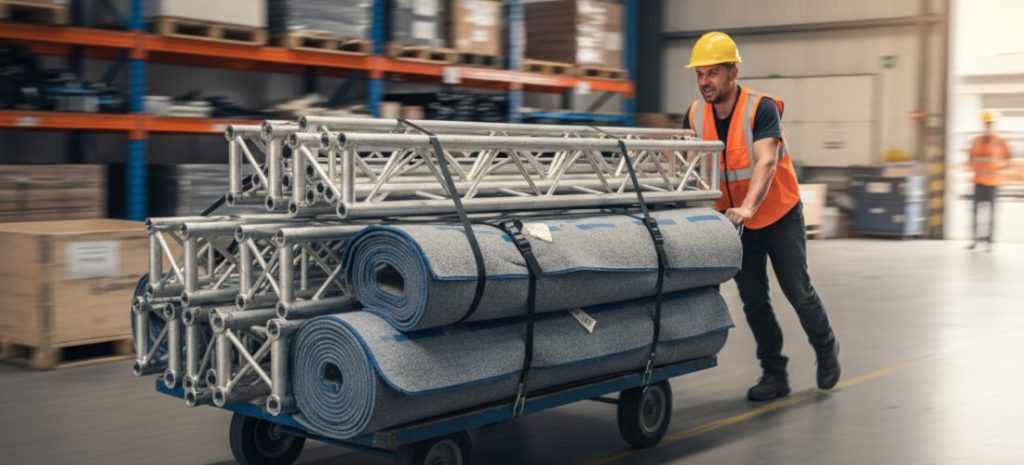
Drayage is often the most misunderstood cost in exhibition setup.
You don’t eliminate it. You manage it:
- Reduce shipment weight and volume
- Consolidate crates
- Label clearly for faster handling
If your materials arrive disorganized, you pay for that—in both time and money.
5. Treat move-out as part of the strategy
Most teams just want to leave.
The better ones plan:
Move-Out Done Right
The last 3 steps most teams rush—and regret later.
Breakdown should never be guesswork. If installation had steps, dismantling needs them too—just reversed. This reduces confusion, saves time, and avoids costly mistakes.
Label everything before the show even starts. Clear crate and component labels make repacking faster and prevent missing parts at the next event.
Use protective materials, assign responsibility, and plan handling carefully. Most damage doesn’t happen during the show—it happens when everything is rushed at the end.
Because what you protect during move-out is what you reuse next show.
A small shift that changes everything
Here’s what I’ve noticed.
Teams that treat exhibition setup as a marketing task struggle.
Teams that treat it as an operations system perform better.
It’s not about working harder. It’s about reducing uncertainty:
- Fewer surprises
- Fewer delays
- Fewer reactive decisions
Maybe that’s the real advantage—not saving money, but avoiding waste.
So, is optimization worth it?
If your booth is small, maybe you can get away with loose planning.
If your investment is significant—space, design, travel, staffing—then exhibition setup becomes a leverage point.
Not visible. But decisive.
Because the show doesn’t start when the doors open.
It starts the moment your first crate hits the loading dock.