Let’s start with the uncomfortable questions.
Why did your last show feel busy… but not productive?
Why did you scan hundreds of badges, yet struggle to tie anything back to revenue?
Why did your team leave exhausted, slightly optimistic—and then quietly forget about it three months later?
I’ve been on enough show floors to know this isn’t rare. It’s the norm.
Most Trade Show Booths don’t fail because of bad luck. They fail because of a few predictable decisions—made early, repeated often, and rarely challenged.
Let’s break it down.
The Real Problem: Activity Without Outcome
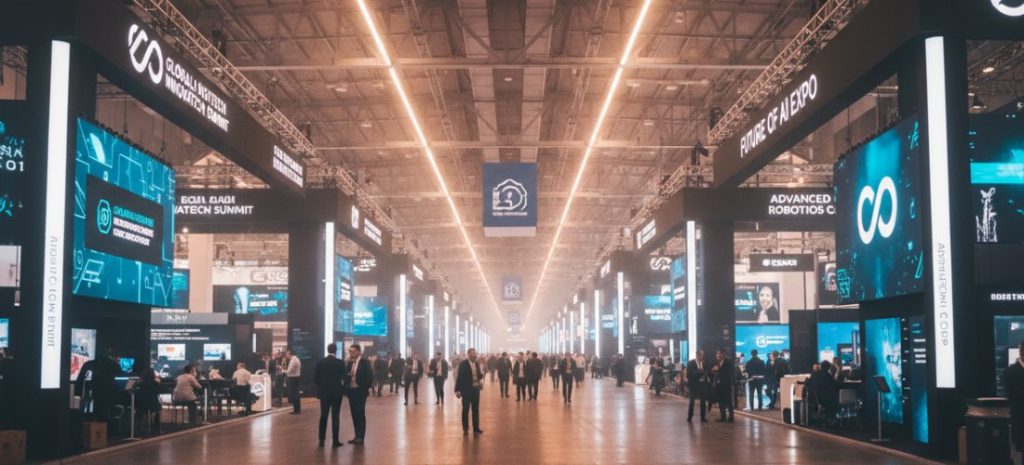
Walk any major exhibition floor—whether it’s CES, RSNA, or a regional industry expo—and you’ll see the same pattern.
Busy booths.
Polished graphics.
Crowds hovering.
But if you ask a simple question—“What did this generate?”—the answers get vague.
Because most Trade Show Booths are built for attention, not conversion.
There’s a difference.
Attention fills space.
Conversion drives pipeline.
And too many exhibitors confuse the two.
Where Trade Show Booths Go Wrong
1. They Optimise for Looks, Not Function
A booth that photographs well isn’t the same as one that works.
I’ve seen six-figure builds with:
- No clear entry point
- No defined visitor flow
- No place for real conversations
It looks impressive. It performs poorly.
Maybe the design team nailed the visual brief—but missed the commercial one.
Fix: Start with behaviour, not aesthetics.
Ask: Where do people stop? Where do conversations happen? Where do deals begin?
Design around that.
2. No Clear Offer, No Clear Outcome
If I walk up to your booth and can’t tell:
- Who you help
- What you solve
- Why it matters now
…I’m walking away.
Most Trade Show Booths rely on generic messaging:
“Innovative solutions”
“Leading provider”
“Cutting-edge technology”
It sounds safe. It converts nothing.
Fix: Be specific.
What’s the one problem you solve better than anyone else—and for whom?
If your booth can’t answer that in five seconds, it’s leaking opportunity.
3. Staff Are Present, But Not Prepared
This one’s painful.
You’ve invested in the space, the build, the logistics—and then staffed it with:
- People who weren’t briefed
- People who don’t qualify leads
- People who default to small talk
Good people, wrong setup.
And suddenly your Trade Show Booth becomes a social lounge instead of a sales channel.
Fix: Train for intent, not attendance.
Your team should know:
- What qualifies a lead
- How to open a conversation
- When to move someone forward—or let them go
Script it if you have to. Most teams don’t. They should.
4. No System for Capturing Value
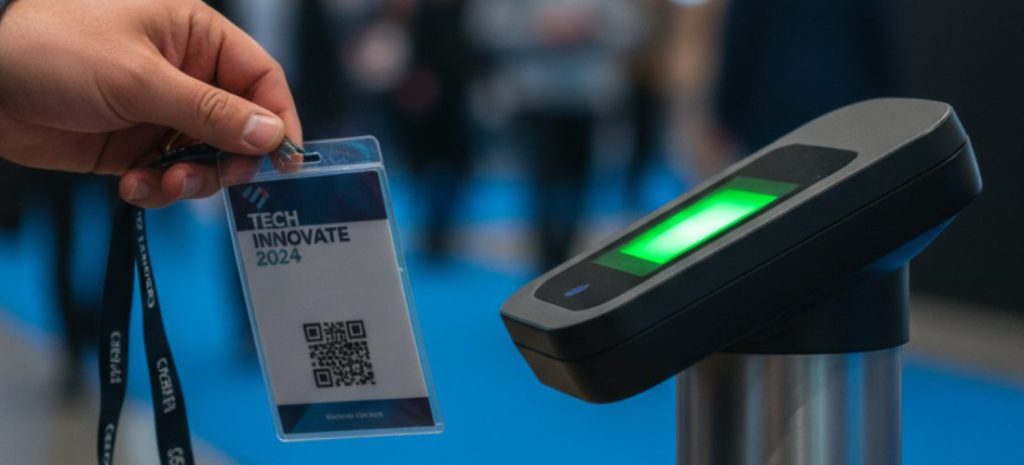
Badge scans aren’t a strategy.
They’re a record of missed potential—if you don’t attach context.
I’ve seen teams collect thousands of contacts and still say:
“We’re not sure which ones are worth following up.”
That’s not a lead problem. That’s a system problem.
Fix: Build a simple qualification layer:
- Hot / warm / cold
- Key interest area
- Timeline
Even a basic structure can turn your Trade Show Booth from a data dump into a pipeline engine.
5. No Follow-Up Strategy (This Is the Big One)
This is where most ROI dies.
After the show:
- Emails go out too late
- Messaging feels generic
- Sales teams move on
And all that effort? Gone.
Others suggest that up to 70–80% of trade show leads are never properly followed up. That number feels high—until you’ve seen it happen.
Fix: Plan follow-up before the show starts.
Not after.
Define:
- Who follows up
- How fast
- With what message
If you wait until the show ends, you’ve already lost momentum.
What High-Performing Trade Show Booths Do Differently
The best Trade Show Booths I’ve seen aren’t always the biggest. Or the most expensive.
They’re the most intentional.
They:
- Guide visitor behaviour
- Communicate one clear idea
- Equip staff to qualify quickly
- Capture structured data
- Follow up like it matters
Nothing fancy. Just disciplined execution.
A Simple Way to Reframe Your Next Show
Before your next exhibition, ask four questions:
- What outcome are we buying?
Not “presence”—pipeline. - What must happen inside the booth to achieve that?
Conversations? Demos? Meetings? - What does the design need to enable?
Not impress—enable. - What happens after the show?
If the answer is unclear, fix that first.
Because a Trade Show Booth isn’t the end of the process.
It’s the middle.
Final Thought
Maybe your last show didn’t fail.
Maybe it just didn’t have a system behind it.
That’s fixable.
And once you see your Trade Show Booth as a revenue tool—not a marketing expense—you start making different decisions.
Better ones.