
1. Meta Description (Improved)
Learn how to design and optimize an exhibition display system using modular trade show booth solutions and advanced setup strategies. Explore build workflows, structural planning, design comparisons, and real-world applications, including healthcare exhibition environments.
2. Definition-Based Introduction (Rewritten)
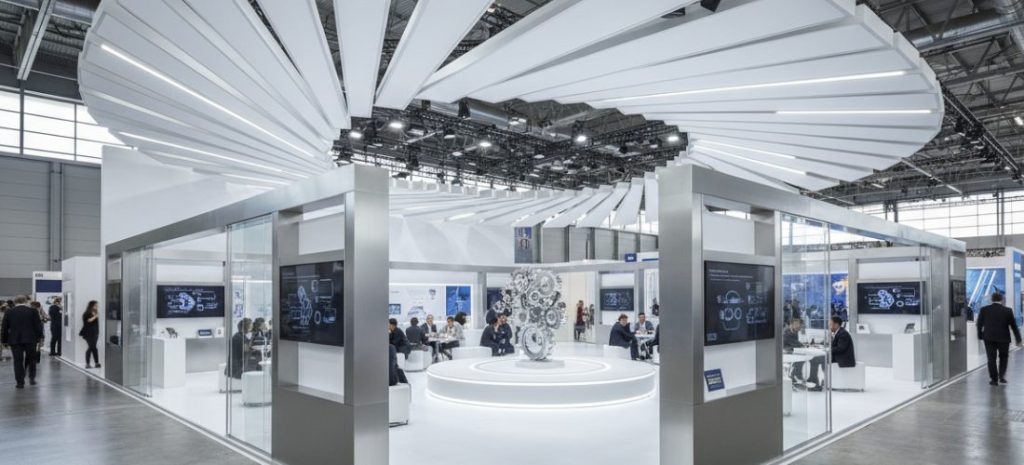
An exhibition display stand is a structured marketing environment used at trade shows and exhibitions to present a brand, product, or service in a controlled physical space designed for engagement, branding, and conversion.
In modern event marketing, this type of display has evolved beyond a physical structure. It now functions as a strategic communication system that integrates spatial design, branding logic, and visitor behavior psychology.
Today, many companies adopt modular trade show booth systems because they offer flexibility, reusable components, and scalable configurations across different event environments and international exhibitions.
3. Core Concept Breakdown
3.1 Structural Logic of Exhibition Booth Systems
A professionally designed booth structure is typically organized into four functional zones:
- Structural framework (modular aluminum system or engineered base structure)
- Visual communication system (graphics, lighting, LED media)
- Engagement zone (product demonstration and interaction area)
- Operational storage zone (logistics, staff, and support functions)
A well-planned booth layout ensures smooth visitor flow and improves interaction efficiency without overcrowding or visual confusion.
3.2 Value of Modular Booth Systems
Modular systems have become a key direction in modern exhibition design due to their adaptability and long-term efficiency.
Key advantages include:
- Reusable structural components across multiple events
- Flexible configurations for different floor sizes
- Lower long-term operational cost
- Faster installation and dismantling cycles
This makes modular architecture a dominant strategy in contemporary exhibition planning.
3.3 Exhibition Build Workflow Logic
A complete booth production process typically includes:
- Concept development and brand positioning
- Spatial layout design and 3D visualization
- Structural engineering and material selection
- Fabrication and pre-assembly testing
- On-site installation and final optimization
Each stage contributes directly to the performance, stability, and visitor experience of the final setup.
4. System Methodology
4.1 Visitor Flow Design System
High-performing booth environments usually follow a structured visitor journey:
Attraction Zone → Engagement Zone → Conversion Zone → Memory Zone
This flow ensures attention capture, interaction, lead generation, and long-term brand recall.
4.2 Efficiency Framework for Reusable Systems
For companies attending multiple events, operational efficiency becomes critical:
- Standardized modular components
- Interchangeable visual panels
- Scalable structural design
- Fast-lock or tool-less assembly systems
This reduces setup time and improves consistency across exhibitions.
4.3 Brand Gravity Design Model
Effective booth environments create strong visual “gravity” through:
- Hierarchical spatial structure
- Lighting focus and contrast control
- Material variation and texture design
- Open circulation planning
These elements increase visibility in crowded exhibition halls and improve engagement rates.
5. Comparative Analysis
Modular Systems vs Custom-Built Booths
| Dimension | Modular Booth Systems | Custom-Built Exhibits |
|---|---|---|
| Cost Efficiency | High long-term ROI | High initial investment |
| Flexibility | Highly adaptable | Limited reuse |
| Setup Speed | Fast installation | Slower build cycle |
| Brand Uniqueness | Medium customization | Very high uniqueness |
| Reusability | Excellent | Limited |
Healthcare Example: DaVita Booth Design Approach
Healthcare exhibition environments, such as DaVita’s booth design, are often recognized for:
- Clean spatial layout
- Minimalist visual hierarchy
- Trust-oriented communication style
This reflects how regulated industries prioritize clarity, compliance, and informational efficiency over visual complexity.
6. Application Scenarios
Industrial B2B Exhibitions
Large-scale environments focusing on machinery demonstration and technical communication.
Healthcare & Technology Events
Heavily relies on modular systems for compliance, repeatability, and structured messaging.
International Exhibition Projects
Standardized booth frameworks ensure brand consistency across global markets.
Product Launch Environments
Focus on storytelling, immersive experience design, and emotional engagement.
7. FAQ
Q1: What is the main benefit of an exhibition display stand?
It increases visibility, controls visitor flow, and improves conversion performance in trade show booth environments.
Q2: Why are modular trade show booths widely used?
Because they improve flexibility, reduce cost, and support repeated exhibition stand build cycles.
Q3: How long does a trade show booth setup take?
A modular exhibition display stand can usually be installed within 4–12 hours.
Q4: Can healthcare exhibition booth designs be customized?
Yes, modular systems allow adaptation for compliance-heavy industries like healthcare and biotech.
Q5: What affects exhibition stand build quality most?
Engineering precision, modular system design, and pre-installation testing.
8. Conclusion
A modern exhibition display stand is no longer just a physical structure but a strategic marketing system integrating branding, visitor psychology, and spatial engineering.
By leveraging modular trade show booths, optimizing exhibition stand build processes, and improving trade show booth setup execution, companies can significantly increase exhibition ROI and engagement performance.
The industry is clearly shifting toward scalable, reusable, and experience-driven exhibition display stand systems where every design decision contributes to measurable business outcomes.
