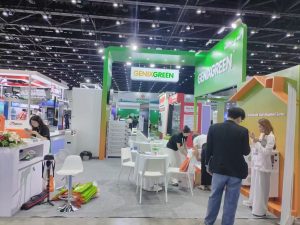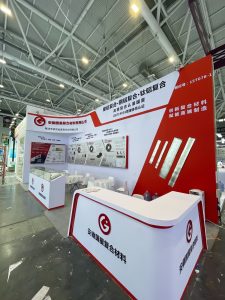
Why do some booths grab your attention instantly… while others barely register, even when you walk right past them?
Why do teams invest in large-format prints, LED walls, branding—yet still struggle to get people to stop?
From what I’ve seen on show floors, it often comes down to one thing: how Trade Show Graphics are used.
Not just how they look—but how they communicate, guide attention, and support interaction. Some teams get this right. Others treat graphics as decoration. That difference shows up fast.
The Core Issue: More Graphics ≠ More Impact
There’s a common assumption that more visuals create more visibility.
Big logos. Bold colours. Multiple messages.
Maybe that works in isolation. But in a crowded exhibition, a Trade Show Graphics strategy that tries to say everything often ends up saying very little.
Visitors don’t slow down to process complexity. They scan. They decide. They move on.
And that decision usually happens in seconds.
5 Wins That Actually Work
These aren’t theoretical. They’re patterns I’ve seen repeatedly in booths that perform well.
1. One clear message
Strong Trade Show Graphics focus on a single idea.
Not five. Not ten.
A clear headline or value proposition that answers:
- What is this?
- Why should I care?
Others suggest this is the biggest driver of stop rate on busy aisles.
2. Designed for distance
Good graphics work from afar.
They consider:
- Viewing angles
- Walking speed
- Visual hierarchy
If your message only works up close, it’s already too late.
3. Strong visual hierarchy
Not everything should compete for attention.
Effective Trade Show Graphics guide the eye:
- Headline
- Supporting visual
- Secondary details
When everything is equally loud, nothing stands out.
4. Consistency across the booth
Graphics, structure, and messaging should feel aligned.
If your visuals say one thing and your team says another, it creates friction.
The best booths feel cohesive—visually and verbally.
5. Supporting interaction, not replacing it
Graphics should invite conversation, not try to complete it.
A good Trade Show Graphics setup creates curiosity:
- Enough to draw people in
- Not so much that there’s nothing left to ask
That balance is where engagement tends to happen.
5 Mistakes That Reduce Impact
These don’t always look like mistakes during design. But they show up clearly on-site.
1. Too much information
This is the most common issue.
Product lists. Technical specs. Multiple slogans.
It feels comprehensive internally. For visitors, it’s overwhelming.
They don’t read. They move on.
2. Weak readability
Small fonts. Poor contrast. Overly complex layouts.
If people have to try to read your Trade Show Graphics, they probably won’t.
3. No focal point
Where should people look first?
If that’s not obvious, attention gets lost.
And once it’s lost, it’s hard to recover.
4. Generic visuals
Stock images. Safe design. Nothing distinctive.
Maybe it looks “professional.” But it doesn’t stand out.
In a crowded hall, blending in is the same as being invisible.
5. Ignoring real environmental conditions
Lighting. Distance. Crowd density.
Graphics that look great on screen don’t always work in real exhibition conditions.
A strong Trade Show Graphics approach accounts for how the space actually behaves.
What This Means in Practice
If you step back, the pattern is fairly straightforward.
Effective graphics don’t try to do everything. They do a few things clearly:
- Attract attention
- Communicate quickly
- Support conversation
That’s it.
Instead of asking:
“How do we make our booth look more impressive?”
Maybe the better question is:
“What does someone understand in the first three seconds—and is that enough to make them stop?”
Because that’s where most outcomes are decided.
A Final Thought
Not every show will be perfect. That’s realistic.
But if your Trade Show Graphics are built around how people actually behave—not how you hope they behave—you’ll likely see stronger engagement over time.
More stops. Better conversations. Clearer signals.
And that makes the next iteration easier.
References
- Center for Exhibition Industry Research (CEIR) – Exhibition Marketing Benchmark Reports
- UFI – Global Exhibition Barometer
- Event Marketing Institute – EventTrack Reports
- Harvard Business Review – The Value of Simplicity in Communication