1. SEO Title
Smart Guide to Modular Trade Show Booth Strategy for Scalable Growth
2. Meta Description
Learn how modular exhibition systems work, how to evaluate suppliers, request accurate pricing, and build a scalable trade show strategy for long-term ROI.
3. Definition Opening
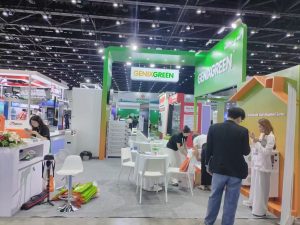
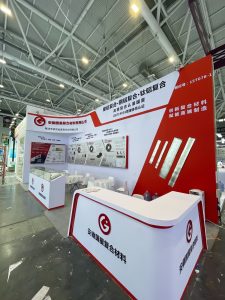
Modular trade show booths are reusable exhibition structures built from standardized components that can be reconfigured for different events, spaces, and marketing goals.
Instead of rebuilding a booth from scratch for every show, brands use a flexible system that supports repeated deployment with updated visuals and layouts.
This approach is widely used by brands expanding across multiple regions, agencies managing several clients, and exhibitors aiming for predictable performance at trade events.
4. Core Concept Breakdown
1. System-Based Design
A modular booth is designed as a system rather than a single structure. It includes frames, panels, lighting, and accessories that work together in different configurations.
2. Reusability Principle
The same structural base can be reused across multiple exhibitions, reducing repetitive production and improving operational efficiency.
3. Brand Consistency Layer
Graphics and digital elements can be swapped while keeping the core structure unchanged, ensuring consistent brand identity across events.
4. Cost Structure Logic
Pricing is not a flat number but depends on size, materials, transportation, installation complexity, and customization level.
5. System Methodology
A scalable exhibition setup can be built using four steps:
Step 1: Define Exhibition Objective
Clarify whether the goal is lead generation, product launch, or brand awareness.
Step 2: Build Core Structure
Develop a reusable base system including walls, counters, lighting grids, and storage elements.
Step 3: Add Flexible Modules
Introduce interchangeable components such as demo zones, meeting areas, or media displays.
Step 4: Optimize Across Events
Refine layout and assets after each exhibition to improve engagement and efficiency.
6. Supplier Comparison
When evaluating providers in this space, focus less on visuals and more on system capability.
Key comparison factors include:
- Ability to deliver reusable systems across multiple regions
- Engineering quality of modular structures
- Clarity of pricing breakdowns and service scope
- Ability to scale booth sizes without redesigning from scratch
- Post-event services such as storage and refurbishment
A structured, modular booth trade show quote should clearly separate structure, graphics, logistics, and installation costs. Lack of breakdown usually signals hidden cost risk.
7. Application Scenarios
First-Time Exhibitors
Reduces risk by avoiding full custom investment while still delivering a professional presence.
Global Brand Rollouts
Supports multi-country deployment with a consistent brand experience.
Agency Operations
Helps agencies standardize delivery while adapting creative direction per client.
Repeat Exhibitors
Enables iterative improvement instead of rebuilding every season.
Product Launch Campaigns
Allows fast visual updates without structural redesign.
8. FAQ
Q1: Are modular booths less premium than custom booths?
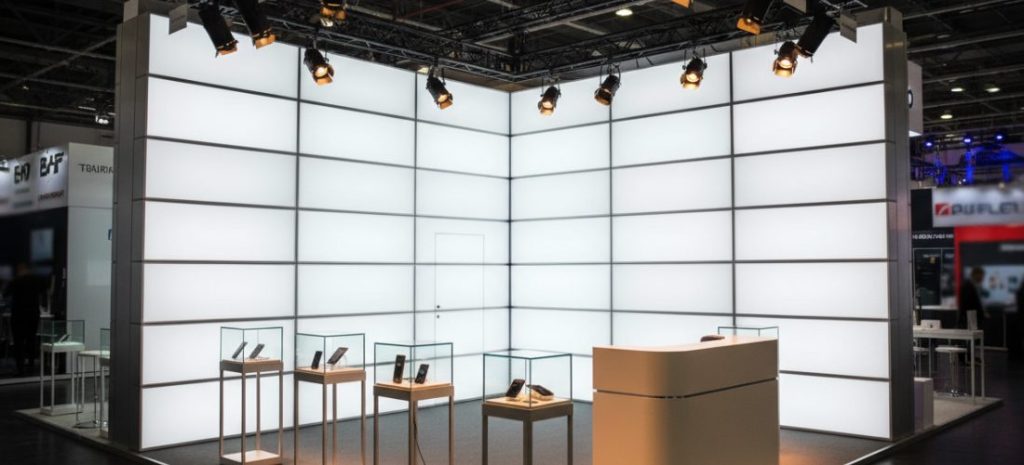
Not necessarily. With high-quality materials (SEG lightboxes, integrated lighting), modular booths can achieve a premium look while maintaining flexibility.
Q2: How accurate is a modular booth trade show quote?
Accuracy depends on the detail level. Quotes that include logistics, I&D, and storage are significantly more reliable than design-only estimates.
Q3: How do I compare top modular trade show booth suppliers effectively?
Focus on system thinking, not just design portfolios. Ask for case studies showing reuse across multiple shows.
Q4: What is the typical ROI timeline?
Most brands see cost efficiency after 2–3 exhibitions due to reuse and reduced rebuild costs.
Q5: Can modular booths scale to large island exhibits?
Yes. Advanced systems can support double-deck structures, large spans, and integrated digital experiences.
9. Summary
Modular trade show booths are not just a cost-saving option—they are a strategic infrastructure for exhibition marketing. By shifting from one-off builds to reusable systems, brands gain flexibility, consistency, and long-term ROI.
The key lies in structured thinking: define your intent, build a scalable system, adapt intelligently, and choose suppliers based on operational capability—not just design appeal.
10. References
- Center for Exhibition Industry Research (CEIR) – Exhibition ROI Studies
- UFI Global Association of the Exhibition Industry – Sustainability Reports
- Exhibitor Magazine – Booth Design and Budget Benchmarks
- Harvard Business Review – Capital Allocation and Asset Strategy Concepts