A furniture trade show booth has one job most exhibition stands do not: the product itself is furniture, so buyers expect to sit in it, lean on it and picture it inside a real hotel lobby, restaurant or showroom. That single expectation changes how you plan space, lighting, freight and staffing. This guide is written for furniture, hotel FF&E and commercial-space exhibitors preparing for the 2026–2027 season. It uses the recently concluded H+R Design Expo Shenzhen as a practical reference point, then walks through the show calendar, booth design ideas, realistic cost benchmarks and the heavy-sample logistics that make or break a furniture stand.
Why Furniture and Hospitality Shows Deserve a Spot in Your 2027 Plan
Hospitality is a renewal business. Hotels refurbish guest rooms and public areas on short cycles, and new hotel pipelines in Southeast Asia, the Middle East and Africa keep FF&E (furniture, fixtures and equipment) buyers actively sourcing. Furniture fairs are where those purchasing programs start: manufacturers meet hotel groups, design firms, dealers and cross-border e-commerce buyers in one hall, and a stand that stages products like finished rooms converts that footfall into scheduled factory visits.
The numbers back the opportunity. H+R Design Expo Shenzhen, the hotel furniture and commercial design exhibition held October 13–15, 2026 at Shenzhen World, is a core section of Bohua’s Connexion Shenzhen mega-exhibition, which totals 160,000 square meters, more than 2,000 exhibitors and 120,000 professional visitors. At the 57th CIFF Guangzhou in March 2026, the organizer reported 353,106 professional visitors from 185 countries and regions, including a record 64,291 overseas attendees, up 13.2% year on year, alongside more than 5,100 brands from 36 countries and regions. If you are exhibiting in China for the first time, our China trade show booth guide covers venues, visas and payment practicalities in depth.
The Furniture and Hospitality Show Calendar for 2026–2027
Four events anchor the international furniture and hospitality exhibiting season. CIFF Guangzhou (59th edition) runs in two phases on March 18–21, 2027 (home furniture, home décor and hometextile, outdoor leisure) and March 28–31, 2027 (office, commercial and hotel furniture, plus the CIFM/interzum guangzhou supply show) across 850,000 square meters; the official CIFF announcement details both phases. Hotel & Shop Plus Shanghai 2027 follows on March 30–April 2, 2027 at the Shanghai New International Expo Centre; its 2026 edition covered 210,000 square meters with 2,000+ brands and 135,682 professional visits, including 10,886 overseas buyers, up 25.84%, according to the official exhibition site. Hall E4 there is dedicated to hotel and commercial furniture and soft decoration.
HD Expo + Conference, the flagship hospitality design show in the United States, returns to Mandalay Bay, Las Vegas on May 4–5, 2027, with more than 500 exhibitors across 25+ product categories, per the official HD Expo website. For design-led furniture brands, Paris’s Maison&Objet remains the twice-yearly reference fair each January and September. H+R Design Expo Shenzhen returns each October inside Connexion Shenzhen at Shenzhen World; confirm the next edition’s dates with the organizer before locking freight. Many export-oriented furniture companies run a China sourcing show in spring plus one overseas design show in autumn, which lets one modular stand system serve both markets.
Booth Design Ideas That Sell the Room, Not the Catalogue
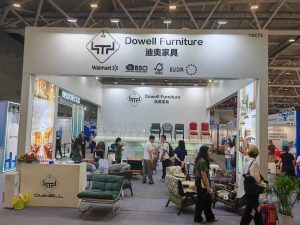
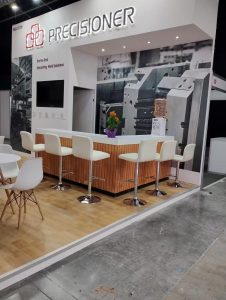
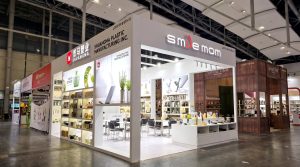
Furniture buyers do not order from a photo wall; they order from a feeling. The most effective furniture trade show booth designs stage one or two finished scenes — a hotel lounge corner with rug, floor lamp and coffee table, or a restaurant table setting with chairs visitors can actually pull out and sit on — instead of lining products up like a warehouse. A tiered display wall or plinth system then lets you show a full chair collection in a compact footprint without cluttering the floor.
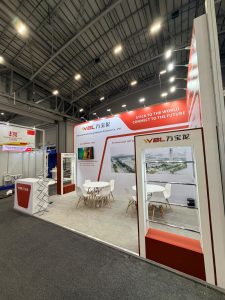
Structure and credibility matter as much as styling. Keep the fascia tall and clean so buyers can find you from the far aisle, especially in corner stands. Export furniture buyers are auditing a supplier, not just a product, so dedicate one wall to factory credentials: certification logos (FSC, BSCI and retail-audit marks are common in this sector), workshop photography and material samples buyers can touch. Warm-neutral lighting around 3000–4000K renders wood grain and fabric texture far better than cool white, and track spotlights let you re-aim accents between product refreshes.
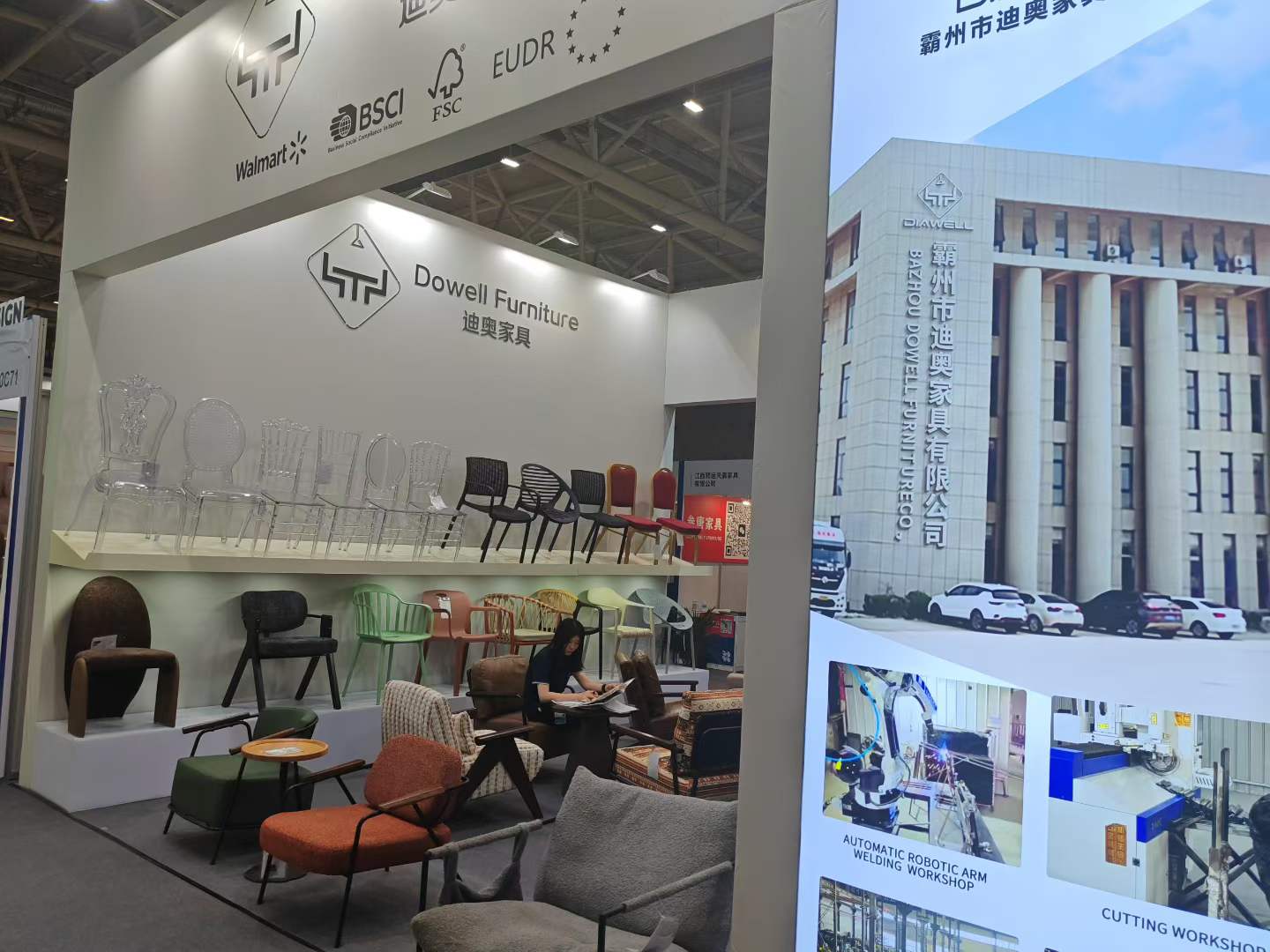
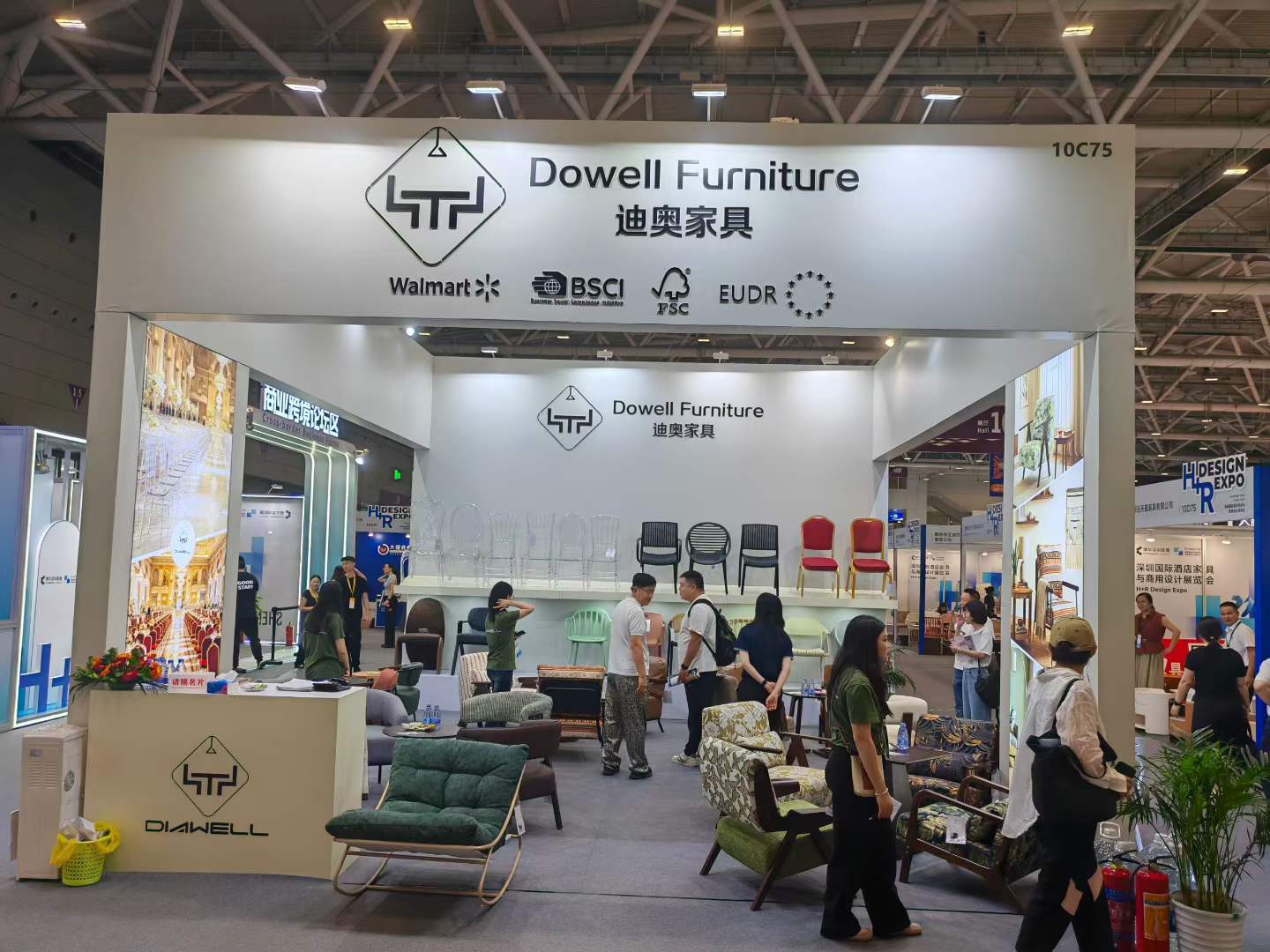
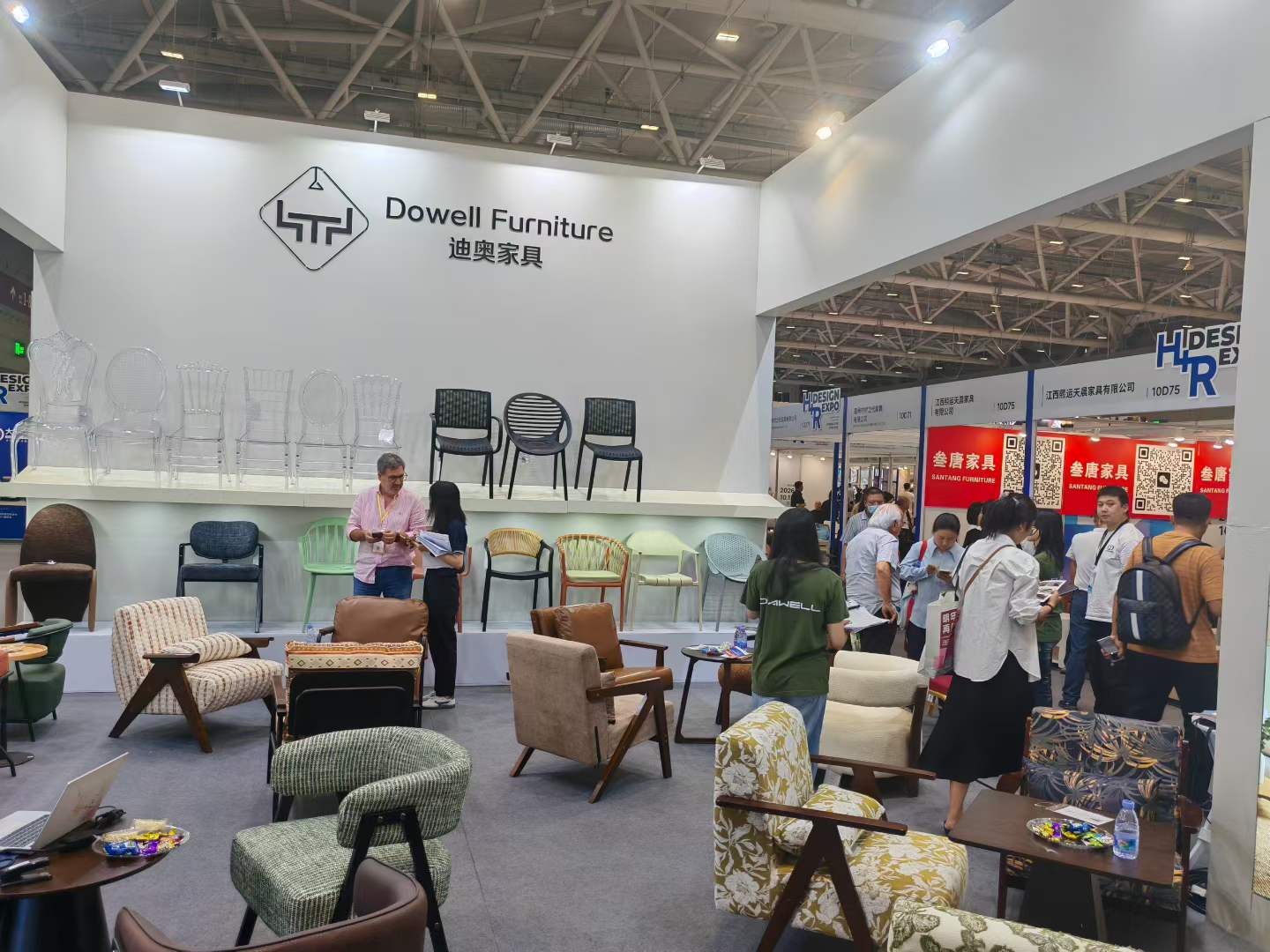
This is exactly how we approach furniture stands at New Power Exhibition (NeoBooths). At H+R Design Expo Shenzhen in October 2026, our team delivered a corner stand for a hotel furniture exporter: a raised white fascia for aisle visibility, a tiered chair display wall, a factory credentials wall with workshop photography, and a lounge zone staged like a hotel lobby where buyers could sit and negotiate. You can see the same sector logic in our CIFF Guangzhou furniture booth project, and our one-stop booth solution covers design, fabrication, freight and installation end to end.
What a Furniture Exhibition Stand Really Costs
Start with the 2.5x rule: industry research consistently puts raw space at roughly 40% of direct exhibitor spending, so plan for total costs of about two and a half times your space fee. From our own project data, a 100-square-meter custom stand averages about €18,000 in Africa, €35,000 in Europe and €55,000 in the United States, with fully installed European projects commonly landing between $60,000 and $120,000+ depending on structure and rigging. Our exhibition booth cost comparison breaks these bands down by region.
Furniture exhibitors should then add the line items general exhibitors forget. Samples are heavy, and venue material handling is typically charged by weight, so crate count directly moves your drayage bill. Reinforced flooring or floor protection is standard where heavy pieces are repositioned during the show. Budget for extra accent lighting, for on-stand repair kits (felt pads, touch-up pens, spare hardware), and for sample storage between shows if you exhibit more than twice a year. Fabricating the stand structure in China typically saves 25–35% versus local Western fabrication — the economics we break down in our Shenzhen booth fabrication guide.
Logistics: Moving Heavy Samples Without Surprises
Freight is where furniture exhibitors win or lose money. Volumetric weight on bulky but light pieces can exceed actual weight, so measure crated dimensions before requesting quotes, and decide early which pieces are true hero samples that must ship and which can be sourced, rented or fabricated near the venue. A hybrid strategy works well: ship one consignment of hero samples and reusable modular walls, then locally fabricate platforms, counters and display plinths that do not need to carry your brand finish. Build-up windows at furniture fairs are usually generous, but floor positions and unloading slots are still scheduled, so confirm the venue’s freight rules and book rigging and forklift time in advance.
On the floor, staff the stand with people who can answer specification questions — foam densities, load ratings, fabric abrasion counts — because hospitality buyers arrive with project requirements, not general curiosity. After the show closes, plan dismantling with the same discipline as build-up: furniture scratches, so wrap pieces before crating and decide immediately whether samples return home, move to the next show or get sold locally to offset freight.
FAQ
How much does a furniture trade show booth cost?
Plan for roughly 2.5 times your raw space fee in total costs. As benchmarks, a 100-square-meter custom stand runs about €18,000 in Africa, €35,000 in Europe and €55,000 in the US for fabrication and installation, with Europe’s fully installed range commonly $60,000–$120,000+. Add furniture-specific items: weight-based material handling, floor protection, accent lighting and sample storage.
Which trade shows are best for hotel furniture exporters?
For China sourcing audiences, CIFF Guangzhou’s second phase (March 28–31, 2027, including hotel furniture) and Hotel & Shop Plus Shanghai (March 30–April 2, 2027) are the anchor events, with H+R Design Expo Shenzhen each October covering the Greater Bay Area hotel project market. For North American hospitality designers, HD Expo + Conference in Las Vegas on May 4–5, 2027 is the flagship.
Should I ship my own samples or build the stand locally?
Do both. Ship only hero samples and your reusable modular structure, and fabricate platforms, counters and plinths locally or in a lower-cost fabrication hub such as Shenzhen, which typically saves 25–35% versus Western local fabrication. This hybrid reduces weight-based handling fees while keeping your brand finish consistent.
How far in advance should I book space and freight?
Book space 6–12 months ahead for flagship fairs, and lock sample freight 2–3 months before the show once crate dimensions are final. Ocean freight planning windows vary by route, so confirm schedules with your forwarder before the design freeze; late freight changes are the most common cause of missing build-up slots.
Planning a stand for the 2027 furniture season? Explore our booth design and build solution or contact our team for a tailored quote.