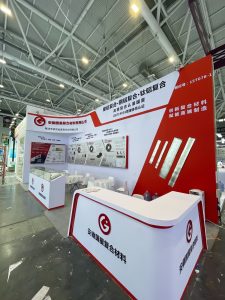
Exhibiting in China has moved back onto the marketing calendar for global brands, and for good reason: the country hosts some of the largest and busiest trade events on earth. But planning a China trade show booth is not the same exercise as booking space in Las Vegas or Frankfurt. Venues, labor norms, payment habits, and build-up schedules all run differently. This guide walks you through the shows worth your budget in 2026 and 2027, what a booth in China really costs, and the practical rules that catch first-time exhibitors off guard — so your first China trade show booth works as a sales channel, not an expensive lesson.
Why Exhibit in China in 2026 and 2027
China remains the world’s largest manufacturing base and one of its fastest-growing consumer markets, and its trade fairs have reopened at full scale. Two types of opportunity exist here. First, sourcing and partnership fairs such as the Canton Fair, where international buyers come to find suppliers — a fit if you sell components, equipment, or manufacturing services. Second, market-entry expos such as the China International Import Expo (CIIE), built specifically for foreign brands selling into China, with government-backed buyer delegations walking the halls.
The scale is hard to overstate. The Canton Fair complex in Guangzhou alone offers roughly 850,000 square meters of exhibition space per session, and close to 700,000 overseas buyers attended the most recent edition across its three phases. No other single venue on the planet concentrates that many active buyers under one roof. For a B2B brand, a well-planned booth here can fill a pipeline for an entire year.
The Shows That Matter: Key 2026–2027 Dates
Two events anchor the international exhibitor calendar, and both are happening within weeks of each other this autumn:
- 138th Canton Fair (China Import and Export Fair), Guangzhou — autumn 2026 in three phases: Phase 1 runs October 15–19 (electronics and appliances, advanced manufacturing, vehicles, lighting, hardware), Phase 2 runs October 23–27 (housewares, gifts and décor, building and furniture), and Phase 3 runs October 31–November 4 (toys, fashion, home textiles, health and recreation). Halls open 9:30–18:00. Full phase details and registration are on the official Canton Fair website.
- 9th China International Import Expo (CIIE), Shanghai — November 5–10, 2026 at the National Exhibition and Convention Center. The previous edition drew more than 4,100 companies from 138 countries and recorded $83.49 billion in intended deals. Six exhibition sectors cover medical devices and pharmaceuticals, vehicles and smart mobility, technical equipment, consumer goods, food and agriculture, and trade in services.
Beyond these two, Shenzhen has become a serious second pole: the Shenzhen World Exhibition and Convention Center in Bao’an is among the largest venues in the world and hosts major electronics, new energy, and industrial events year-round. If your buyers are in tech hardware or energy storage, a Shenzhen show often beats a Guangzhou one for audience relevance — and the venue’s build infrastructure is world-class.
What a China Trade Show Booth Really Costs
Booth construction in China is generally 20–40% cheaper than in the US or Western Europe for equivalent build quality, because fabrication workshops are local and skilled labor rates are lower. A typical custom-built 36 sqm (roughly 20×20 ft equivalent) booth on a prime Guangzhou or Shanghai show might land between $15,000 and $35,000 including design, fabrication, installation, and dismantling, depending on materials, rigging, and AV content. Raw space rental from the organizer is billed separately and varies widely by show prestige.
Where international exhibitors lose money is not the build — it is the things nobody prices in early:
- Lead time. Booth design freeze typically needs to happen 8–12 weeks before move-in. Late changes trigger rush fees that erase the cost advantage.
- Graphics and translation. Bilingual (English/Chinese) messaging is not optional if you want local buyers to engage. Budget for professional translation, not machine output.
- AV and rigging. Large LED walls and hanging signs are common and affordable to build in China, but venue rigging approval and power orders follow each venue’s own process — confirm both before design sign-off.
- Travel and visa. Most business visitors need an M (business) visa arranged through the show’s invitation system; factor 3–4 weeks processing time.
A practical budgeting rule that travels well from our first-time exhibitor guide: multiply your space rental by about 2.5 to estimate the all-in trip. China rewards this discipline as much as anywhere.
Booth Design That Works on Chinese Show Floors
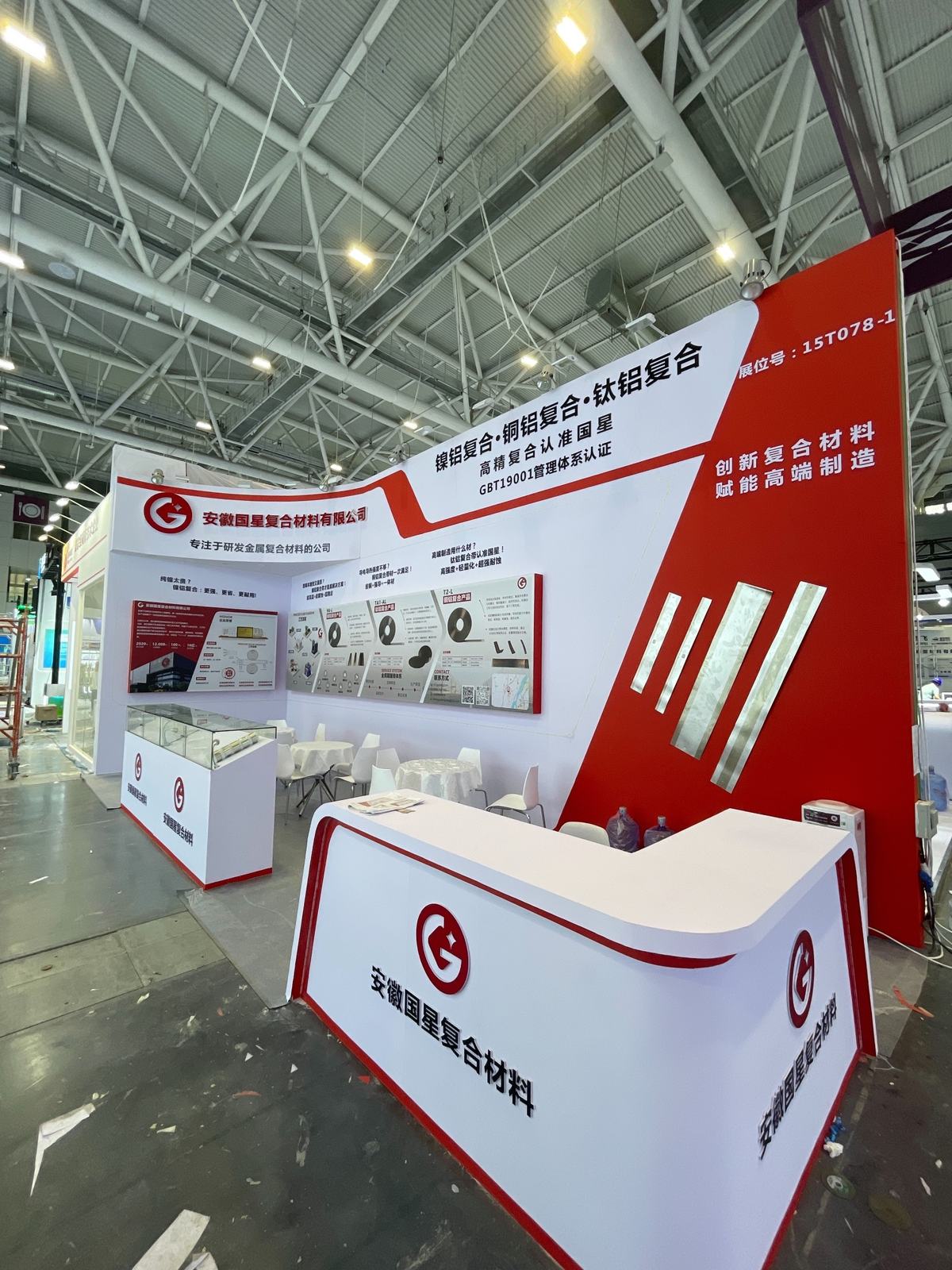
Chinese venues allow taller structures and heavier builds than many Western halls, and local fabrication makes double-deckers, curved walls, and large suspended elements accessible at mid-range budgets. That freedom cuts both ways: the booths that perform are not the biggest ones, but the ones with a single clear message, a live demo, and an open entry line. One design decision matters more here than in most markets: put your key message in both English and Chinese at eye level, keep English as the hero for international buyers, and use Chinese to welcome the domestic distributors and partners who often become your most valuable contacts.
Work with a team that handles both languages natively and owns the fabrication floor. At New Power Exhibition (NeoBooths), we design, build, and install booths across mainland China and 30+ countries — which means one point of contact from 3D render to dismantling, with fixed quotes in USD or RMB. You can review the full scope on our booth solutions page before you commit to anything.
Logistics, Rules and On-Site Practicalities
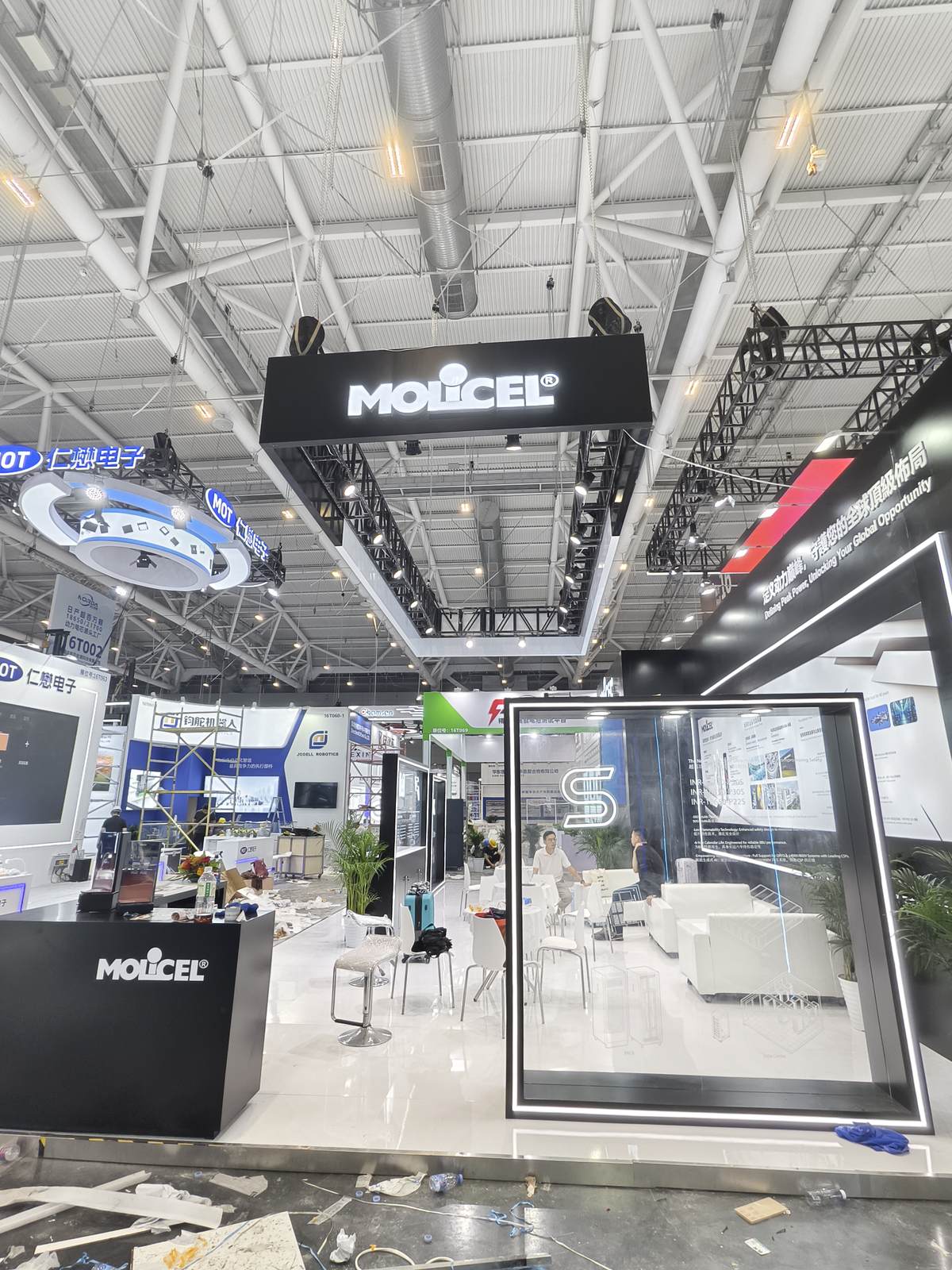
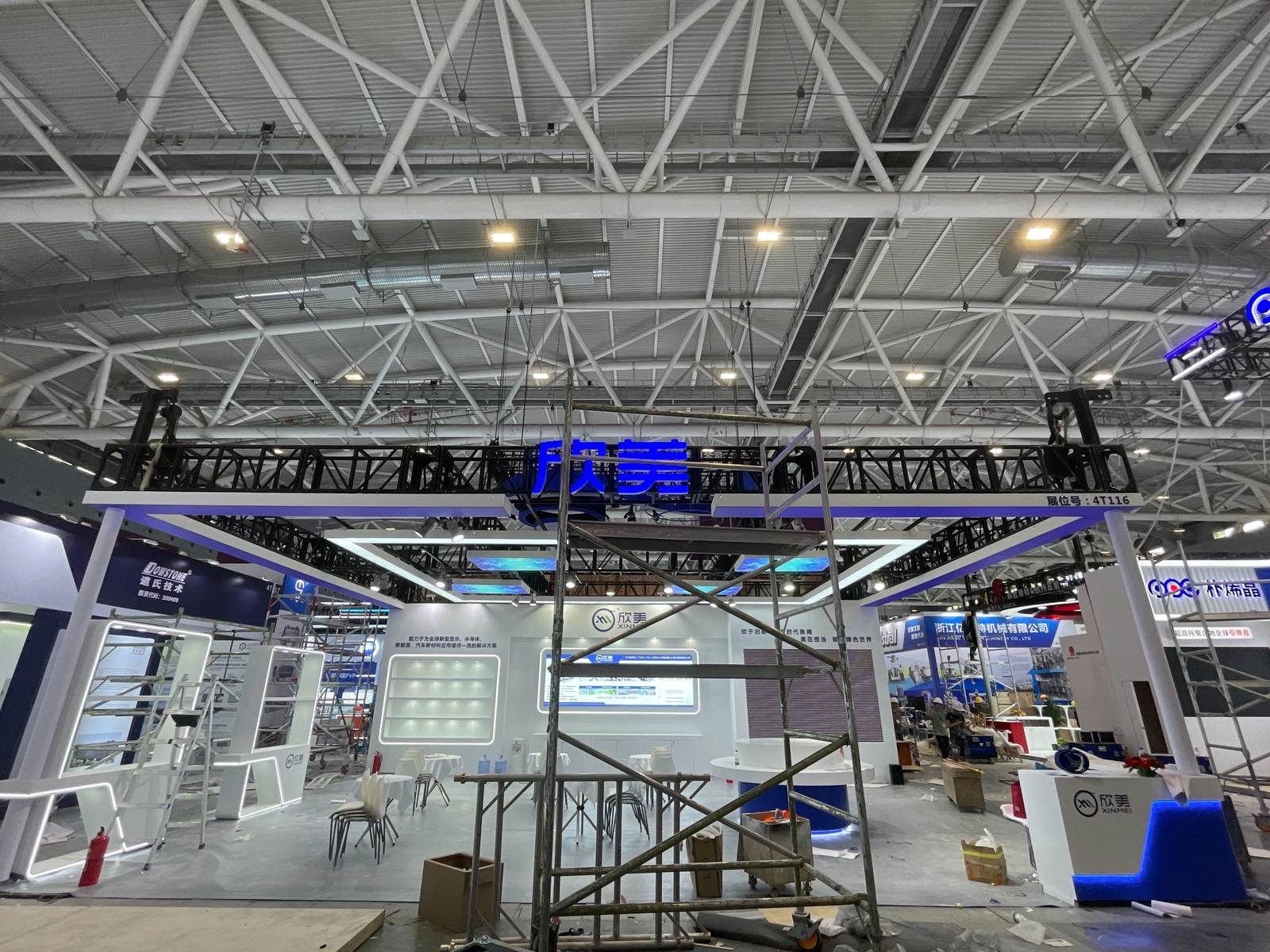
China’s on-site system is less rule-bound than US union labor, but it has its own rhythms. Move-in windows are tight and announced by the organizer per hall; island booths and rigging crews go in first, inline booths follow. Fire compliance is enforced through Chinese standards (GB 8624 fire ratings for wall and ceiling materials) rather than the NFPA paperwork familiar from US shows — a local builder will spec compliant materials automatically, but if you ship your own structure in, get the certificates translated and pre-approved or you risk being stopped at inspection.
Payments are another world of their own. On-site services in China are settled through the organizer’s official contractor portal, and foreign credit cards do not always clear smoothly — plan wire transfers in advance and keep a WeChat Pay or Alipay account linked to an international card for small expenses. Internet access on the floor can be filtered; if your demo depends on cloud services, bring a compliant local connection or offline fallback. Finally, book accommodation early: hotels within 20 minutes of the Canton Fair complex sell out months ahead during phase weeks.
After the show, move fast on follow-up — the same 48-hour window applies everywhere, and Chinese buyers expect quick, concrete next steps. If you want a structured process, see our breakdown of lead capture at trade shows, and when you are ready to price a specific show, contact our team for a fixed quote.
China Trade Show Booth FAQ
How much does a trade show booth cost in China?
A custom-built 36 sqm booth at a major Guangzhou or Shanghai show typically costs $15,000–$35,000 including design, fabrication, installation, and dismantling — roughly 20–40% less than an equivalent build in the US or Western Europe. Space rental, travel, and AV are extra.
When should I book my booth for the Canton Fair or CIIE?
Book space with the organizer 6–12 months ahead, and freeze booth design 8–12 weeks before move-in. Prime positions near entrances sell out first, and late design changes trigger rush fees.
Do I need a Chinese-speaking partner on site?
Not strictly — major shows are bilingual and organizers provide interpreters — but a builder whose team speaks both English and Chinese removes most day-to-day friction with venue contractors, electricians, and inspectors during build-up.
Can I ship my existing booth from Europe or the US to China?
You can, but reusing a shipped structure rarely pays off: customs clearance, temporary import duties, drayage, and fire-standard re-approval usually exceed the cost of building locally. Rebuild in China from your existing design files instead.