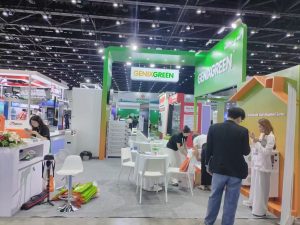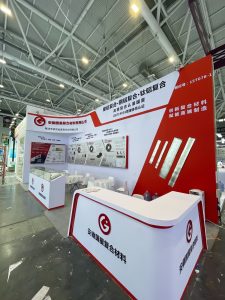
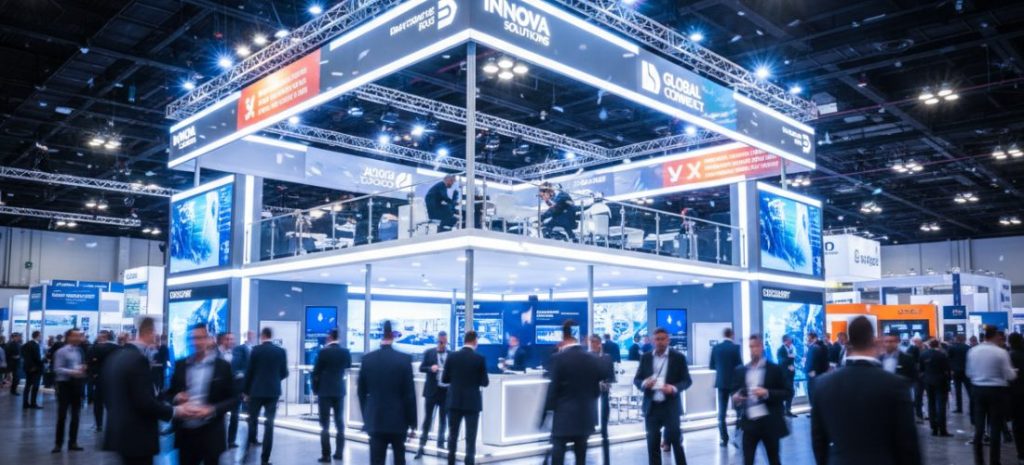
I still remember standing in a half-empty hall in Frankfurt, watching two brands launch at the same time. Same budget range. Same industry. Same crowd.
One booth at the trade show was packed. The other? People walked straight past it like it wasn’t even there.
And I kept asking myself—what actually makes the difference here? Is it the design? The location? Or something more subtle that most teams miss until it’s too late?
Because here’s the uncomfortable truth: most companies don’t fail because they don’t try. They fail because their custom exhibition stands don’t do one simple job—pull people in fast enough to matter.
In a crowded exhibition hall, attention is the real currency. And when a custom exhibition stand doesn’t communicate value in seconds, it doesn’t matter how much was spent on production, lighting, or logistics. “Almost good enough” doesn’t register. It disappears.
The real problem behind most exhibition setups
When I look at underperforming booths, it’s rarely a product issue. Its execution.
A lot of teams still treat custom exhibition stands like static branding exercises. Pretty graphics, some screens, a counter, maybe a seating area. Done.
But visitors don’t walk exhibition floors looking for branding. They’re scanning for relevance in seconds.
Some brands overbuild. Others go too portable and look temporary. A trade show portable booth might be efficient, but if it feels cheap or disconnected from the story, it loses trust instantly.
So the real challenge is this:
How do you build something flexible, but still solid enough to stop people in motion?
1. Design for interruption, not decoration
The first smart shift is mindset.
A strong exhibition display stand is not about looking good. It’s about interrupting behaviour.
I’ve seen brands win simply by doing one thing differently—breaking symmetry. Angled entrances, unexpected lighting, or a product placed where you don’t expect it.
It’s not about complexity. It’s about friction.
If someone walking past slows down even half a second, you’ve already won the first battle.
That’s where custom exhibition stands start to outperform generic builds. Because you can design for attention triggers, not templates.
2. Make the first 3 seconds do the heavy lifting
Here’s what most teams underestimate: you don’t get 30 seconds. You get 3.
That’s it.
In that window, your booth for the trade show must answer three silent questions:
- What is this?
- Is it relevant to me?
- Should I stop?
If your message takes longer than that to land, you’ve already lost traffic.
I’ve seen simple changes work better than expensive builds. One brand removed half its text and enlarged one product visual. Engagement doubled.
Sometimes, less structure, more clarity wins.
That’s also where well-planned custom exhibition stands outperform off-the-shelf kits. They allow message hierarchy instead of clutter.
3. Build movement into the space
Static booths feel dead, even when they look expensive.
A smarter exhibition display stand uses movement—digital or human.
That could mean:
- live demos every 10 minutes
- rotating product storytelling
- staff actively stepping into the aisle
- screens showing changing scenarios instead of static loops
The goal isn’t entertainment. It’s rhythm.
A trade show portable booth can actually do this well if designed correctly, because it forces simplicity. And simplicity often leads to clearer storytelling.
Others suggest the best booths don’t “present” products—they “perform” them.
I tend to agree.
4. Design for conversation zones, not furniture
I’ve lost count of how many booths I’ve seen where the seating area is beautifully designed… and completely empty.
Why? Because it’s placed too far inside the booth, or it feels like a commitment too early.
A better approach is layering:
- edge zone = quick interaction
- mid zone = product explanation
- inner zone = serious discussion
This is where custom exhibition stands really change performance. You’re not just designing space—you’re designing progression.
A booth for a trade show should feel like a natural funnel, not a showroom.
5. Make portability part of the strategy, not a compromise
Let’s talk reality. Budgets matter. Logistics matter even more.
That’s why the trade show portable booth has become so common. But too many brands treat it as a downgrade.
It doesn’t have to be.
A well-designed portable system can still feel premium if:
- Materials are consistent
- lighting is intentional
- graphics are modular, not generic
- The assembly is clean and invisible
Some of the best-performing exhibition display stand setups I’ve seen were portable systems refined over multiple events, not one-off builds.
Iteration beats perfection.
6. Treat every stand like a learning system
This is where most companies stop too early.
They build custom exhibition stands, run one show, and move on. But the real value comes after the event.
Ask simple questions:
- Where did people stop most?
- What did they ignore?
- Which message triggered conversations?
- Did the booth for the trade show actually convert attention into leads?
The best operators I’ve worked with treat each exhibition display stand like a live experiment.
One client I observed changed just lighting angles between shows and saw a 40% increase in dwell time. Nothing else changed.
That’s how sensitive this environment really is.
Final thought
Here’s the uncomfortable takeaway.
Most brands don’t need bigger booths. They need smarter ones.
A strong custom exhibition stands strategy isn’t about adding more elements. It’s about removing friction, sharpening focus, and designing for human behaviour under time pressure.
Whether you go with a modular trade show portable booth or a fully built environment, the principle stays the same: clarity beats complexity, every time.
Because on a busy floor, your exhibition display stand doesn’t compete with competitors.
It competes with distraction.
References
- Event Marketing Institute, Event Track Report
- Harvard Business Review, Why Customer Experience Matters
- CEIR (Center for Exhibition Industry Research), Exhibition Industry Performance Reports
- Freeman Company Research, Experience Design in Live Events
- Exhibitor Magazine, Trade Show Engagement Studies