Custom Trade Show Booth: 5 Wins vs 5 Mistakes
Why does one custom booth feel like a magnet… while another just sits there?
Why do some teams walk away with a real pipeline, and others with a list of scanned badges they never use?
I’ve spent enough time on show floors to know this isn’t random. And it’s probably not just budget either.
It usually comes down to how teams approach their Custom Trade Show setup—what they prioritise, what they ignore, and how early they make certain decisions. Some get it right. Others… repeat the same quiet mistakes.
Let’s break it down.
The Core Challenge: Custom Doesn’t Mean Effective
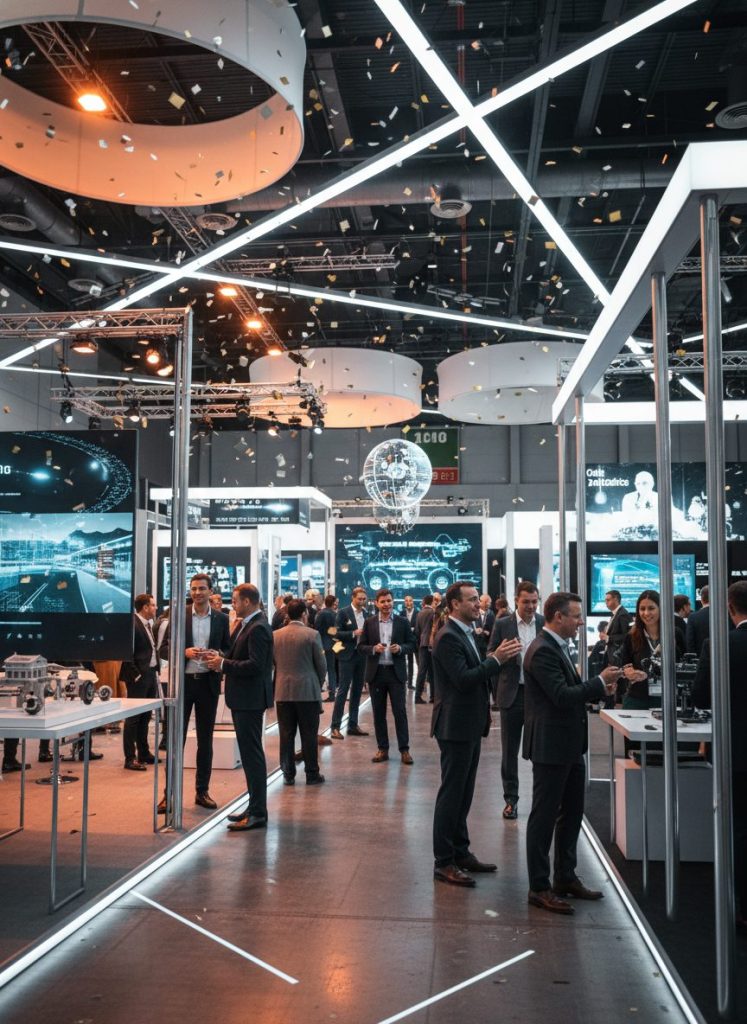
There’s a common assumption: if a booth is custom-built, it should perform better.
Maybe. But not always.
A custom Trade Show booth gives you flexibility—layout, branding, experience. But that flexibility can also create complexity. More options. More decisions. More ways to get it slightly wrong.
And on a busy show floor, “slightly wrong” is often enough to lose attention.
5 Wins That Actually Drive Results
These are patterns I’ve seen in booths that consistently perform—not perfectly, but noticeably better.
1. Clear message within seconds
The best booths don’t make visitors think too hard.
You can tell what they do in 3–5 seconds. No guessing. No decoding.
In a crowded custom Trade Show environment, clarity beats creativity more often than people expect.
2. Designed for behaviour, not just visuals
Strong booths guide movement:
- Where people stop
- Where they look
- Where conversations happen
It’s subtle. But intentional.
Others suggest that when layout is planned around behaviour, engagement tends to follow naturally.
3. Focused objective (not trying to do everything)
High-performing teams pick one primary goal:
- Leads
- Meetings
- Brand visibility
Not all three at once.
That focus shapes the entire custom Trade Show booth—from structure to staffing.
4. Alignment between design and operations
Good design is buildable. And usable.
If your team struggles with setup, power access, or flow, the booth won’t perform well—no matter how it looks.
The best booths feel smooth behind the scenes.
5. Space that supports real conversations
Not just traffic. Conversations.
Whether it’s a semi-private area or just better spacing, strong booths create moments where actual discussions can happen.
And that’s where most deals start.
5 Mistakes That Quietly Kill Performance
These don’t always look like failures. But they reduce impact more than teams realise.
1. Overloading the booth
Too many screens. Too many messages. Too much happening.
It feels impressive during planning. On-site, it feels like noise.
Visitors move on.
2. No clear entry point
If people don’t know where to enter—or feel unsure—they often won’t.
In a busy custom Trade Show, hesitation usually means lost opportunity.
3. Designing for internal approval, not visitors
This one comes up a lot.
Decisions driven by internal preferences instead of visitor behaviour:
- “We need to show everything”
- “Let’s include all product lines”
It makes sense internally. Less so on the floor.
4. Ignoring real-world constraints
Power limits. Height restrictions. rigging rules.
If these aren’t considered early, the final booth ends up compromised.
And compromises tend to show.
5. No feedback loop after the show
This might be the most expensive mistake.
Teams don’t track:
- What worked
- What didn’t
- Where people engaged
So the next custom Trade Show booth starts from scratch again.
What This Means in Practice
If you step back, the pattern is pretty simple.
The difference between wins and mistakes isn’t creativity. It’s alignment.
- Between message and design
- Between goals and layout
- Between planning and reality
And maybe that’s the shift more teams need to make.
Instead of asking:
“How do we make a better booth?”
Ask:
“What do we want people to do—and is the booth helping that happen?”
Because when a custom Trade Show booth supports behaviour, not just branding, results tend to follow.
Not always immediately. But more consistently.
References
- Center for Exhibition Industry Research (CEIR) – Exhibition Marketing Benchmark Reports
- UFI – Global Exhibition Barometer
- Event Marketing Institute – EventTrack Reports
- Harvard Business Review – Design Thinking and Business Strategy