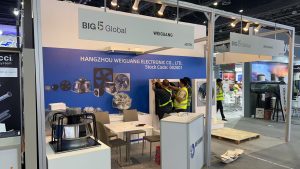
modular exhibition stands are changing how brands think about trade shows.
A few years ago, most exhibitors wanted one thing: bigger custom stands.
More height. More screens. More structure.
The assumption was simple — bigger booths created a bigger impact.
Now the conversations sound completely different.
“How quickly can this booth be rebuilt?”
“Can the structure work for multiple events?”
“What happens if the stand size changes next month?”
“Can we update the graphics without rebuilding everything?”
That shift matters more than people realise.
I noticed it earlier this year at an international manufacturing expo, where several companies that previously invested in large traditional builds switched to modular exhibition stands instead. Not smaller. Not lower quality. Just more flexible, easier to manage, and honestly, more practical for modern exhibition schedules.
Because exhibition programmes move fast now.
One-month brands need a compact setup for a regional event. The next month, they need a larger stand for an international trade fair. Permanent custom structures struggle to adapt efficiently to that kind of change.
And after watching how quickly budgets, logistics, and marketing priorities shift today, the move towards modular exhibition stands makes sense.
The real challenge for exhibitors is no longer just visibility.
It’s adaptability.
Brands want exhibition systems that can scale, evolve, and reduce unnecessary operational costs without sacrificing presentation quality. That’s one reason sustainable exhibition stands and modular systems are becoming more common across global trade shows.
Flexibility is starting to matter just as much as design.
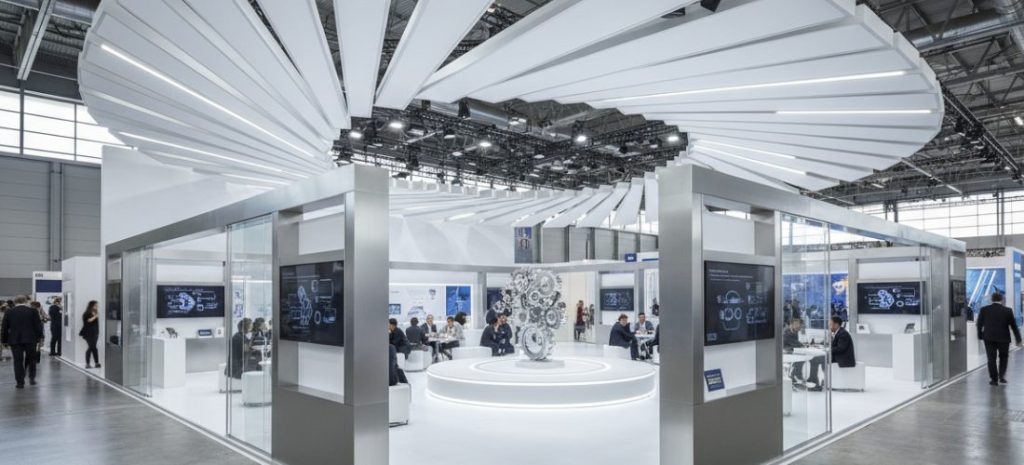
Why modular exhibition stand systems are growing fast
Traditional custom booths still look impressive.
But they also come with problems many exhibitors underestimate:
- expensive shipping
- storage costs
- rebuild limitations
- damaged materials
- slow redesign timelines
That’s where modular exhibition stand systems are becoming attractive.
Companies can reconfigure layouts for different exhibition halls, scale booth sizes depending on the event, and refresh trade show graphics without rebuilding everything from scratch.
Some exhibitors use the same modular exhibition stands for:
- regional expos
- International trade fairs
- product launches
- smaller networking events
That flexibility saves time, but maybe more importantly, it reduces operational stress.
And for brands attending multiple events yearly, that matters a lot.
Sustainable exhibition stands are becoming a business conversation, not just a trend
This part surprised me a little.
A few years ago, sustainability in exhibitions often felt more like marketing language than operational reality.
Now clients are asking serious questions about waste, material reuse, and transport efficiency.
That’s one reason sustainable exhibition stands are gaining attention across the industry. Modular systems naturally support reuse because structures can be rebuilt, resized, and repurposed across multiple events instead of being discarded after one show.
Others suggest modular systems also reduce shipping weight and storage demands, especially compared with large traditional timber builds.
And honestly, exhibitors are under pressure to justify spending now. If a booth can lower waste while also lowering long-term costs, companies usually pay attention.
The interesting part is that sustainable exhibition stands no longer look temporary or basic. Many modern systems now include:
- seamless LED integration
- premium fabric graphics
- architectural lighting
- custom branding
- interactive digital displays
Visitors often cannot tell whether the structure is modular or fully custom-built.
They just notice whether the booth feels professional.
Booth performance still matters more than the structure type
This is probably the biggest misconception in exhibitions right now.
Some companies still believe the booth itself creates results.
Usually, it doesn’t.
The strongest modular exhibition stands I’ve seen recently succeeded because they focused on:
- visitor flow
- clear messaging
- approachable meeting areas
- product interaction
- visible branding from a distance
Not because the structure was expensive.
A clean booth with strong trade show graphics and a smart layout will usually outperform a complicated stand that confuses people.
And maybe that’s why modular systems are growing faster now. They force companies to focus more on strategy and less on unnecessary construction.
Maybe flexibility is the real competitive advantage now
Exhibitions move fast.
Budgets change. Booth spaces change. Marketing priorities change.
That makes permanent structures harder to manage than they used to be.
For many exhibitors, modular exhibition stands offer something more valuable than ownership:
options.
The ability to scale.
The ability to update branding quickly.
The ability to reuse structures across different events.
The ability to adapt without rebuilding from scratch every year.
And in a market where efficiency matters more than ever, that flexibility may end up being the smartest investment on the show floor.