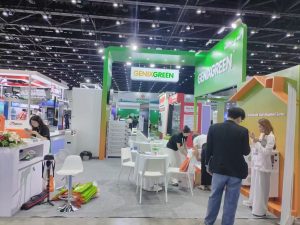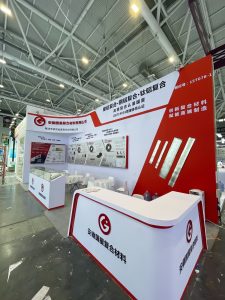
Why does one booth stay busy all day… while the one next door feels invisible?
Why do teams invest heavily in exhibitions and still struggle to prove ROI six months later?
I’ve walked enough show floors to know this isn’t random. It’s not luck either. It’s usually the gap between strategy and execution—more specifically, how trade show booth design is treated.
Most teams still see design as the final step. Something you “apply” once the plan is locked. Maybe that worked ten years ago. Today, it doesn’t hold up.
Because design doesn’t just reflect strategy, it shapes it.
The Problem: Strategy and Design Still Live in Different Rooms
In theory, everyone agrees alignment matters. In reality, the workflow often looks like this:
- Marketing defines goals
- Sales adds requirements
- Then, the design is asked to “make it work.”
That sounds efficient. It isn’t.
What happens is subtle. Strategy becomes abstract. Design becomes reactive. And the final trade show booth design ends up trying to do too much without doing anything particularly well.
You see it on the floor:
- Booths packed with screens but no clear message
- Open layouts with no reason to stop
- Teams scanning badges without real conversations
No one planned for that outcome. But the process led there.
A Better Way to Think About It: It’s a Loop, Not a Line
Here’s what I’ve noticed working with different exhibitors across industries.
The strongest results tend to come from teams that treat trade show booth design and strategy as a loop—each shaping the other, continuously.
Not perfect. But tighter.
1. Design Forces Strategic Clarity
You can’t design a physical space around a vague idea.
If your positioning is fuzzy, the booth exposes it immediately:
- Too many messages are competing
- No focal point
- No obvious “next step” for visitors
Others suggest this is where design becomes useful—not decorative, but diagnostic.
It forces hard questions:
- What’s the one thing we want remembered?
- What’s the action we care about—demo, meeting, or visibility?
If those answers aren’t clear, the trade show booth design won’t fix it later.
2. Strategy Becomes Real Through Space
This is where things shift.
Let’s say your goal is high-quality meetings. Not footfall.
Then the design should reflect that:
- Semi-private meeting zones
- Controlled entry points
- Less visual noise
But is this show about awareness?
- Taller structures
- Open access
- Strong visual anchors
Same brand. Different intent. Completely different trade show booth design.
The issue is that many teams try to combine everything. Visibility, intimacy, demos, and content capture. All in one footprint.
Maybe it works sometimes. Often, it dilutes everything.
3. The Show Floor Gives You Feedback (If You Pay Attention)
This part is usually overlooked.
During the show, your booth is generating real behavioural data:
- Where people slow down
- What they ignore
- Where staff naturally gather
I’ve seen teams adjust mid-event—moving a demo station, changing staff positions, simplifying messaging.
Small shifts. Real impact.
But here’s the gap: those insights rarely feed into the next iteration of trade show booth design. Notes get lost. Teams reset. The cycle repeats.
Where Things Quietly Break Down
Not in obvious ways. More like friction that adds up.
From what I’ve seen, a few patterns come up repeatedly:
- Over-designed, under-strategised
Looks impressive. Doesn’t convert. - Too many objectives
Trying to serve buyers, partners, media—without prioritising. - Late-stage compromises
Budget cuts or venue constraints are reshaping the concept too late. - No feedback loop
No structured way to learn from what actually happened.
None of these is purely a design issue. They sit in the space between planning and execution.
What High-Performing Teams Do Differently
Not dramatically. Just more deliberately.
Start with behaviour, not visuals
Before sketches, they ask:
- Where do we want people to stop?
- How long should they stay?
- What action matters most?
The trade show booth design follows that logic.
Align early across teams
Design, build, and operations need to talk early. If they don’t:
- Installation becomes messy
- Power and layout issues show up
- On-site stress increases
Good design is as much about feasibility as creativity.
Design with constraints in mind
Every venue has limits—height, rigging, and power.
Some teams fight them. Better teams work with them.
It usually leads to cleaner, more focused trade show booth design.
Treat each show as an iteration
This might be the biggest shift.
Instead of chasing a “perfect” booth, strong teams treat each event as a prototype:
- Test layout changes
- Adjust messaging
- Refine engagement points
Over time, results compound.
So What Should You Do With This?
Maybe the question isn’t:
“What should our booth look like?”
Maybe it’s:
“What do we want people to do—and how will the space support that?”
If you start there, trade show booth design becomes more than a cost.
It becomes leverage.
And in a crowded exhibition where attention is limited, that leverage is often the difference between activity… and actual outcomes.
But here’s something I keep coming back to after walking dozens of shows.
The difference between a good booth and a great one usually isn’t the budget. It’s clarity. When the thinking is clear, the trade show booth design follows. When it’s not, even a large spend can feel underwhelming on the floor.
There’s also a quieter layer most teams overlook—how the design supports the people working inside the booth.
If your staff don’t understand the flow, or if the space makes it hard to engage naturally, then even the best messaging won’t land properly. Good trade show booth design doesn’t just attract visitors—it supports better conversations once they arrive.
And maybe that’s where the real value sits.
Not just in getting attention, but in what happens after that first interaction. The structure, layout, and flow of the booth all influence how conversations start, how long they last, and what people remember when they walk away.
If you zoom out, the pattern becomes pretty clear.
Trade shows are not just marketing events. They’re systems where design, behaviour, and strategy all interact. And when trade show booth design is aligned with those elements, the results tend to be more consistent—and easier to repeat.
That’s the part most teams are really looking for.
Not just a booth that looks good for three days, but a setup that actually contributes to the pipeline, relationships, and long-term outcomes. And that only happens when design is treated as part of the strategy—not after it.
References
- Center for Exhibition Industry Research (CEIR) – Exhibition Marketing Benchmark Reports
- UFI – Global Exhibition Barometer
- Event Marketing Institute – EventTrack Reports
- Harvard Business Review – Design Thinking and Strategy