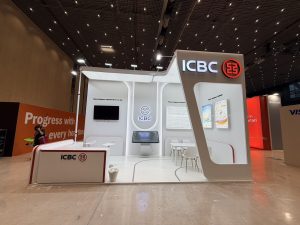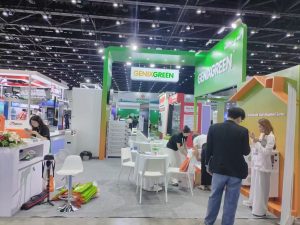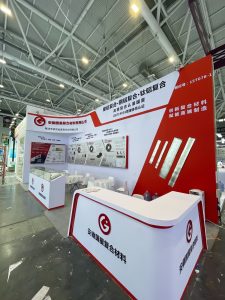
Trade Show Display is often the difference between a booth that attracts steady traffic and one that gets ignored.
Why do some booths stay busy all day… while others barely get a glance? Why do teams follow a Trade Show Booth Design Guide, tick every box, and still walk away unsure what actually worked in their Trade Show Display?
I’ve spent enough time on exhibition floors to know this isn’t about effort. Most teams do the work. They plan, design, and build a trade show booth design that follows every recommended step in the Trade Show Booth Design Guide.
The gap is usually simpler—and harder to spot.
It’s the difference between what looks right on paper and what actually works in real Trade Show Display conditions. And more often than not, a few key things in trade show booth design get ignored, even when everything seems “correct” in planning.
The Core Issue: Good Intentions, Weak Translation
Most exhibitors don’t lack ideas. They lack prioritisation.
They follow a Trade Show Booth Design Guide, including all the expected elements—branding, screens, messaging—but the final trade show display feels… flat.
Not bad. Just not effective.
And in a busy hall, “not effective” is enough to lose attention.
1. What Works: Immediate Clarity
What Gets Ignored: Decision Speed
People don’t analyse booths. They scan.
A strong trade show display answers two questions almost instantly:
- What is this?
- Is it relevant to me?
That’s it.
But many booths overload that moment with too much information. Others suggest that more detail builds credibility. Maybe. But only if someone stays long enough to read it.
Most don’t.
2. What Works: Defined Flow
What Gets Ignored: Entry Friction
Good booths guide movement without making it obvious.
You see it in:
- Natural entry points
- Clear pathways
- Subtle stopping zones
But when this is missing, people hesitate. Even for a second.
And in a crowded exhibition, hesitation usually means they keep walking.
A solid Trade Show Booth Design Guide will mention layout, but often underestimates how sensitive visitor flow really is.
3. What Works: Focused Messaging
What Gets Ignored: Internal Noise
Here’s something I’ve seen repeatedly.
Internally, teams want to show everything:
- Full product range
- Multiple industries
- Every capability
It makes sense inside the company.
On the floor, it creates noise.
A high-performing trade show display filters aggressively. It shows less—but says it clearly.
4. What Works: Real Interaction
What Gets Ignored: Passive Design
Screens, graphics, videos—they all have their place.
But they don’t replace interaction.
The booths that perform tend to create moments:
- A quick demo
- A simple question
- A reason to stop and talk
If your setup is entirely passive, engagement drops. Even if the design looks polished.
This is where a practical Trade Show Booth Design Guide should go further—not just what to include, but how it gets used.
5. What Works: Adaptation During the Show
What Gets Ignored: Live Feedback
This one is often overlooked.
During the show, your booth is giving you signals:
- Where people stop
- What they ignore
- When engagement drops
Some teams adjust:
- Moving elements
- Tweaking messaging
- Changing staff positioning
Others stick to the original plan.
Maybe it feels safer. But it also means missing easy improvements.
What This Means in Practice
If you step back, the pattern is pretty clear.
What works isn’t complicated:
- Clarity
- Flow
- Focus
- Interaction
- Adaptation
And what gets ignored isn’t dramatic either. It’s the small things that compound.
Following a Trade Show Booth Design Guide is useful. But if it stays theoretical, it won’t translate well on the floor.
A More Practical Way to Think About It
Instead of asking:
“Did we include everything?”
Maybe ask:
“Can someone understand this in five seconds—and does it make them stop?”
Because that’s the real test.
Not the render. Not the checklist. The moment someone walks past your booth.
Final Thought
Not every show will be a success. That’s realistic.
But if your trade show display is built around how people actually behave—rather than how you expect them to behave—you’ll start to see more consistency.
Better engagement.
Clearer conversations.
Fewer missed opportunities.
And over time, that’s what turns a decent booth into a reliable one.
References
- Center for Exhibition Industry Research (CEIR) – Exhibition Marketing Benchmark Reports
- UFI – Global Exhibition Barometer
- Event Marketing Institute – EventTrack Reports
- Harvard Business Review – Behavioural Design in Customer Experience