Planning your budget for a 2026 Chicago trade show? The moment you see “Chicago” on the schedule, one question likely comes to mind: What about the union rates? For decades, the city’s labour costs have been a source of anxiety for exhibitors. But a lot has changed. While rates remain high, understanding the rules, your rights, and the projected costs for venues like McCormick Place and Navy Pier is the key to creating an accurate and manageable budget. This guide breaks down the expected 2026 union rates and gives you the tools to navigate the system effectively.
Decoding the Bill: Projected Exhibitor Rates for 2026
When you get an invoice from your general contractor (like Freeman or GES), you’re not seeing the union’s base wage. You’re seeing the Exhibitor Billing Rate, which includes the base wage, benefits, contractor markup, insurance, and overhead. Based on service manuals for early 2026 events, here is what you can likely expect to budget per hour for a 2026 Chicago trade show.
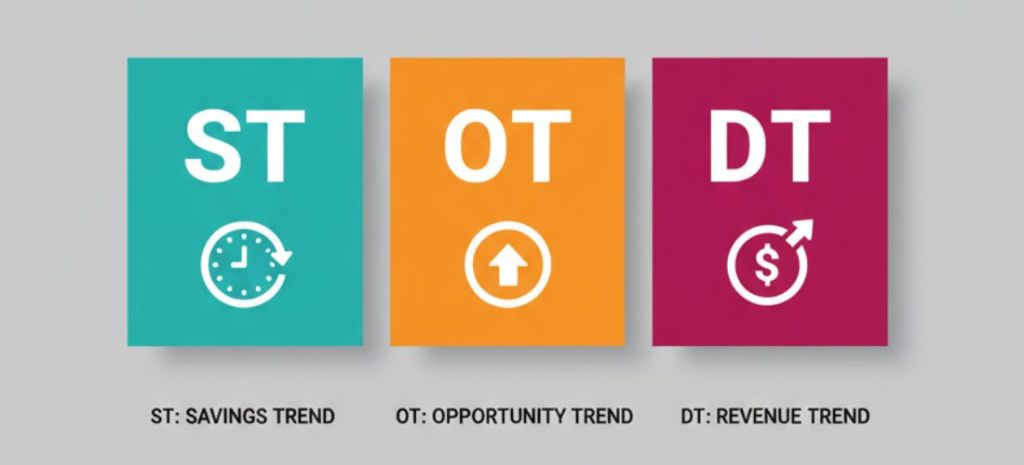
| Trade Service | Straight Time (ST) | Overtime (OT) | Double Time (DT) |
|---|---|---|---|
| Display Labour (Carpenters) | ~$138.30 | ~$207.50 | ~$276.75 |
| Electrical Labour | ~$121.30 | ~$182.20 | ~$242.65 |
| Plumbing Labour | ~$133.90 | ~$198.15 | ~$261.60 |
| Teamsters (Dock/Material Handling) | ~$99.00 | ~$134.00 | ~$167.00 |
| Audio/Visual Technicians | ~$123.00 | ~$184.50 | ~$246.00 |
It is important to note that these rates are for the first half of 2026. After new contracts are often negotiated on June 1st, others suggest these rates could increase by another 3-5%.
Understanding the Clock: Straight Time, Overtime, and Double Time
Your final labour bill isn’t just about the hourly rate; it’s about when the work happens. Timing is everything, and scheduling your setup and dismantle within the right windows can lead to significant savings.
- Straight Time (ST): This is the standard, least expensive rate. It generally applies to work performed Monday to Friday, from 8:00 AM to 4:30 PM. Some contracts have expanded this window, with McCormick Place often billing work from 6:00 AM to 8:00 AM at straight time.
- Overtime (OT): Typically charged at 1.5 times the ST rate, OT applies to work done after 4:30 PM on weekdays or on Saturdays.
- Double Time (DT): The most expensive rate, usually double the ST rate. DT is reserved for late-night work (after 10:00 PM or midnight, depending on the union), Sundays, and public holidays.
The Hidden Giant: Material Handling (Drayage) Costs
For many exhibitors, the biggest budget shock isn’t the hourly labour, but the cost of getting materials from the loading dock to the booth space. This service, called material handling or drayage, is handled exclusively by the Teamsters union in Chicago. In 2026, drayage costs in Chicago remain among the highest in the country.
Expect to budget around $2.89 per pound for crated shipments, which translates to $289.00 per 100 lbs. If your shipment arrives after the deadline, surcharges can push that cost even higher.
Your Secret Weapon: The Exhibitor Bill of Rights
Here’s the good news. Thanks to landmark reforms, exhibitors in Chicago have more power than ever to control costs. The “Exhibitor Bill of Rights” applies to both McCormick Place and Navy Pier and allows you to perform a surprising amount of work yourself.
What you CAN do:
- Set up your own booth: Full-time employees of your company can set up and dismantle their own display, regardless of its size. This includes assembling furniture and installing graphics.
- Use your own tools: You are permitted to use your own hand tools and cordless power tools.
- Handle your own electronics: You can plug in your own computers, monitors, and lamps, as long as the power requirement is under 208 volts.
- Hand-carry items: You can carry items to your booth in one trip without using dollies or carts.
What you MUST hire union labour for:
- Operating heavy equipment: Forklifts and genie lifts must be operated by Teamsters.
- High-voltage electrical: Any hard-wiring or power needs of 208 volts or more require an IBEW Local 134 electrician.
- Hanging signs: Any sign or truss that needs to be hung from the ceiling requires riggers.
- Plumbing: All water, air, and drain lines must be installed by a union plumber.
Pro Tips for Saving on Your 2026 Chicago Trade Show
- Order in Advance: Never wait until you’re on-site. Ordering labour and services before the “discount deadline” (usually 3-4 weeks pre-show) can save you 30% or more.
- Use the POV/ASUV Programme: If you’re driving a car, van, or small truck, take advantage of the Privately Owned Vehicle (POV) or Automobile & Small Utility Vehicle (ASUV) unloading areas. This allows you to bypass drayage fees entirely for items you can carry yourself.
- Schedule Smart: If possible, schedule your setup and dismantle to fall within the straight-time windows. That early 6:00 AM to 8:00 AM window can be a budget-saver.
- Know the Minimums: Most unions have a 4-hour minimum call per person. Try to group tasks together to avoid paying for four hours of labour for a ten-minute job.
While the union rates for a 2026 Chicago trade show are certainly a major budget line item, they are no longer the mysterious and uncontrollable expense they once were. By understanding the billing rates, work rules, and most importantly, your rights as an exhibitor at McCormick Place, you can plan with confidence and focus on what truly matters: a successful show.
References List
- Freeman, The Inspired Home Show 2026
- McCormick Place, Exhibitor Rights
- AV-RX, Chicago Trade Show Labor Rules.