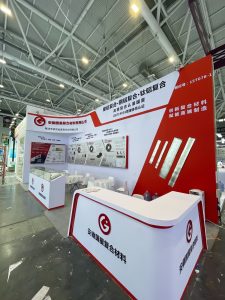
Ever stood in an exhibition hall watching other booths steal the show and thought — why aren’t we getting the same traffic? It’s a thought that hits almost every exhibitor at some point. And more often than not, the culprit isn’t the product, the team, or even the messaging — it’s the exhibition layout.
Maybe you’re a first‑timer baffled by layout options. Maybe you’ve defaulted to the “safe” corner booth for years and wondered whether you’re leaving value on the table. Or maybe you’re budgeting for your biggest show yet and need to justify a more ambitious build.
Here’s the blunt truth I learned covering trade shows: where you stand defines how you stand. Not just physically — strategically. From corner booths to island‑style booths, choosing the right exhibition layout can make the difference between meeting people and being passed by.
Let’s unpack what actually matters, in plain terms.
1. The Challenge: Layout Choices That Feel Bigger Than They Are
Exhibition layout isn’t just real estate. It’s psychology. It’s visibility. It’s traffic flow.
At its simplest:
- Corner booths feel safe, affordable, and obvious — but they can bottleneck attention.
- Inline booths are predictable and cost‑effective — and that’s often why people choose them.
- Peninsula booths give you two open sides — and double your chance to pull in crowds.
- Island‑style booths are the big kids on the block: spacious, open, and impossible to ignore — but expensive and not right for every brand.
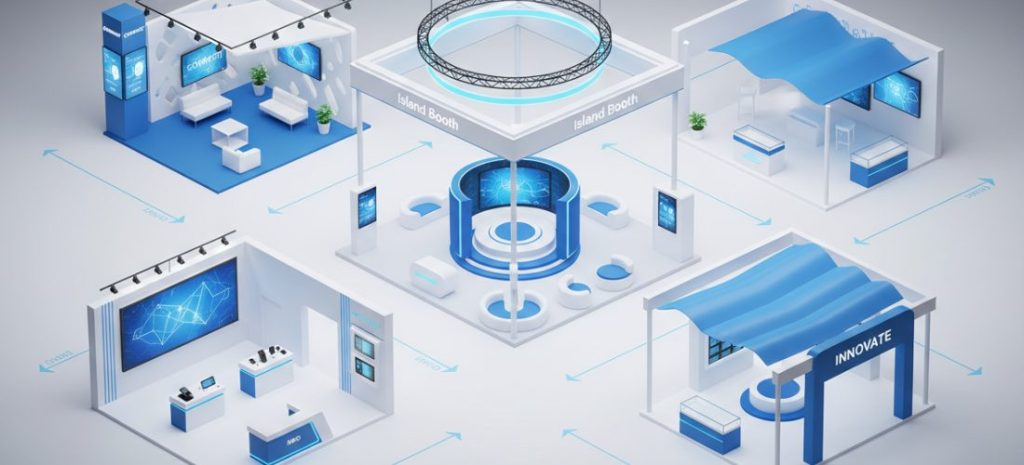
Others suggest that the “best” layout is the one that fits your strategy, not just your budget. And many teams skip that first step: Define what success looks like before you pick the shape of your booth.
So let’s actually do that.
2. What Your Exhibition Layout Says About Your Goals
Before you choose a configuration, ask yourself:
- Are you trying to intercept foot traffic or invite purposeful conversations?
- Do you need space for demos or private meetings?
- Is brand awareness more important than lead quantity?
If your goals include high engagement and memorable interactions, there’s a layout dependency you can’t ignore.
Corner Booths — Best for Cost‑Conscious Visibility
Corner positions give you two open sides — that’s better than inline, where only one side faces the aisle. If you’re new or cautious, a corner booth can help you break out of the noise.
But here’s the reality: corners still funnel people in predictable ways. Foot traffic doesn’t linger unless something truly grabs attention.
Inline Booths — Predictable, Affordable, but Limiting
Inline booths are often the default. They’re straightforward and predictable, and if your show goals are about presence more than outreach, they do the job.
If your priority is lead volume over engagement quality, inline might be enough. Just don’t expect to stop a crowd unless you have something remarkable to show.
Peninsula Booths — Extra Exposure Without Full Island Cost
Think of peninsula booths as the compromise. Two sides exposed to traffic, space to create a branded experience, but usually still cheaper than a full island.
People entering from multiple directions means more eyeballs. And eyeballs often translate to conversations.
Island‑Style Booths — Room to Breathe, Space to Interact
This is where things get interesting.
Island‑style booths are open on all sides. No walls. No barriers. It’s like a stage in the middle of the crowd.
If your goal is brand impact, immersive experiences, demos, or meetings, this layout delivers. It gives you room for product showcases and group interactions — and importantly, it invites people in rather than waiting for them to walk by.
But here’s a human truth: space alone doesn’t equal engagement. You still need compelling content, staff readiness, and clear pathing.
3. How Traffic Flow Changes Everything
Once, at a mid‑sized tech expo, I shadowed two neighbouring booths:
- One was a peninsula with demos and staff proactively greeting.
- The other was an inline with minimal signage and staff seated behind tables.
Guess which drew bigger crowds?
It wasn’t the booth type. It was the flow strategy. The peninsula booth team had mapped how visitors moved through the hall and positioned themselves accordingly. They weren’t passive — they intercepted.
The takeaway? Traffic patterns matter as much as layout type. Good exhibition layouts work with traffic, not against it.
If you can design your stand so that visitors naturally walk through — not around — you’ve already won half the battle.
4. Budget vs. Impact — The Hard Trade‑Off

Let’s be honest: island‑style booths aren’t cheap. They take space, engineering, and staffing muscle. But they can pay dividends if you’re committed to high‑impact engagement.
For smaller brands or first‑timers, cornertable booths or inline spaces give you room to learn without massive risk.
Others suggest you test smaller layouts early and invest bigger once you understand what gets people to stop, talk, and convert.
That’s not generic advice. That’s how many seasoned teams protect their budgets while still winning bigger in the long run.
5. Practical Suggestions Before You Book Anything
Here’s a simple checklist I use when I talk to organisers, planners, and exhibitors:
- Define your measurable goals first — don’t choose layout based on gut alone.
- Know the venue traffic flow — get maps, understand peak crowds.
- Plan engagement strategies before booth construction — what will visitors do at your space?
- Consider staff rotation and training — open layouts are only powerful when staff actively engage.
- Test messaging from aisle view — if people can’t read your value in 3 seconds, you’ve lost them.
Maybe the right layout is obvious once you stop thinking about space and start thinking about behaviour.
Final Take
Here’s how I like to put it when I’m in the press pit at a busy expo: Exhibition layout isn’t decoration — it’s strategy.
And the best layout isn’t universally fixed. It’s the one that aligns with your goals, your traffic patterns, and your ability to engage visitors meaningfully.
Maybe for you that’s an island‑style showcase. Maybe it’s a smartly used corner that gets big results on a smaller budget. Or maybe you find success with something between, trading space for intention.
Whatever you choose, do it with purpose — not default.
References
- Kotler, P. & Keller, K.L. Marketing Management — strategic insights on buyer behaviour and marketing approaches.
- Trade Show Executive — industry trends influencing exhibition success and booth strategy.