
When a Standard Booth Just Isn’t Enough
Every trade show has that one booth everyone notices.
You know the one. People stop, look up, take photos. From the other side of the hall, the structure rises above the crowd like a small building inside the exhibition centre.
Most of the time, that’s a Double-deck Booth.
But here’s the real question exhibitors ask me: Is it worth the investment? Or is it just an expensive way to look impressive?
From what I’ve seen covering international exhibitions, a Double-deck Booth works brilliantly—but only when the design actually supports the visitor experience. Otherwise, it’s just a tall structure with stairs.
So let’s talk about what separates a smart double-level booth from one that wastes valuable floor space.
Why Brands Choose a Double-deck Booth
Trade show floors are crowded. Every brand is fighting for the same thing: attention.
A Double-deck Booth solves one major limitation—space.
Instead of expanding outward, you build upward. That gives brands several advantages:
- Higher visibility across the exhibition hall
- More usable floor area without increasing footprint
- Separate spaces for meetings, demos, or VIP clients
Others suggest that the real value isn’t just the extra space. It’s control over visitor flow.
If designed well, the ground floor attracts attention while the upper level offers a quieter environment for serious conversations.
In other words, one structure serves two different purposes.
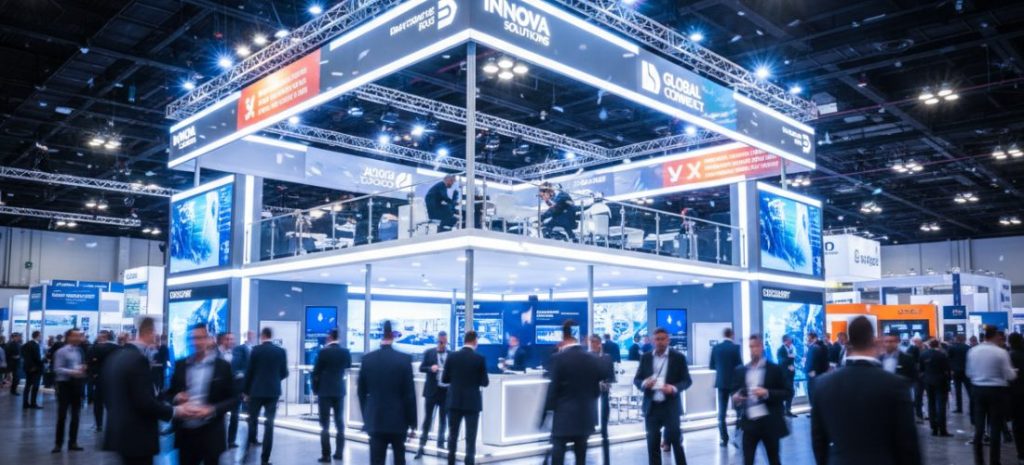
Design Tip #1: Use Height for Visibility, Not Just Space
The biggest mistake I see? Brands build a Double-deck Booth but forget why they did it.
Height should work as a visual beacon.
That means:
- large overhead branding
- visible lighting features
- clear logo placement facing main aisles
If people can’t recognise your brand from 30 metres away, the extra level isn’t doing its job.
Some exhibitors even treat the upper level like a billboard—simple, bold messaging that pulls visitors toward the booth.
Design Tip #2: Separate Public and Private Spaces
One of the smartest uses of a Double-deck Booth is layered interaction.
Think about how visitors behave at trade shows:
Most people are browsing.
A few are serious buyers.
The ground floor should stay open and inviting—product displays, interactive screens, quick conversations.
The upper deck, however, can serve a different purpose:
- private meeting rooms
- hospitality lounges
- VIP client discussions
This separation helps serious negotiations happen without the noise of the show floor.
Design Tip #3: Control the Traffic Flow
A double-level structure changes how visitors move through your booth.
Without planning, people may hesitate to climb the stairs—or worse, they miss the upper level entirely.
Good designs usually include:
- visible staircases from main walkways
- clear signage inviting visitors upstairs
- staff encouraging qualified leads to move up
If the second level feels hidden or exclusive in the wrong way, it may sit empty while the ground floor stays crowded.
Balance matters.
Design Tip #4: Don’t Ignore Structural and Safety Requirements
This part isn’t glamorous, but it matters.
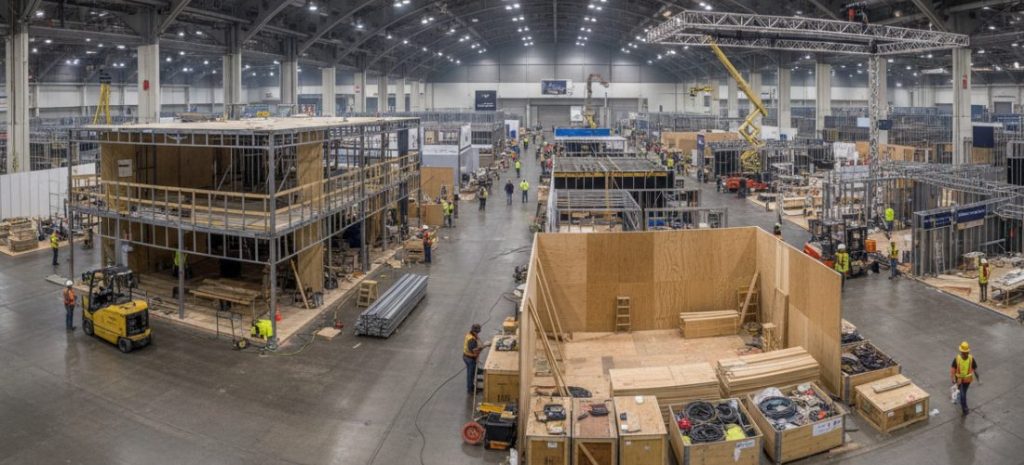
Building a Double-deck Booth involves strict safety approvals. Exhibition organisers usually require:
- engineering certification
- fire safety compliance
- load calculations
- structural inspections
Different venues have different regulations, especially in the US, Europe, and Asia.
Others suggest starting these approvals months before the show, because structural reviews can slow down the design process if handled too late.
Design Tip #5: Focus on Experience, Not Just Architecture
A tall booth may attract attention, but attention alone doesn’t generate leads.
The real value of a Double-deck Booth comes from the experience inside it.
Ask a simple question:
What will visitors actually do in this space?
Maybe they’ll:
- test products
- watch demonstrations
- meet sales teams
- relax in a lounge area
If the structure supports these interactions, the booth becomes memorable. If not, it becomes expensive decoration.
The Takeaway
A Double-deck Booth isn’t just about building higher—it’s about designing smarter.
When used well, it can:
- increase visibility across the exhibition hall
- create multiple engagement zones
- improve meeting quality with potential clients
But if the design ignores visitor behaviour, the second level becomes empty space.
The best booths I’ve seen follow a simple rule: every square metre has a purpose.
And maybe that’s the real lesson.
Trade shows aren’t about building bigger structures. They’re about creating environments where conversations—and business—actually happen.
References
Exhibitor Online – Trade Show Booth Design Strategies
UFI– Global Association of the Exhibition Industry Reports
