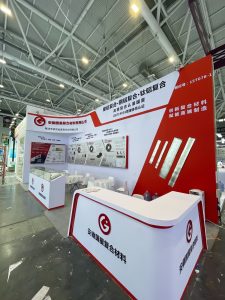
Hook — So You’re Staring at a Blank Floor Plan… Again
Ever stood in front of a raw, open exhibition hall and thought, “How the hell do we make this stand actually work for us?” It’s a question I’ve heard from dozens of exhibition teams over the past few months — and it’s getting louder as shows get more competitive. Exhibitors aren’t just fighting for attention; they’re fighting for memory. Visitors don’t remember shells with tacky banners. They remember experiences.
That’s where Exhibition Stand Design Trends 2026 matter, not as buzzwords for agency promo decks, but real strategic levers that can make — or break — your ROI at the show.
In this piece, I dive into what I’m seeing on the floor, what clients are asking for, and which ideas might actually land in 2026.
The Core Challenge — Why Design Still Matters (More Than Ever)
Most teams walk into an event thinking about logos and furniture. That’s backwards.
Here’s the reality:
- Attention spans are microscopic — people judge within seconds.
- Competition isn’t just next door — it’s on every screen and activation.
- Your best clients now expect something. Not just a booth.
So the goal for Exhibition Stand Design Trends isn’t just “look cool”. It’s about signalling value in an instant, and making people feel — for a moment — that your stand was worth finding in a sea of noise.
And maybe that’s why we’re moving past flat, rectangular islands and into layouts that feel like they mean something.
Trend #1 — Zones That Work Like Mini Experiences
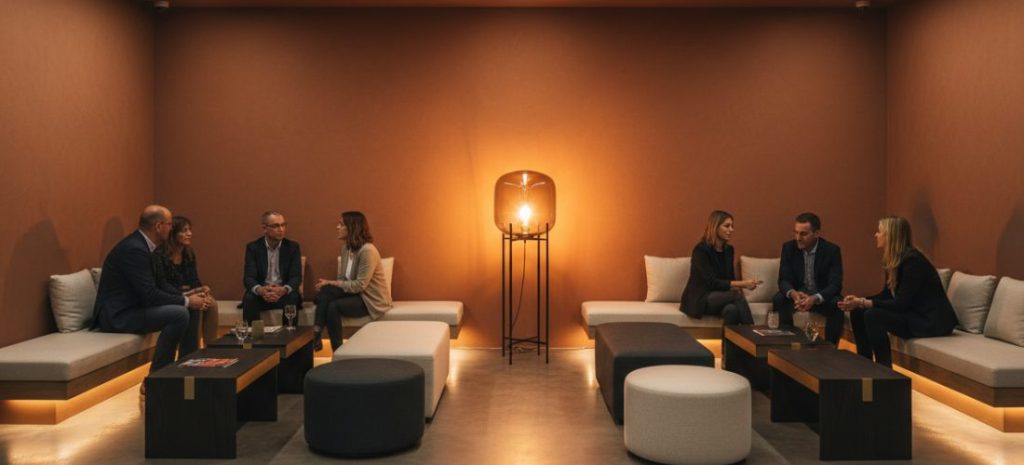
If 2025 was about modular blocks, 2026 is about zones with purpose.
Instead of one open space with a table and chairs, I’m seeing stands carved into:
- Discovery zones — walk‑in spaces that tease curiosity.
- Demo theatre zones — not just screens, but places that host attention.
- Quiet zones — yes, really — spaces to talk without noise.
Smart people suggest that these zones reflect human behaviour. Visitors don’t want to be trapped; they want to be guided. So stands aren’t flat anymore — they’re sequential.
This matters because it actually influences attention — not in a gimmicky way, but in a psychological one.
Trend #2 — The Rise of Asymmetric Layouts
Squares used to be the safe play. Now they’re the boring play.
What I’m noticing across big tech shows, industry events and curated exhibitions is:
Asymmetric layouts that feel dynamic.
Not random. Not weird.
Just:
- Diagonals that draw you in.
- Elevated meeting pods off to the side.
- Walkways that don’t just lead but show.
Why does this work? Because humans don’t like predictability. Our eyes jump to contrast, unusual shapes, sights that break the pattern. If done well, this approach keeps dwell time up — and that’s huge.
Others suggest this could be a faux trend — just design for design’s sake — but the data seems to support it. Anecdotally, visitors cluster more organically in spaces that feel less engineered.
Trend #3 — Tech You Actually Use (Not Just Flash)
Look — everyone’s talking about VR and holograms. But let’s be real:
Most visitors tune out gimmicks.
Here’s what’s landing better in 2026:
- Augmented reality guides — AR layers that help people self‑navigate your stand.
- Touchless experiences — not because it’s sanitary, but because it feels modern.
- Simple interactive walls that respond to presence, not just buttons.
If a technology doesn’t answer a human question, it’s just decoration.
The trick is to choose tech that answers basic visitor needs:
“What do you do?”
“What’s new here?”
“Why does this matter to me?”
Tech should answer those, not distract from them.
Trend #4 — Brand First, Furniture Second
The old way was: pick furniture, slap a logo on the wall.
The new way is:
Design from the brand story outward.
This trend is less about furniture and more about narrative placement:
- Where does your brand story start?
- Where does it build?
- Where does it convert interest into action?
I spoke with a few designers who are now layering brand narrative into the physical layout — not just colours.
A chill lounge area might tell a story of trust
A discovery wall might showcase innovation
A demo theatre might position authority
This keeps your space from feeling like a collection of chairs and screens — and more like a journey.
Maybe this sounds obvious — but you’d be surprised how many stands still put brand at the end of the experience rather than the beginning.
Trend #5 — Sustainability Isn’t Optional
2026 isn’t just another year — it’s the year sustainability becomes baseline.
Visitors are asking:
- “Is this recyclable?”
- “Can this be reused?”
- “Where did this material come from?”
If you’re not ready with answers, it might as well not exist.
I’ve seen stands built with:
- Reclaimed wood
- Modular reuse systems
- Zero‑waste graphics
- Eco‑friendly lighting
And the subtle thing I’ve noticed? These stands often feel warmer, less sterile, and people linger longer.
Sustainability isn’t just a checkbox anymore — it’s design language.
What This Means for Your Next Show
So where does this leave teams planning their next big show?
Here’s how I’d approach it (and clients are doing this):
- Start with human behaviour, not logos.
How do people walk? Where do they pause? What do they ask? - Create purposeful zones.
Don’t just fill space — define why each area exists. - Use tech to answer questions, not impress.
If it doesn’t help someone decide or explore — cut it. - Build the brand narrative into the layout.
Your stand should tell a story, not just display one. - Make sustainability part of the aesthetic.
Let people feel that you’ve thought beyond the show.
If you move with these Exhibition Stand Design Trends in mind, your next stand won’t just be seen — it’ll be remembered.
Reference List
- Reading the Room: Designing effective exhibitions with emotional impact in mind — Museum Magazine / American Alliance of Museums (2025)
- Trade Show Executive: Smart Moves, Strong Markets 2025 — Trade Show Executive Media (Nov 2025)