Why do some booths feel busy all day… while others never quite get going?
Why do teams invest in a show, build something decent, and still walk away unsure if it worked?
I’ve been on enough exhibition floors to know this isn’t just bad luck. And it’s probably not just budget either.
More often, it comes down to how the trade show display is planned—what it prioritises, what it ignores, and how well it connects with actual visitor behaviour. Some booths get it right. Others look fine, but don’t really perform.
Here’s what I’ve seen make the difference.
The Core Issue: Visibility Doesn’t Equal Engagement
A lot of teams focus on being seen.
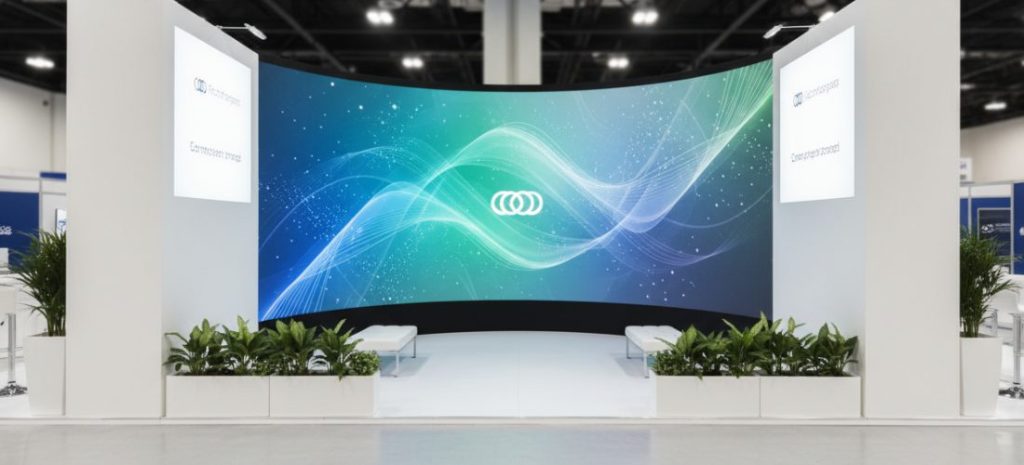
Big graphics. Bright lights. Large screens.
And yes, visibility matters. But a visible trade show display doesn’t guarantee people will stop, engage, or remember anything afterwards.
That’s the gap.
The booths that work tend to go beyond visibility. They’re built around how people move, decide, and interact—often in just a few seconds.
1. Clarity Over Complexity
This sounds obvious, but it’s where many booths struggle.
If someone walks past your trade show display, they should understand what you do almost instantly. Not everything—just enough to decide whether to stop.
I’ve seen booths with:
- Multiple headlines
- Competing visuals
- Too much product information
It feels thorough internally. On the floor, it feels confusing.
Others suggest that reducing information actually increases engagement. It gives visitors a reason to step in and ask.
2. A Defined Entry Point
Here’s something subtle but important.
If people aren’t sure where to enter, they often won’t.
A strong trade show display makes the entrance feel obvious:
- Open, but intentional
- Inviting, not ambiguous
If the layout creates hesitation—even for a second—you lose people. And in a busy hall, they rarely come back.
3. Designed for Dwell Time, Not Just Traffic
Getting people to stop is one thing. Keeping them there is another.
High-performing booths think about:
- Where conversations happen
- How long can someone comfortably stay
- Whether the space supports interaction
If your trade show display only works for quick passers-by, you might get traffic—but not much depth.
And depth is where real opportunities usually come from.
4. Alignment Between Message, Design, and Team
This one is often underestimated.
You can have a strong visual setup, but if your team’s messaging doesn’t match—or if the flow makes it hard to engage—the experience breaks.
Good booths feel consistent:
- What you see matches what you hear
- What you hear matches what you can do next
When that alignment is off, visitors notice. Maybe not consciously, but it affects how long they stay.
5. Built for Real-World Conditions
This is where things get practical.
Every venue has constraints:
- Power limitations
- Height restrictions
- Rigging rules
If these aren’t considered early, the final trade show display often ends up compromised.
I’ve seen last-minute adjustments that change the entire feel of a booth. Not dramatically—but enough to reduce its impact.
Better teams plan for reality, not just concept.
What This Means on the Show Floor
If you step back, the pattern is fairly clear.
Booths that perform well don’t just look good. They work well.
They guide attention.
They reduce friction.
They support real interaction.
And maybe that’s the shift.
Instead of asking:
“How do we make our trade show display stand out?”
It might be more useful to ask:
“How does this display help someone decide to stop, engage, and continue the conversation?”
Because that’s where performance actually comes from.
A Final Thought
Not every show will deliver perfect results. That’s realistic.
But if your trade show display is aligned with behaviour, not just branding, outcomes tend to improve over time. More engagement. Better conversations. Clearer signals on what’s working.
And that makes the next show easier to plan.
References
- Centre for Exhibition Industry Research (CEIR) – Exhibition Marketing Benchmark Reports
- UFI – Global Exhibition Barometer
- Event Marketing Institute – EventTrack Reports
- Harvard Business Review – Design Thinking and Business Strategy