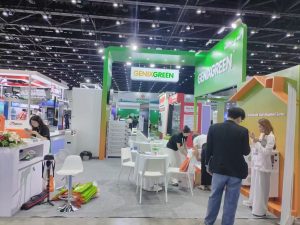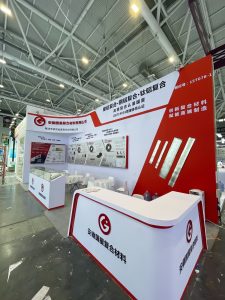
Are you spending too much on trade shows and getting too little back?
Are you wondering whether a massive custom stand is worth it when budgets are tighter, shipping costs keep climbing, and event ROI is under more scrutiny?
Fair questions.
I’ve seen plenty of exhibitors assume bigger equals better.
Often, it doesn’t.
In many cases, portable trade show booth displays are doing something larger builds struggle to do: staying flexible, controlling costs, and still generating results.
That’s why more brands — especially growing firms and repeat exhibitors — are rethinking the portable route.
And honestly, it makes sense.
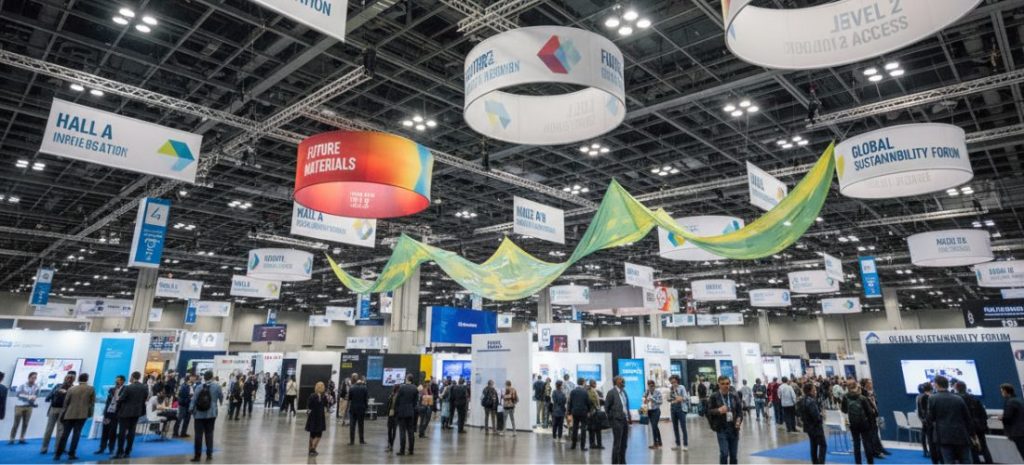
The Problem With Overbuilt Trade Show Programmes
A lot of exhibitors overcommit.
They build for one major show… then try forcing the same structure into smaller events, regional expos, distributor meetings, or product roadshows.
It rarely fits.
Storage costs stack up.
Freight costs creep.
Installation fees surprise people.
Then, suddenly, the booth designed to impress becomes hard to justify.
That’s where portable trade show booth displays enter the conversation.
Not as a compromise.
As a strategy.
Because portability often means repeatability.
And repeatability often improves ROI.
Portable Doesn’t Mean Basic Anymore
This is where perceptions lag behind reality.
Some still think portable means cheap pop-up banners and folding tables.
That’s dated.
Modern pop-up trade show booth systems can include:
- Backlit fabric graphics
- Modular frames
- Integrated shelving
- Demo counters
- Media displays
- Lightweight branded structures
- Reconfigurable layouts for multiple footprints
Some setups look surprisingly close to custom environments.
But cost less to transport.
Cost less to install.
And often move faster.
That matters.
Why Smaller Footprints Can Convert Better
This sounds counterintuitive.
But maybe bigger spaces sometimes create more friction.
Visitors hesitate to enter oversized, over-designed stands.
Compact layouts can feel more approachable.
That’s one reason table top displays still remain relevant, especially for conferences, networking expos, and lead-gen events where face-to-face conversation matters more than theatre.
A well-designed tabletop setup with sharp messaging can outperform a bloated booth with no traffic flow.
I’ve seen it.
Others in the industry suggest the same.
Attention is not always won by scale.
Often it’s won by clarity.
The Economics Are Hard to Ignore
Let’s be practical.
If your exhibition strategy includes six shows a year, the maths changes.
A reusable pop-up trade show display booth may lower costs across:
- Shipping
- Drayage
- Storage
- Labour
- Installation
- Reconfiguration
- Asset replacement
That’s not small.
And if the saved budget funds more shows, better lead follow-up, or stronger product demos…
That may be a better growth decision.
The stand itself isn’t the strategy.
It supports the strategy.
Big difference.
Where Portable Systems Tend to Win
I keep seeing portable trade show booth displays perform well in five scenarios.
1. Companies Testing New Markets
If you’re entering a market and still validating demand, committing to heavy custom builds can be premature.
Portable systems reduce risk.
Simple.
2. Multi-Show Programmes
If one asset can support ten events instead of one, economics improve fast.
That’s where modular pop-up trade show booth systems often shine.
3. Smaller Booth Spaces
10×10 and 10×20 spaces often benefit from efficient portable design more than overcomplicated structures.
Sometimes less is genuinely more.
4. Fast Turnaround Events
Some events move quickly.
Portable systems can support rapid deployment without heavy contractor dependencies.
Useful if timing matters.
5. Sales-Led Exhibiting
If the event is mostly about conversations and appointments, tabletop displays may be enough.
Not every show needs architecture.
What Buyers Often Overlook
People compare purchase prices.
But maybe they should compare the total ownership cost.
Different metric.
A £6,000 portable system reused over five years may outperform a £30,000 one-off build.
Especially if updates are modular.
That’s where many pop-up trade show display booth buyers are getting smarter.
They’re buying systems.
Not one-off booths.
And that changes procurement logic.
But Portable Has Limits
Worth saying clearly.
Portability isn’t right for every event.
If you’re exhibiting at a flagship international show where competitors are investing heavily, a lightweight setup may underrepresent the brand.
There are trade-offs.
Maybe this show needs a custom island.
Maybe another works with a modular pop-up trade show booth.
Both can be true.
Fit matters more than ideology.
What Strong Portable Programmes Usually Have
The better-performing exhibitors I’ve watched tend to focus on a few basics.
Not gimmicks.
Basics.
They prioritise:
Clear messaging
Can visitors understand what you offer in three seconds?
Fast setup
Complexity tends to kill portability.
Reusable graphics
Easy refresh, lower replacement cost.
Flexible components
One system. Multiple configurations.
Lead capture process
Because the stand doesn’t close deals. Sales follow-up does.
Seems obvious.
Still often missed.
Sustainability Is Pushing This Trend Too
Another factor worth mentioning.
Sustainability pressures are changing stand decisions.
Reusable portable trade show booth displays often align better with lower-waste exhibition strategies.
Less disposable building material.
Less freight.
Longer asset life.
That matters increasingly, especially for larger procurement teams.
Some buyers now ask about this early.
Five years ago, many didn’t.
Suggestion: Stop Asking “Portable or Custom?”
Maybe wrong question.
Ask:
What outcome does this event need?
If it’s lead generation at regional shows…
Portable may win.
If it’s major brand positioning…
Custom may win.
If you attend multiple event types…
Maybe a hybrid model wins.
That’s where many firms seem to be heading.
Custom hero stand.
Portable supporting system.
Smarter portfolio.
The Bigger Point
This isn’t really about booths.
It’s about capital allocation.
And maybe too many exhibitors still spend based on habit.
Not a strategy.
A good pop-up trade show display booth is not valuable because it folds into a case.
It’s valuable if it supports revenue efficiently.
That’s the lens.
And when you view portable trade show booth displays through that lens, they stop looking like “budget options”.
They start looking like scalable infrastructure.
Very different category.
References
- Harvard Business Review — Marketing ROI and Experiential Strategy
- Freeman Trends Report — Attendee Engagement Research
- Event Marketer — Trade Show and Live Marketing Insights
- ESSA UK — Exhibition Supplier Best Practice