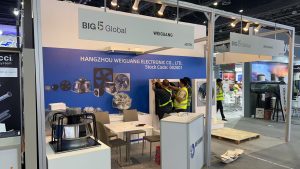
Sustainable exhibition stands are rapidly transitioning from a corporate public relations trend to a strict operational necessity for international B2B enterprises. Every trade show season, corporate marketing directors fly teams across oceans only to participate in a deeply wasteful commercial ritual. You pay an overseas contractor a massive premium to construct a beautiful, custom timber stand, use it for exactly seventy-two hours, and then watch a local teardown crew smash it apart with crowbars.
According to a global supply chain analysis published by the Harvard Business Review, international regulatory frameworks are tightening around industrial waste, making single-use temporary assets a major liability for multinational corporations. Continuing to burn through your marketing capital on disposable MDF and toxic paint finishes is no longer just an environmental issue; it is a direct operational cash leak. Transitioning your event strategy to premium sustainable exhibition stands is the only logical path to protect your international marketing margins.
The hidden financial drain of traditional trade show construction is driven by local venue labor monopolies and skyrocketing material inflation in major exhibition hubs like Frankfurt, Las Vegas, or Dubai.
Others suggest that utilizing sustainable exhibition stands means sacrificing brand prestige or looking generic on the show floor. That is an outdated misconception.
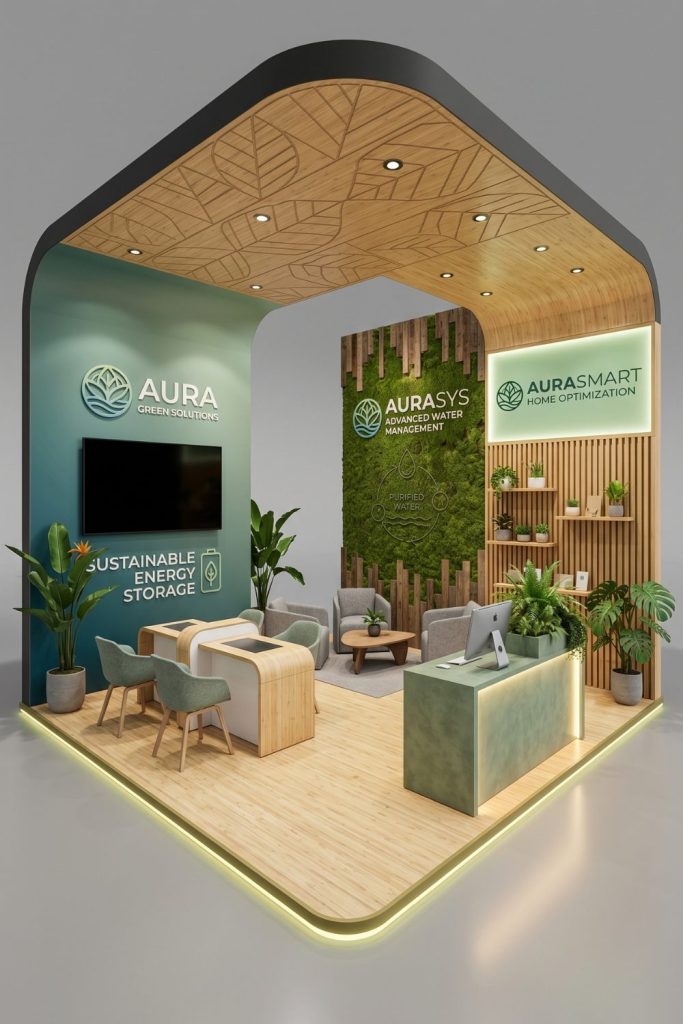
Modern architectural engineering has advanced to a point where eco-friendly structural systems deliver a cleaner, more premium aesthetic than traditional carpentry. By adopting structural aluminium frame matrix designs, forward-thinking enterprises are discovering that sustainable exhibition stands allow them to build complex, multi-story pavilions that are entirely reusable, infinitely scalable, and completely waste-free.
The Real Economics of Reusable Event Infrastructure
To justify the transition to eco-friendly event structures to your board of directors, you must look directly at the hard financial metrics over a 24-month operational cycle. Deploying certified sustainable exhibition stands completely flips the math on your event overhead through three specific cost-reduction channels.
- Logistics and Freight Optimization: Traditional timber custom builds require massive heavy freight trucks or ocean containers to haul tonnes of painted wood across borders. Premium sustainable exhibition stands utilize high-tensile, lightweight aluminium alloys that pack completely flat into modular, wheeled transit crates. This structural optimization can lower your international freight forwarder’s billing by up to 50%.
- Radical Labor Efficiency: A standard wood exhibit requires specialized teams of on-site carpenters, painters, and riggers working around the clock under high-stress union labor rates. Choosing highly engineered, sustainable exhibition stands eliminates this complexity entirely. Because the structural engineering is built directly into the reusable hardware, a small internal setup crew can assemble the entire perimeter using simple hex keys, avoiding massive local labor surcharges.
- Long-Term Asset Amortization: When you purchase high-grade sustainable exhibition stands, you stop treating event marketing as a recurring, disposable expense. The underlying structural hardware sits on your corporate balance sheet as a depreciable physical asset. You own the infrastructure; you only update the localized marketing media.
By decoupling your structural architecture from single-use materials, your choices in sustainable exhibition stands shift your budget from paying for temporary site labor to building a scalable asset network. The result is a dramatic increase in international marketing ROI across every single event on your global corporate calendar.
The Operational Strategy for Green Exhibition Management
If you are tasked with aligning your company’s global trade show footprint with modern corporate environmental, social, and governance goals, here is the exact blueprint for deploying sustainable exhibition stands:
- Standardize Your Master Structural Framework: Design a master modular frame system based on your largest planned exhibition footprint (such as a 6m x 6m island space). Ensure this specific framework can be easily broken down and reconfigured into smaller configurations for smaller regional venues.
- Transition to High-Density Tension Fabric: Eliminate rigid plastic PVC graphic panels and heavy painted particle boards. Switch to premium tension fabric graphics that use water-based inks and are fully recyclable. These fabrics pack down into the size of a standard garment bag, eliminating the risk of transit damage while slashing weight.
- Rent Local Support, Own the Hardware Core: Retain ownership of your primary structural sustainable exhibition stands hardware to maintain consistent engineering quality worldwide, but partner with an international supplier network that can manage localized warehousing, customs clearance, and local graphics printing near the convention hall. For comprehensive execution strategies, review the customized setups provided on our exhibition services network.
The competitive reality of international B2B marketing demands a shift away from legacy waste. By transitioning your budget from single-use custom construction into highly engineered sustainable exhibition stands, you protect your capital, streamline your logistics, and secure a massive operational advantage before your team even sets foot on the convention floor.