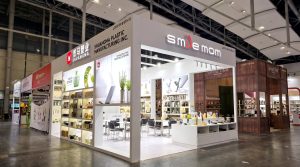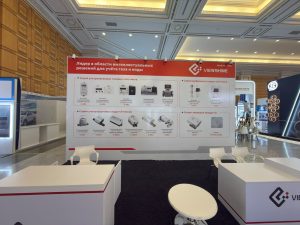
An energy storage trade show is now one of the fastest-growing stages in the global exhibition industry, and the calendar behind it has never been busier. Battery makers, inverter suppliers, EPCs, and grid-service companies all compete for the same buyers, and the stands that win attention are engineered for that competition — not improvised two weeks out. This guide maps the shows worth booking for the 2026–2027 season, explains how to design a booth that resonates with storage buyers, and covers the shipping, safety, and budget details that separate a smooth build from an expensive one.
Why Energy Storage Trade Shows Deserve a Bigger Budget
Energy storage has moved from a side stage at solar events to headline billing. The clearest signal is how the biggest organizers now structure their halls: in Munich, ees Europe — Europe’s largest exhibition for batteries and energy storage systems — runs as one of the four co-located shows inside The smarter E Europe, and the same pattern repeats in Beijing, Guangzhou, and Melbourne. Storage is no longer a sub-category of solar; it anchors its own expo calendars, its own conference tracks, and increasingly its own dedicated venues.
For exhibitors, that shift changes the buying audience. Instead of walk-in traffic, you meet utility procurement teams, industrial and commercial project developers, distributors building storage portfolios, and data-centre operators — buyers who arrive with technical specifications and multi-year sourcing plans. A booth that treats them like generic trade-show traffic — a logo wall and a counter — leaves the real conversations to competitors who brought demo units, live monitoring dashboards, and engineers on the stand.
The Energy Storage Trade Show Calendar Worth Booking
Five shows currently define the circuit for international storage brands. Dates below were confirmed with organizers or official venues in October 2026 — always re-check before signing a space contract, since mega-shows occasionally shift halls or venues.
ESIE 2027 — Beijing, 17–19 March 2027
The Energy Storage International Expo and Summit (ESIE), now in its 15th edition, is China’s flagship storage event, organized by the China Energy Storage Alliance (CNESA) together with the China Energy Research Society and the CAS Institute of Engineering Thermophysics. ESIE 2027 moves to the Capital International Exhibition and Convention Center with an expanded 160,000 sqm of exhibition space, a move-in window of 13–16 March, and daily show hours of 9:00–17:00. Recent editions drew more than 260,000 professional visits, with organizers reporting that over half of visitors hold direct purchasing authority — one reason the event also packs in 40+ technical forums alongside the floor.
WBE 2027 — Guangzhou, 13–15 August 2027
The World Battery & Energy Storage Industry Expo (WBE), co-located with the 12th Asia Pacific Battery Show and Asia Energy Storage Expo, fills Area A of the Canton Fair Complex. Combined with the parallel solar PV and hydrogen expos on site, organizers list roughly 300,000 sqm of total exhibition space across the cluster. For budgeting, published exhibitor rates put raw space at USD 320 per square metre for foreign companies, with a deluxe 9 sqm shell package at USD 3,500 — useful benchmarks even if you plan a custom build, because they anchor what organizers expect per square metre in this market.
The smarter E Europe / ees Europe 2027 — Munich, 8–10 June 2027
Intersolar Europe, ees Europe, Power2Drive Europe, and EM-Power Europe share Messe München from 8–10 June 2027, with the accompanying conferences running 7–8 June at the ICM. This is where European storage demand concentrates: residential and C&I battery systems, grid-scale integrators, and the continent’s full PV-storage supply chain in one walk. Published 2027 space rates run from €279 per square metre (re-booking rate, row booth) up to €377 (regular island rate) excluding VAT — plan your build budget on top of that, and expect strict technical guidelines on rigging, electrical, and hall load-in windows typical of German venues.
World Future Energy Summit 2027 — Abu Dhabi, 12–14 January 2027
WFES opens the Gulf storage season at ADNEC Abu Dhabi with 50,000+ attendees, 450+ exhibitors, and 300+ speakers expected across clean energy, water, and smart-city zones. For storage brands targeting Middle East utilities and mega-project developers, it is the region’s highest-value three days — and its January slot pairs naturally with the Dubai exhibition circuit covered in our Dubai exhibitor guide.
All-Energy Australia 2026 — Melbourne, 28–29 October 2026
The Southern Hemisphere’s largest clean energy event lands at the Melbourne Convention and Exhibition Centre on 28–29 October 2026, days after this guide’s publication. Organizers RX Global and the Clean Energy Council expect 490+ exhibiting suppliers, 500+ speakers across 100+ sessions, and 16,500+ industry professionals, with dedicated Grid & Network and Energy Management zones and free registration for the exhibition and conference. It is the APAC entry point for Australian utility and C&I storage buyers — and a realistic size for a first-time exhibitor, with most stands compact and conversation-driven.
Designing a Booth That Wins Storage Buyers
Storage buyers evaluate technology, not decoration, so the booth itself should function like a product demonstrator. Four elements consistently earn their space:
- A live demonstration point. A running battery cabinet, inverter rack, or monitoring dashboard with real telemetry outperforms any printed claim. Even a screen replaying logged charge/discharge cycles from a reference project beats static graphics, because buyers can interrogate the data.
- Specs where engineers can reach them. Print datasheets in English plus the market’s local language, and put key figures — capacity, round-trip efficiency, cycle life, certifications — on the walls, not just in brochures. Engineers shortlist on the floor and verify later.
- A meeting zone sized for delegations. Utility and distributor visits rarely come alone; a table that seats four to six with visible spec folders converts the casual stop into a scheduled technical meeting.
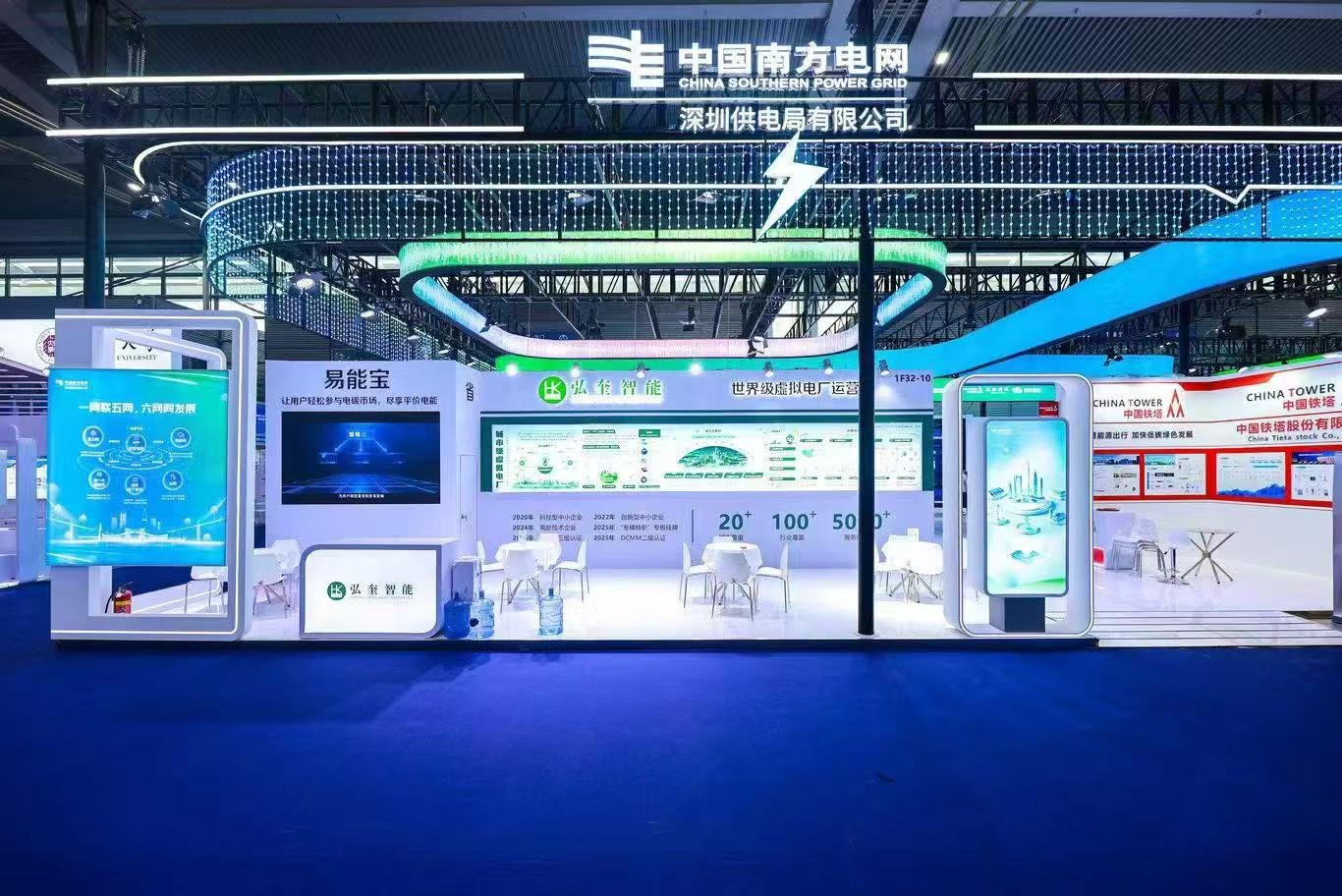
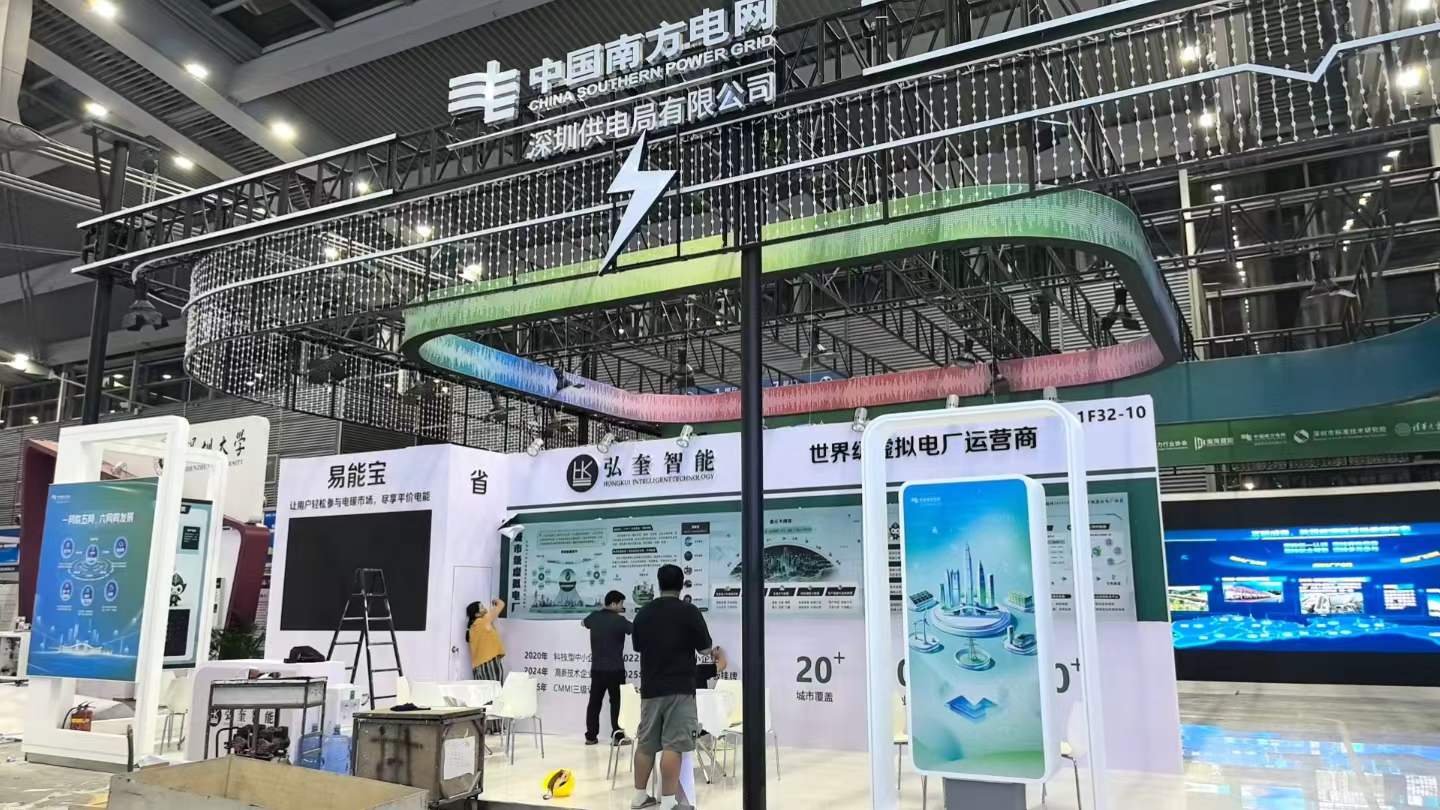
- One strong overhead signature. Suspended light structures and ribbon-style LED elements help buyers locate you across dense, lookalike halls — the single most requested design feature we see in this sector.
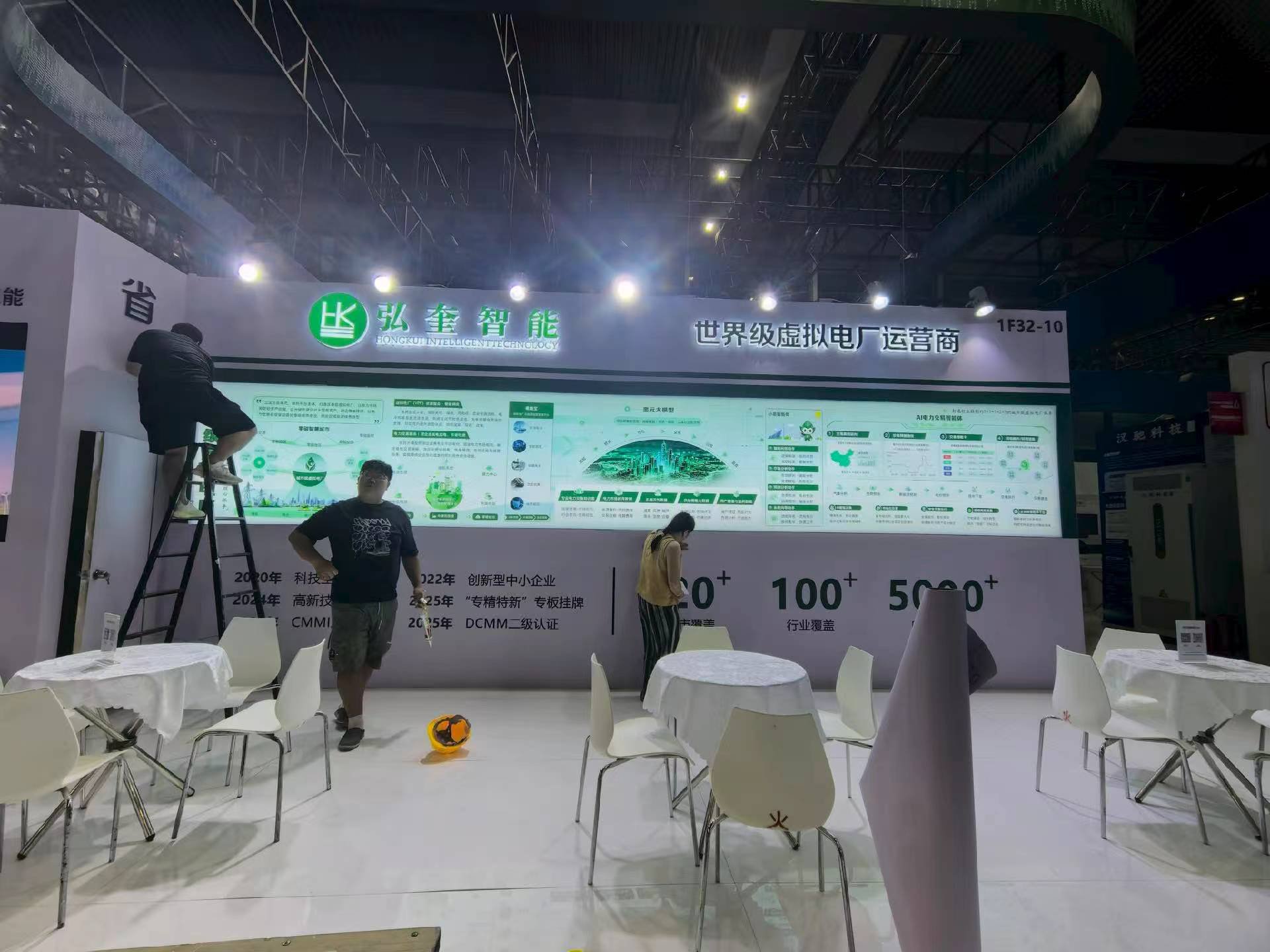
This is where sector experience shows in execution. New Power Exhibition (NeoBooths) delivers turnkey booths for battery, PV, and energy-storage exhibitors — design, in-house fabrication, freight, and on-site installation as one coordinated job — with recent builds across China’s storage expo circuit. If your programme spans several markets, our China trade show guide explains how Shenzhen-based production shortens the freight leg for shows across Asia and beyond.
Shipping, Safety, and Venue Rules for Battery Exhibits
Battery products add compliance layers ordinary exhibits never face, and every one of them eats lead time if discovered late:
- Transport certification. Lithium batteries shipped internationally must comply with UN 38.3 testing requirements under air and sea dangerous-goods rules. Book a forwarder who handles DG documentation early — this is the single most common cause of exhibits arriving late to storage shows.
- Organizer safety rules. Most storage events now restrict live charging on the floor, require fire-rated construction around demo units, or ask for safety filings before move-in. Requirements differ show by show, so request the exhibitor technical manual when you reserve space and design the demo point around it.
- Venue technical guidelines. German venues such as Messe München publish detailed rules on rigging loads, electrical connections, and materials; Chinese venues focus on build height and official-contractor electrical work. Confirm power capacity for your demo load — a running battery system plus cooling draws more than a typical shell booth supply.
- Timeline discipline. For ESIE, the 13–16 March move-in window allows four build days, but freight should clear customs well before. Work backwards: lock design 10–12 weeks out, fabricate 6–8 weeks out, and ship with buffer for DG handling.
Budgeting Your Energy Storage Trade Show Booth
Anchor on space rates, then multiply. Verified 2027 organizer rates put raw space at USD 320 per sqm (WBE Guangzhou, foreign rate) and €279–377 per sqm (Munich, depending on booth type and re-booking status) — a useful spread showing why the same 36 sqm island costs roughly twice as much to book in Europe. Across the shows we support, total spend typically lands near 2.5 times the space rental once custom build, freight, travel, and staffing are included, the same rule of thumb detailed in our first-time exhibitor guide. A 36 sqm custom island with a demo cabinet, meeting room, and suspended light feature generally lands in the USD 20,000–40,000 build range before space fees, depending on finish level and AV. Book early wherever the organizer offers re-booking discounts — at the smarter E Europe alone, that gap is worth up to 15 percent of space cost.
If storage is becoming a standing channel rather than a one-off test, our turnkey booth solution page shows how one modular core can be re-skinned across Beijing, Munich, and Melbourne for a fraction of the per-show cost. To get a fixed-price concept for a specific show, send your floor plan through our contact page.
Frequently Asked Questions
Which energy storage trade show should a first-time exhibitor choose?
Match the show to your target market, not the biggest headline. ESIE Beijing (17–19 March 2027) suits brands selling into China’s utility-scale market; WBE Guangzhou (13–15 August 2027) connects battery and storage supply chains with global distributors; ees Europe in Munich (8–10 June 2027) concentrates European residential and C&I demand; All-Energy Australia (28–29 October 2026, Melbourne) is a low-friction APAC entry with free-attendance buyers and compact stand formats.
How much does it cost to exhibit at an energy storage expo?
Space alone runs from USD 320 per square metre (WBE Guangzhou foreign rate) to €279–377 per square metre in Munich. Total spend typically lands around 2.5 times space rental once build, freight, travel, and staffing are counted, so a 36 sqm stand in Europe realistically means USD 60,000–90,000 all-in, less in China.
Can I ship live lithium batteries to the show floor?
Yes, but only under dangerous-goods rules: lithium batteries require UN 38.3 test certification and compliant packaging for international transport by air or sea. Many organizers additionally restrict live charging and require fire-rated demo enclosures — check the exhibitor technical manual before finalizing your demo design.
How early should I book space and start production?
Reserve space 6–12 months ahead for the main storage shows, since prime islands near hall entrances go first. Lock your design 10–12 weeks before opening, finish fabrication 6–8 weeks out, and ship with extra buffer for battery-related DG paperwork, which adds days to every freight leg.