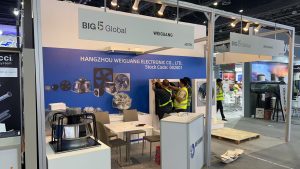
The uncomfortable question most exhibitors avoid
Why does a £50,000 stand sometimes generate fewer leads than a £5,000 one?
I’ve heard this more than once on show floors. A team invests heavily in a custom build, ships it across continents, deals with delays… and still walks away with weak engagement.
Meanwhile, a smaller competitor shows up with portable trade show booth displays, sets up in a few hours, and somehow pulls steady traffic all day.
It’s not luck.
It’s a shift in how booths are being used—and what buyers actually respond to.
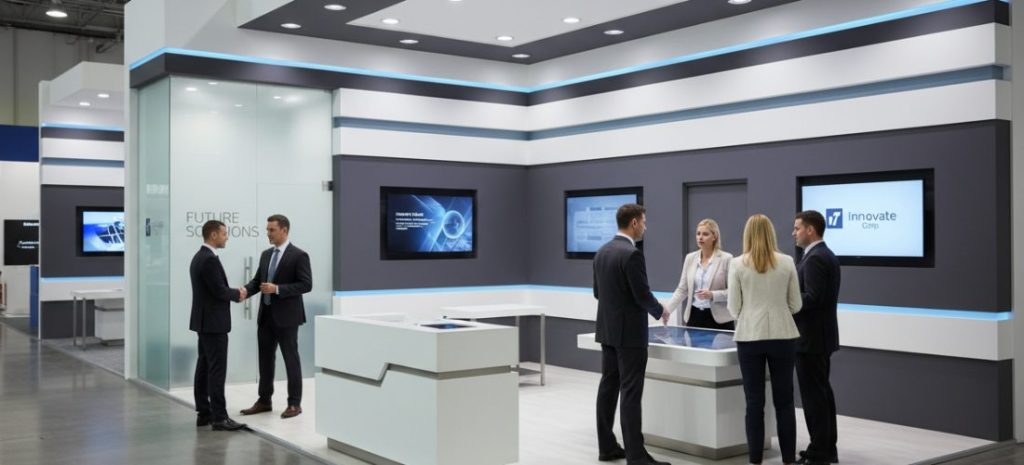
The real problem isn’t the budget. It’s friction.
From what I’ve seen across multiple exhibitions, the issue isn’t how much brands spend. It’s how much friction they create.
Traditional builds often come with:
- Long lead times
- Complex logistics
- Rigid layouts
- High on-site risk
If one thing slips—shipping, labour, approvals—the whole system struggles.
Portable trade show booths reduce that friction.
Not perfectly. But enough to matter.
A pop-up trade show booth, for example, can be assembled quickly, adjusted on-site, and reused across multiple events. That flexibility alone changes how teams plan.
What’s actually driving the rise of portable formats
It’s tempting to say “cost savings.” That’s part of it, but not the full story.
From conversations with exhibitors, a few patterns show up:
1. Speed is becoming a competitive advantage
Some teams now decide on attending a show just weeks in advance. A traditional build can’t keep up with that timeline. Portable trade show booth displays can.
2. Consistency across events matters more than scale
Brands aren’t just doing one big show anymore. They’re doing five, ten, sometimes more per year. A portable trade show booth gives them repeatability.
3. Buyers care less about size, more about clarity
If messaging is sharp and visible, a smaller booth can outperform a larger one. I’ve seen it happen more than once.
Where portable booths actually win (and where they don’t)
Let’s not pretend portable trade show booths solve everything.
They work best when:
- The goal is lead generation, not brand spectacle
- The team needs fast setup and teardown
- The same booth is reused across multiple events
- Budget is being allocated across a full event calendar
But they struggle when:
- The brand relies heavily on immersive experiences
- Complex product demos require built-in infrastructure
- The event itself rewards scale and visual dominance
So it’s not a replacement. It’s a different strategy.
The overlooked advantage: control
One thing that doesn’t get talked about enough is control.
With traditional builds, a lot sits in the hands of external contractors—designers, fabricators, logistics teams.
With portable trade show booth displays, teams regain some of that control:
- They know exactly what will arrive
- They can test the setup beforehand
- They reduce reliance on on-site labour
That doesn’t eliminate risk. But it makes it manageable.
A small shift in thinking that changes outcomes
The teams getting the most out of portable trade show booths aren’t just buying lighter structures.
They’re changing how they think about exhibitions.
Instead of asking:
“How impressive can we look?”
They’re asking:
“How quickly can we engage, qualify, and convert?”
That shift shows up in everything—layout, messaging, staff behaviour.
A pop-up trade show booth becomes less about display, more about function.
Practical suggestions (based on what I’ve seen work)
If you’re considering portable trade show booth displays, a few things seem to make a difference:
- Prioritise message over structure
If your value proposition isn’t clear in three seconds, the booth won’t fix it. - Design for flow, not just visuals
Even small booths benefit from intentional entry and exit points. - Test before the show
Teams that rehearse setup and interaction tend to perform better. - Think in systems, not single events
A portable trade show booth pays off over time, not just one exhibition.
Final thought
Portable trade show booths aren’t “better” in every situation.
But they’re exposing something uncomfortable:
A lot of exhibition success has less to do with how much you build—and more to do with how clearly you operate.
And right now, clarity seems to be winning.
References
- Centre for Exhibition Industry Research (CEIR) – Exhibition performance benchmarks
- UFI (Global Association of the Exhibition Industry) – Global exhibition trends reports
- Harvard Business Review – Articles on operational efficiency and customer engagement
- Event Marketer – Trade show ROI and experiential marketing insights