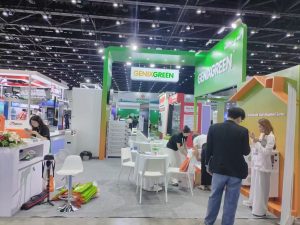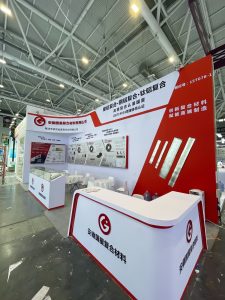
Why do some booths pull people in without effort… while others get ignored, even with bigger budgets?
Why do teams follow trends, invest in visuals, and still struggle to get meaningful engagement?
I’ve walked enough exhibition floors to notice a pattern.
It’s not always the biggest booth. Not even the most expensive. It’s usually the one that understands how people behave in that environment—and builds around it.
That’s where most trade show booth design ideas either work… or quietly fail.
The Core Problem: Good Ideas, Poor Translation
Most teams don’t lack ideas.
They’ve seen inspiration online. They’ve followed a few solid trade show booth design ideas. Maybe even worked with experienced designers.
But the issue is translation.
What looks impressive in a render doesn’t always work in a crowded, noisy, fast-moving exhibition hall. And when that gap isn’t addressed early, the booth ends up underperforming.
5 Design Ideas That Attract
These aren’t trends. They’re patterns that consistently work—across industries, booth sizes, and budgets.
1. Clear, single-message design
The best booths don’t try to say everything.
They focus on one idea:
- One headline
- One core value
- One reason to stop
Strong trade show booth design ideas simplify the decision for visitors.
If they understand it quickly, they’re more likely to engage.
2. Open and inviting layout
Booths that attract tend to feel easy to enter.
No barriers. No confusion.
Just a natural flow that makes people feel comfortable stepping in. Others suggest that even small layout changes can significantly affect foot traffic.
3. Visual hierarchy that guides attention
Good design tells people where to look first.
- Headline → visual → detail
Not everything competes at the same level.
Effective trade show booth design ideas guide attention instead of overwhelming it.
4. Built-in interaction points
Attracting attention is only step one.
Keeping it requires interaction:
- Simple demos
- Touchpoints
- Human conversation
Booths that create small moments of engagement tend to hold attention longer.
5. Consistency across design and messaging
When everything aligns—graphics, layout, team messaging—the booth feels coherent.
Visitors don’t have to figure things out. It just makes sense.
And that clarity builds trust faster than most people expect.
5 Design Ideas That Repel
These don’t always look like mistakes during planning. But they show up clearly on the floor.
1. Overcomplicated visuals
Too many elements. Too many messages.
It might feel “complete,” but it slows down understanding.
In a fast-moving environment, complexity pushes people away.
2. Closed or awkward layouts
If people hesitate at the entrance, they often don’t enter at all.
A booth that feels blocked—even slightly—reduces engagement.
This is one of the most overlooked issues in trade show booth design ideas.
3. Trying to showcase everything
Full product ranges. Multiple industries. Every feature.
Internally, it feels logical.
Externally, it feels like noise.
Visitors don’t process everything—they filter.
4. Passive, screen-heavy setups
Screens alone don’t engage.
They display. They don’t interact.
Without human or physical interaction, attention drops quickly.
5. Ignoring real-world conditions
Lighting, distance, crowd flow.
Designs that work in controlled environments don’t always translate.
Strong trade show booth design ideas account for reality—not just concept.
What This Means in Practice
If you step back, the difference is fairly simple.
Attracting booths:
- Reduce friction
- Guide attention
- Encourage interaction
Repelling booths:
- Add complexity
- Create hesitation
- Rely too much on visuals alone
Following trade show booth design ideas isn’t the issue. It’s how they’re applied.
A More Useful Question to Ask
Instead of asking:
“Does this booth look impressive?”
Maybe ask:
“Would I stop here if I had no context?”
That’s usually a better filter.
Because that’s exactly how visitors experience your booth.
Final Thought
Not every idea will work at every show. That’s realistic.
But if your trade show booth design ideas are grounded in how people actually move, decide, and engage, the results tend to improve over time.
More stops.
Better conversations.
Less wasted effort.
And that’s usually the goal.
References
- Center for Exhibition Industry Research (CEIR) – Exhibition Marketing Benchmark Reports
- UFI – Global Exhibition Barometer
- Event Marketing Institute – EventTrack Reports
- Harvard Business Review – Consumer Behaviour and Decision Making