Russia is one of the largest exhibition markets in the world, and in 2026–2027 it is also one of the most active. With Western brands largely absent and local manufacturers actively re-equipping, trade fairs in Moscow and Yekaterinburg have become the main meeting point between Russian buyers and suppliers from Asia, the Middle East, Türkiye and Latin America. If you are planning a Russia trade show booth for the first time, the rules are different from Western Europe or the US: different venues, different customs procedures and a build culture that rewards stands built to last. This guide walks through the key shows, venues, costs and logistics of exhibiting in Russia.
Why Exhibit in Russia in 2026–2027
The exhibition calendar has stayed busy even as the exhibitor mix has shifted. At INNOPROM, Russia’s national industrial show in Yekaterinburg, the most recent editions drew roughly 850–1,100 exhibitors from 50+ countries and around 50,000–68,000 professional visitors, with several hundred Chinese machinery, automation and components companies among the most visible foreign exhibitors (if you are exhibiting from that direction, our guide to trade show booths in China covers the outbound side of the same corridor). Food imports tell a similar story: Asian suppliers have steadily expanded their share of the Russian market, and national pavilions at Moscow’s food fairs now fill entire halls.
For an international supplier, the practical consequence is simple: the buyers are there, competition from established Western brands is thinner than it used to be, and decision-makers — many of them procurement and technical directors from industrial groups — walk the floor looking for new partners. A well-built stand is often the first credible signal that you are a serious, long-term supplier rather than a one-off exporter.
Key Russian Trade Shows for International Exhibitors
A few anchor events cover most industries. Dates below are confirmed for the 2027 cycle:
- Prodexpo 2027 — 1–4 March 2027, Crocus Expo, Moscow. Russia’s largest food and beverage show, with roughly 2,000+ exhibitors from ~37 countries and 67,000+ trade visitors across 30 product sectors. The natural entry point for food, ingredients and packaging suppliers.
- MosBuild 2027 — 30 March–2 April 2027, Crocus Expo, Moscow. The largest building and interiors exhibition in the region, UFI-approved, with the latest edition hosting around 80,700 visitors and 1,370 exhibitors across 17 sectors. Key for building materials, ceramics, finishes, tools and decor.
- bauma CTT Russia 2027 — 25–28 May 2027, Crocus Expo, Moscow. The country’s main construction machinery and equipment show.
- INNOPROM 2027 — 5–8 July 2027, Ekaterinburg-Expo, Yekaterinburg. Russia’s flagship industrial innovation fair, organised with the Ministry of Industry and Trade, covering machine tools, automation, energy and industrial digitalisation, with a dedicated Russia–China cooperation section.
Most of these shows run four days and open around 10:00, so plan a build-up window of at least 1–2 days before opening day.
Main Venues: Crocus Expo, Expocentre and Ekaterinburg-Expo
Almost every major Moscow fair takes place at one of two complexes. Crocus Expo IEC, on the Moscow Ring Road, is the largest — three vast pavilions, high ceilings (typically 6–12 m) and heavy rigging capacity, but long walking distances between halls. Expocentre Fairgrounds on Krasnaya Presnya is the historic central venue with eight pavilions and excellent metro access. Yekaterinburg-Expo, about 20 km from the city centre and the airport, hosts INNOPROM with modern single-level halls.
Venue logistics follow familiar patterns but with local specifics: official stand-plan approvals and electrical orders are usually due 3–4 weeks before build-up; organiser-appointed contractors control rigging, compressed air and main power; and loading docks operate on scheduled slots that tighten quickly in the final 48 hours. Book venue services early — in Russia, late electrical orders are the single most common source of surprise cost.
What a Booth Costs in Russia
Published rate cards move with the rouble, so treat the figures below as planning ranges from recent projects rather than quotes:
- Space only at Crocus Expo or Expocentre typically runs in the low hundreds of US dollars per square metre per show for international fairs, varying by hall and organiser.
- Custom stand construction for a quality two-storey-capable design generally lands in the $300–600/m² range, with lighting, graphics and AV on top.
- A practical budget rule: total your space fee, then multiply by roughly 2.5 to cover design, build, furniture, electrics, graphics, on-site supervision and logistics.
Two cost drivers matter more in Russia than elsewhere: long lead times on imported materials (order local equivalents where possible) and winter logistics, when heating, snow clearance and shortened dock hours can add days to a February or March build-up.
Customs, Language and Practical realities
Three points catch first-time exhibitors off guard:
- No ATA Carnet. Russia is not part of the operational ATA Carnet system, so exhibit goods cannot simply travel under a carnet. You will need temporary import clearance arranged through a licensed customs broker, with paperwork started 4–6 weeks before shipping.
- Language. Hall staff, contractors and dock crews work in Russian. Have your stand drawings, electrical specs and safety documents translated, and budget for a bilingual supervisor on site during build-up and breakdown.
- Visas and lead times. Business visas for crew and staff take time to arrange, and invitation letters should be requested from the organiser as soon as your space is confirmed. Build calendars around 8–12 months of planning time for a major Moscow fair.
Designing a Booth That Works in Russia
Russian visitors judge stands the same way buyers do anywhere: clear brand story, somewhere to sit and talk, and product they can touch. But the build culture rewards solidity — walls that look permanent, generous lighting and a real hospitality counter outperform minimal “pop-up” styling. Bilingual graphics (Russian and English) are essential if you want to stop the traffic; even a simple translated tagline measurably increases dwell time on the stand.
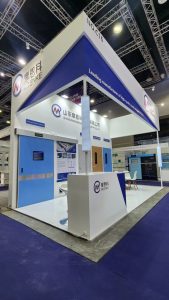
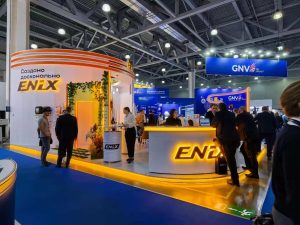
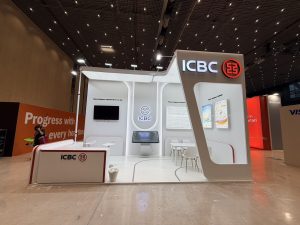
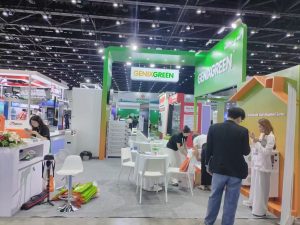
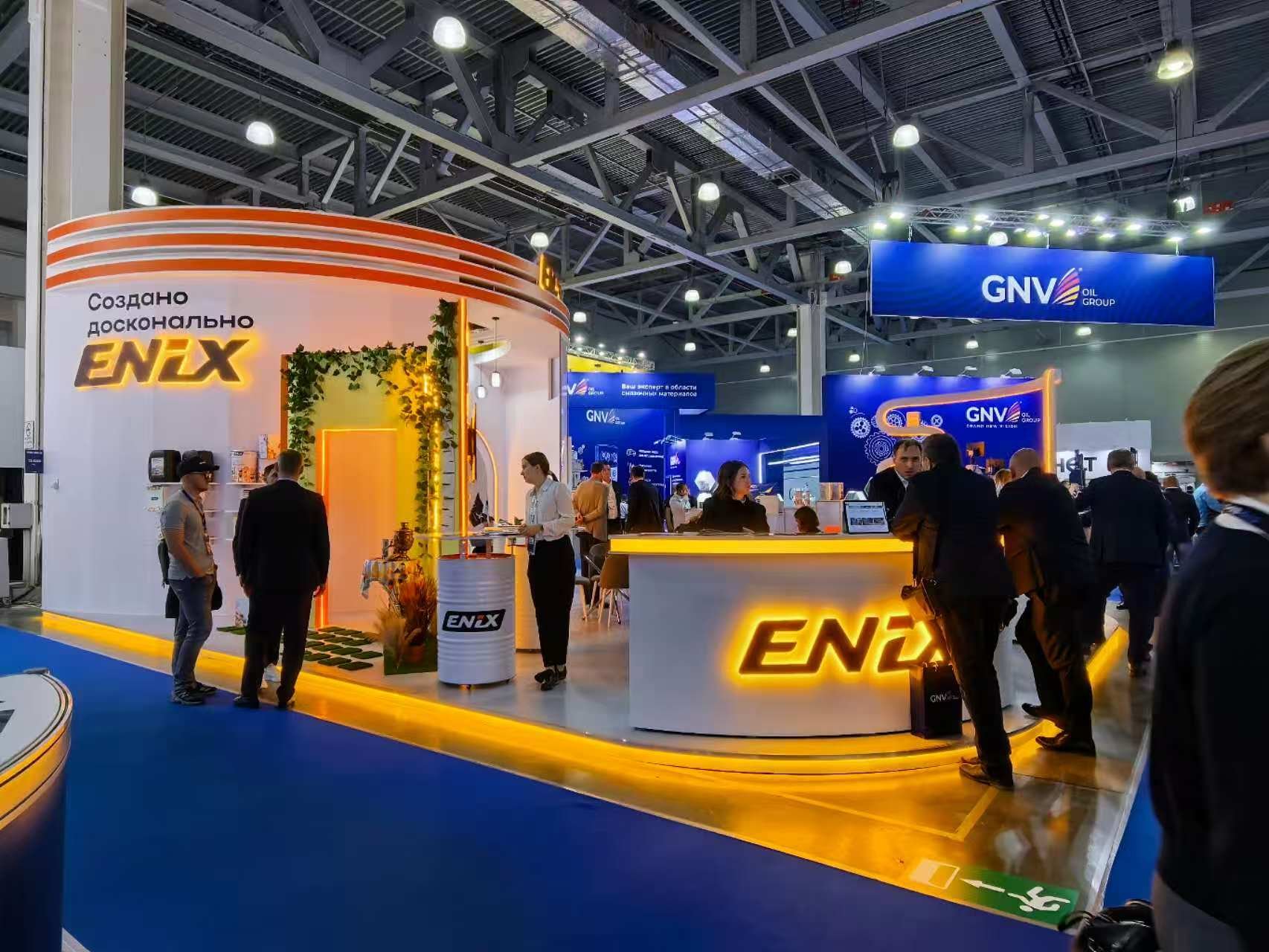
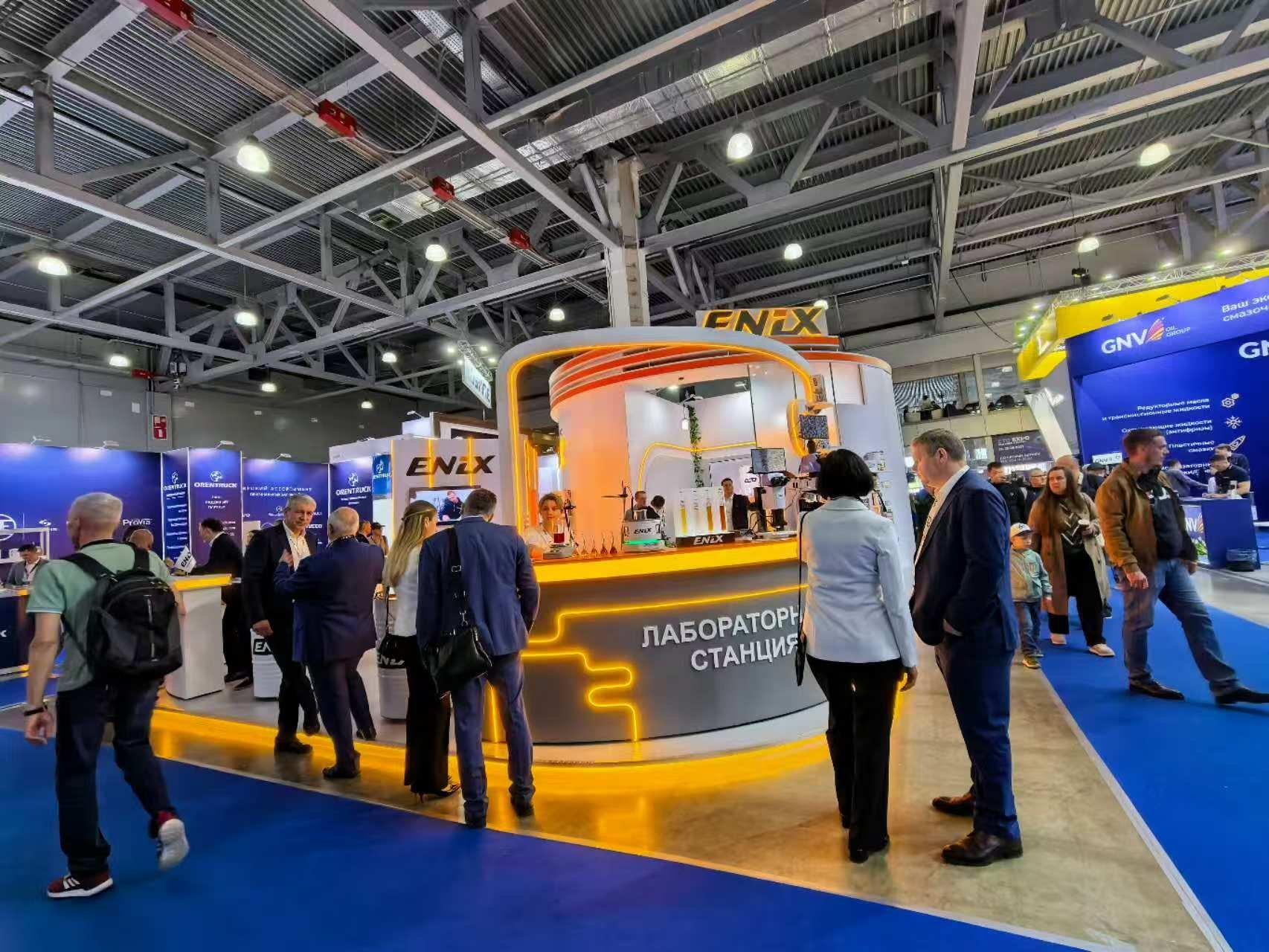
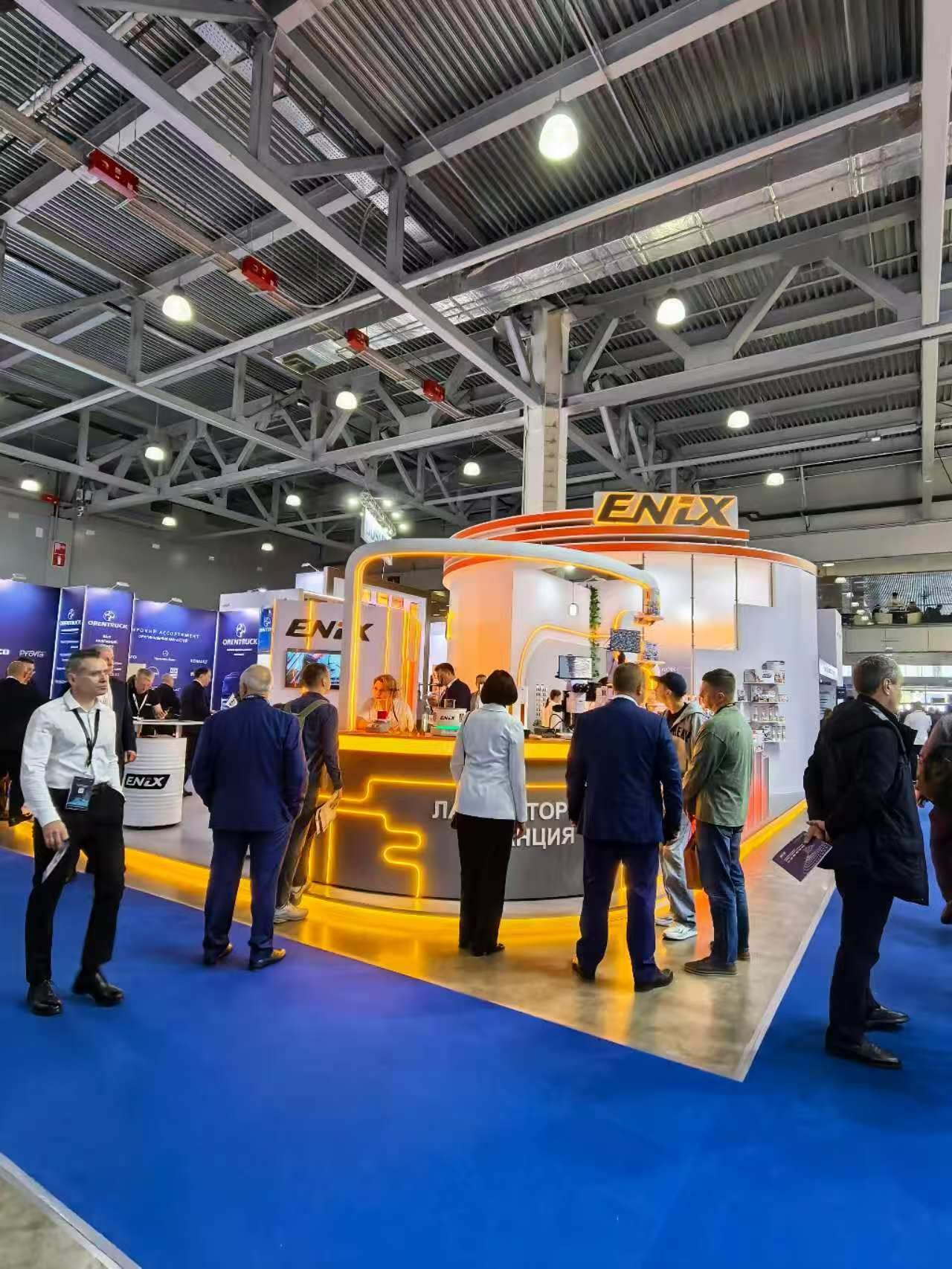
The photos in this article come from a recent custom build on the construction-machinery circuit in Moscow: curved walls, a warm-lit reception bar and a compact demo area that kept visitors talking for the full four days. That is the standard New Power Exhibition (NeoBooths) brings to the Russian market — one accountable partner for design, fabrication, shipping and on-site installation, so your team lands to a finished stand instead of a work in progress. If you want to see how we scope a project end-to-end, start with our full service solution.
Timing-wise, most Russian fairs reward early movers: space selection for the spring shows opens right after the previous edition closes, and the best-positioned islands near hall entrances go first. Treat your first Russian show as a scouting investment — walk the halls on day one, note which national pavilions draw crowds, and plan a bigger, better-located stand for year two.
FAQ
Do I need a Russian customs broker to ship my booth?
Yes. Because ATA Carnets are not valid in Russia, exhibit materials and products must clear customs under temporary import procedures handled by a licensed broker. Build 4–6 weeks into your timeline for documents, and confirm who is named as the importer of record before the freight moves.
How much does a trade show booth in Russia cost?
As a planning range, space at major Moscow venues runs in the low hundreds of dollars per square metre, and quality custom construction adds roughly $300–600/m². Using the 2.5× rule — total space fee times two and a half — gives a realistic all-in budget for design, build, services and logistics.
Which Russian trade show should a first-time exhibitor choose?
Match the show to your sector first: Prodexpo for food and ingredients, MosBuild for construction and interiors, bauma CTT Russia for construction machinery, INNOPROM for industrial equipment and automation. For most first-timers, Moscow venues are easier to reach and staff, so start there before adding Yekaterinburg.
Can booth staff work in English on the stand?
Yes, but you will convert more visitors with at least one Russian-speaking team member or hired interpreter. Signage should be bilingual regardless — it costs little and significantly increases dwell time among local buyers.
Planning a stand for a Russian exhibition? Send us your floor plan and brief — we will come back with a build-ready proposal and a clear budget.