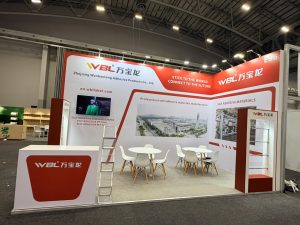
A 3D exhibition stand design can look convincing on screen and still produce a disappointing result on site. The difference is usually not one dramatic mistake. It is a series of small gaps between the approved render, the technical drawings, the materials ordered and the decisions made during exhibition stand construction.
To make sure your exhibition stand matches the 3D design, treat the render as the visual brief and use drawings, specifications, samples and site checks to control how it is built. This is especially important for custom exhibition stands with curved structures, integrated lighting, branded finishes and fitted product displays.
The BETRIMEX project material supplied for this article includes a 3D exhibition stand rendering and photographs of the completed stand. Pairing the approved visual with the finished installation gives exhibitors a practical way to review whether the overall form, branding, display areas and key finishes were carried through to the real build.
1. Approve the design from more than one viewing angle
Do not approve a custom trade show booth from a single hero image. Review the front, side and rear elevations, overhead layout and key visitor viewpoints. Check the reception counter, storage, product displays, meeting areas, access routes and the relationship between the stand and the aisles.
A useful design review asks two questions: does the stand communicate the brand as intended, and can the layout work for staff and visitors during the exhibition?
2. Turn the 3D render into buildable technical drawings
A render communicates appearance, but the production team needs dimensions and construction details. Before fabrication begins, confirm overall width, depth and height, structural sections, fixing points, panel sizes, counter dimensions, cable routes and the position of lighting and screens.
- Dimensioned floor plan and elevations.
- Material schedule, colours, surface finishes and edge details.
- Lighting positions, electrical requirements and cable routes.
- Joinery details, fixing methods and structural interfaces.
- Graphic artwork sizes, print specifications and installation positions.
Make sure the fabricator and installation team are working from the same approved revision. Verbal instructions or outdated screenshots are a common source of mismatch.
3. Confirm materials, colours and finishes before production
Materials can look different under exhibition lighting from the way they appear on a monitor. Confirm physical samples or finish references for important surfaces, including laminates, paint, metal, acrylic, fabric graphics and illuminated panels. Where colour accuracy matters, agree the reference standard and review a printed sample.
Also confirm practical details such as surface durability, cleaning, transport protection and how joints or edges will appear at close range. These decisions affect the perceived quality of the finished exhibition booth.
4. Check lighting, graphics and brand details as separate workstreams
Lighting can change the appearance of a stand significantly. Check colour temperature, brightness, shadowing, power access and the position of LED strips or spotlights. Review graphic artwork at its actual size and confirm logo proportions, image resolution, spelling and alignment before printing.
For a complex exhibition stand design, create a short sign-off list for the features that most affect the visual result: fascia shape, curved elements, illuminated logos, display shelves, counters and large-format graphics.
5. Use production checkpoints instead of waiting for the finished stand
Quality control should happen while changes are still manageable. Agree checkpoints for material arrival, first-article or sample approval, structural assembly, surface finishing, graphic placement and pre-dispatch inspection. Ask for dated progress photographs when the workshop is not nearby.
For overseas projects, confirm who reviews the work at the local fabrication workshop and who has authority to approve a correction. A local production partner can be effective when the design team, workshop and site supervisor share the same drawings and inspection criteria.
6. Compare the completed installation with the approved design
During exhibition stand installation, check the main visual and functional points against the approved documents. Use the same viewing angles as the 3D presentation where possible, and record any differences before the final handover.
| What to inspect | What a site check should confirm |
|---|---|
| Overall structure | Dimensions, height, alignment and stability match the approved drawings |
| Branding and graphics | Correct artwork, colours, scale, position and clean edges |
| Lighting | All specified fixtures work and illuminate the intended surfaces |
| Joinery and finishes | Panels, counters, shelves and visible joints are properly finished |
| Visitor flow | Entrances, circulation, display access and meeting areas remain usable |
| Venue requirements | Required safety, electrical and organiser checks are completed |
If a change is necessary because of a venue condition or a late client request, record what changed, why it changed and who approved it. The goal is not to avoid every adjustment; it is to prevent unapproved substitutions from quietly changing the final result.
7. Keep design, fabrication and on-site installation under one coordinated process
International exhibition projects may use different delivery arrangements in different countries. Some locations have the main contractor’s own factory, warehouse or installation team; elsewhere, production and construction may be completed by established local partners. In either case, consistency depends on one coordinated drawing set, clear responsibilities, progress checks and a named project lead.
For related planning advice, read our trade show booth construction guide and our guide to custom trade show booth design and build.
Frequently asked questions
Why can an exhibition stand look different from its 3D render?
Differences can come from incomplete technical drawings, substituted materials, inaccurate dimensions, lighting changes, print variations or unapproved site adjustments. A documented design-to-build process helps control these variables.
Should I approve material samples before exhibition stand fabrication?
Yes, especially for prominent finishes, brand colours, illuminated elements and surfaces that visitors will see close up. Samples help align expectations before larger quantities are produced.
How do I check an exhibition stand during installation?
Compare the structure, dimensions, graphics, lighting, finishes and visitor flow with the approved drawings and render views. Record any deviation and obtain approval before accepting a change.
Can a local exhibition stand builder follow a design created overseas?
Yes, if the drawings are buildable, specifications are clear and the local workshop and installation team have the required capability. Progress checks and a single project coordinator help keep the result consistent.
Make the finished stand match the approved brief
New Power Exhibition coordinates exhibition stand design, project management, local fabrication and on-site construction for international trade shows. Depending on the market, delivery is carried out by our own local facilities and teams or by established local production and construction partners, with our team coordinating drawings, project communication and quality checks.
Share your 3D design, booth dimensions, event location and exhibitor manual. We can review the design-to-build requirements and discuss how to manage fabrication and exhibition stand installation at your destination. Contact New Power Exhibition to discuss your project.