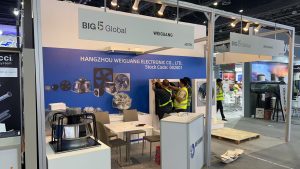
Evaluating the financial long-term viability of recurring trade show display rentals is an essential step for multinational enterprise procurement departments planning their annual international exhibition schedules. When marketing directors outline their multi-city campaigns, they often compare legacy shell schemes and local furniture catalog options against the best trade show booth designs available on the global market. The core operational challenge is choosing whether to sink capital into temporary single-use buildouts or invest upfront in a high-grade modular exhibit booth framework. For brands navigating volatile global supply chains, standardizing around reusable modular booth displays and advanced portable exhibit solutions offers a clear, predictable alternative to traditional event sourcing models.
According to asset amortization analysis published by the Harvard Business Review, B2B enterprises must convert recurring operational service fees into depreciable capital equipment to protect long-term international trade margins. Continuing to pay heavy premiums for basic aluminum frames or standardized furniture packages from general venue suppliers creates a massive cash leak over a multi-year event schedule. To stop this cumulative capital drainage, forward-thinking enterprise procurement managers are choosing to look beyond standard trade show display rentals. Instead, they are taking ownership of their structural hardware core, ensuring their physical brand presence operates as an evergreen corporate inventory asset.
The primary financial complication within the current trade show execution model stems from skyrocketing on-site drayage surcharges and local venue labor monopolies.
Others suggest that relying on temporary trade show display rentals provides the ultimate logistical flexibility for small or shifting footprints across different foreign markets. That is an expensive operational misconception that overlooks long-term cost accumulation over a standard 24-month marketing timeline.
When you carefully audit historical accounting data, repeating the cycle of basic trade show display rentals over four or more global venues delivers zero equity return and high cumulative fees. You are essentially paying third-party builders for temporary structural profiles that you do not own and must return immediately at the close of the exhibition. True financial efficiency is achieved by investing in a premium modular exhibit booth system. This architectural matrix framework sits directly on your corporate balance sheet as a depreciable fixed asset, ensuring your initial marketing budget builds permanent multi-event infrastructure. To see how these flexible frameworks perform under live field regulations, review our practical, reusable exhibition stands operational playbook.

The Hard Financial ROI of Reusable Structural Assets
To successfully secure executive-level approval for a shift toward high-efficiency hardware systems, your presentation must focus entirely on structural supply chain metrics. Moving your international event roadmap away from temporary trade show display rentals toward premium modular booth displays lowers structural costs across three clear operational channels.
- Freight Volume Maximization: Custom timber stands and heavy rental packing crates demand thick protective padding that expands your total freight volume. Conversely, a modern modular exhibit booth uses high-tensile aluminum matrix profiles that stack tightly and pack flat into standardized rolling transit cases. This engineering choice directly reduces cross-border shipping invoices by up to 40%.
- Turnkey Assembly Flow: Traditional custom carpentry and complex catalog setups depend entirely on massive teams of painters, riggers, and on-site specialists working irregular shifts under high venue labor premiums. Standardizing around pre-engineered portable exhibit solutions removes this operational variable from your field strategy. Because the interlocking connections are built right into the frame hardware, a minimal staff crew can erect the complete perimeter using a simple hex tool.
- Eliminating Local Waste Liabilities: Major convention complexes across Europe and North America are enforcing severe financial penalties for single-use build debris left behind on the floor. By anchoring your multi-city schedule with certified reusable exhibition stands, your corporate team bypasses these environmental cleanup fees completely, because 100% of your structural assets pack back into the flight cases for the next destination.
The data proves that separating your physical presence from single-use raw materials shifts your marketing budget from an annual sunk expense into an asset-backed inventory. You stop paying for temporary field props and start building scalable corporate infrastructure.
The Procurement Blueprint for Advanced Multi-Event Management
If you are currently responsible for executing a high-frequency global trade show schedule under rigid financial restrictions, here is the exact structural playbook to implement:
- Purchase the Framework Core, Localize the Media Assets: Invest upfront in a master modular booth displays infrastructure that fits your maximum planned venue footprint. Maintain the underlying aluminum matrix frame as your permanent capital asset, and simply print fresh fabric media profiles to accommodate local language variants or distinct product divisions.
- Transition to Tension Fabric Over Hard PVC Panels: Phase out heavy, rigid plastic graphics sheets that scratch during transport and demand excessive storage space. Switch completely to high-density tension fabric graphics that fold down into standard luggage bags, reducing international parcel delivery costs to near zero.
- Bring Interactive Touchpoints to the Aisle Margin: Stop allocating expensive square footage to deep, enclosed meeting rooms that remain isolated from the primary traffic flow. Position your high-value digital assets—such as a sleek touchscreen product presentation desk or a high-brightness video wall—directly at the front carpet edge. To see how these structural matrix profiles dynamically adapt to diverse venue footprints, examine the precision setups engineered on our main exhibition services network.
The final takeaway for international B2B enterprise marketing is straightforward. Stop paying third-party contractors for exhibition assets you do not own. By converting your operational budget into an asset investment centered around high-performance modular booth displays, you secure absolute structural quality worldwide, achieve complete logistics predictability, and establish an unyielding financial advantage over your competitors before the venue doors ever open. secure absolute structural quality worldwide, achieve complete logistics predictability, and establish an unyielding financial advantage over your competitors before the venue doors ever open.