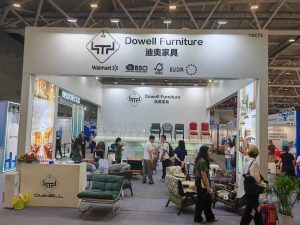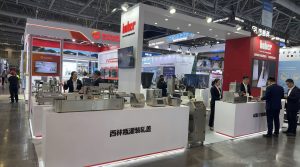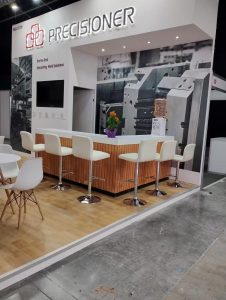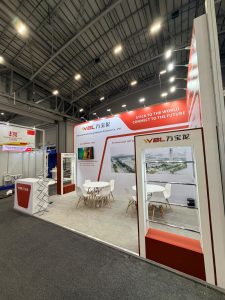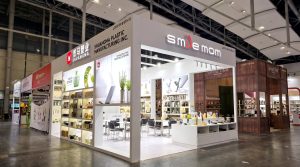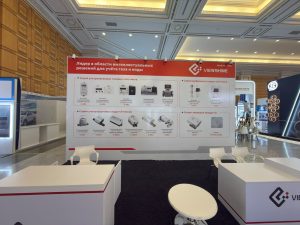
For a growing number of international exhibitors, trade show booth fabrication in Shenzhen has quietly become the default answer to two pressures at once: rising build costs in Europe and North America, and increasingly ambitious booth designs that local workshops struggle to price competitively. Shenzhen pairs one of the world’s densest manufacturing supply chains with a mega exhibition venue of its own, so a booth can be designed, fabricated, pre-assembled, and erected within the same city. This guide explains how Shenzhen booth fabrication works in practice, what it realistically saves, and how to keep quality under control when your builder is thousands of kilometers from the show floor.
Why Shenzhen Became a Global Booth Fabrication Hub
Shenzhen sits at the center of the Pearl River Delta manufacturing belt, and that geography shapes what a booth builder here can do. Aluminium extrusion profiles, CNC-cut plywood, laminates, fabric graphics, LED panels, and custom counters are all sourced within a few hours’ drive, which compresses both material cost and lead time. The city also has decades of exhibition experience: crews that measure walls in millimeters and rebuild the same halls show after show. For exhibitors, the practical result is a supply chain where design revisions, custom metalwork, and last-minute graphic changes are handled in days rather than weeks.
The city’s exhibition calendar makes the point on its own. The 28th China Hi-Tech Fair (CHTF), one of China’s three national-level exhibitions alongside the Canton Fair and the CIIE, will run November 26–28, 2026 at Shenzhen World, with a reported 400,000 m² of exhibition area, more than 5,000 exhibitors, and 450,000+ professional visitors from over 120 countries and regions (chtf.com). Every edition of that scale is built, hall by hall, by fabrication crews based in and around this city.
Shenzhen World: the Mega Venue Next Door to the Workshops
If you exhibit in China, there is a good chance your booth will stand in Shenzhen World Exhibition & Convention Center in Bao’an District. The venue’s Phase 1 offers 400,000 m² of indoor exhibition space across 19 halls — including 16 standard halls of 20,000 m² each and a 50,000 m² mega hall — rising to a planned 500,000 m² upon full completion, all organized along a 1.75 km central corridor and sitting adjacent to Shenzhen Bao’an International Airport, according to the venue’s official overview (shenzhen-world.com).
For fabrication planning, that proximity matters more than the headline numbers. A booth built in a Shenzhen workshop can be fully pre-assembled, photographed for approval, partially knocked down, and trucked to Shenzhen World or to the older Futian convention center in a single day. When your show is in Shanghai, Guangzhou, or Hong Kong, the same workshop is still within overnight trucking range. Our separate China trade show booth guide covers venue rules and show dates across the country in detail.
What Sourcing Fabrication in Shenzhen Actually Saves
The honest answer is: less labor cost, shorter procurement chains, and faster customization — but only if freight and on-site rules are planned properly. Labor-heavy carpentry and finishing that costs significantly more in Europe or North America is the core saving; materials add a smaller margin on top. Based on our own published benchmarks for markets such as South Africa, a booth fabricated in our Shenzhen workshop and assembled locally typically runs 25–35% below a fully locally sourced build at equivalent quality, because the labor-intensive fabrication happens in Shenzhen and only on-site assembly happens at the venue.
Three cost factors decide whether that saving survives contact with reality. First, freight: sea freight suits modular re-usable structures booked 8–12 weeks out, while air freight can rescue tighter timelines at a price. Second, on-site labor rules: many venues outside China require licensed or unionized local crews for rigging, electrical, and overhead work, so your builder needs a compliant local partner rather than a plane ticket. Third, schedule discipline: a typical custom booth needs 3–4 weeks of production in Shenzhen before it ships, so booking 8–12 weeks before the show keeps every option open. For very small shell-badge upgrades or single-day events, a local supplier can still be the simpler choice.
Quality Control: Check These Boxes Before Your Booth Ships
Distance is the main risk in cross-border fabrication, and the fix is process, not trust. Before signing, ask any prospective builder for these five deliverables:
- A photoreal 3D render plus an itemized quote, so you can see the design and the cost split before production starts.
- Structural drawings matched to venue rules — height limits, rigging points, fire-rated materials, and electrical specs for your specific hall.
- Material specifications in writing, including fire ratings for board and fabric, because inspection standards differ between countries.
- Full pre-assembly in the workshop, documented with photos or video, so joints, doors, lights, and graphics are proven before packing.
- A named project manager who owns the timeline from design sign-off to on-site handover.
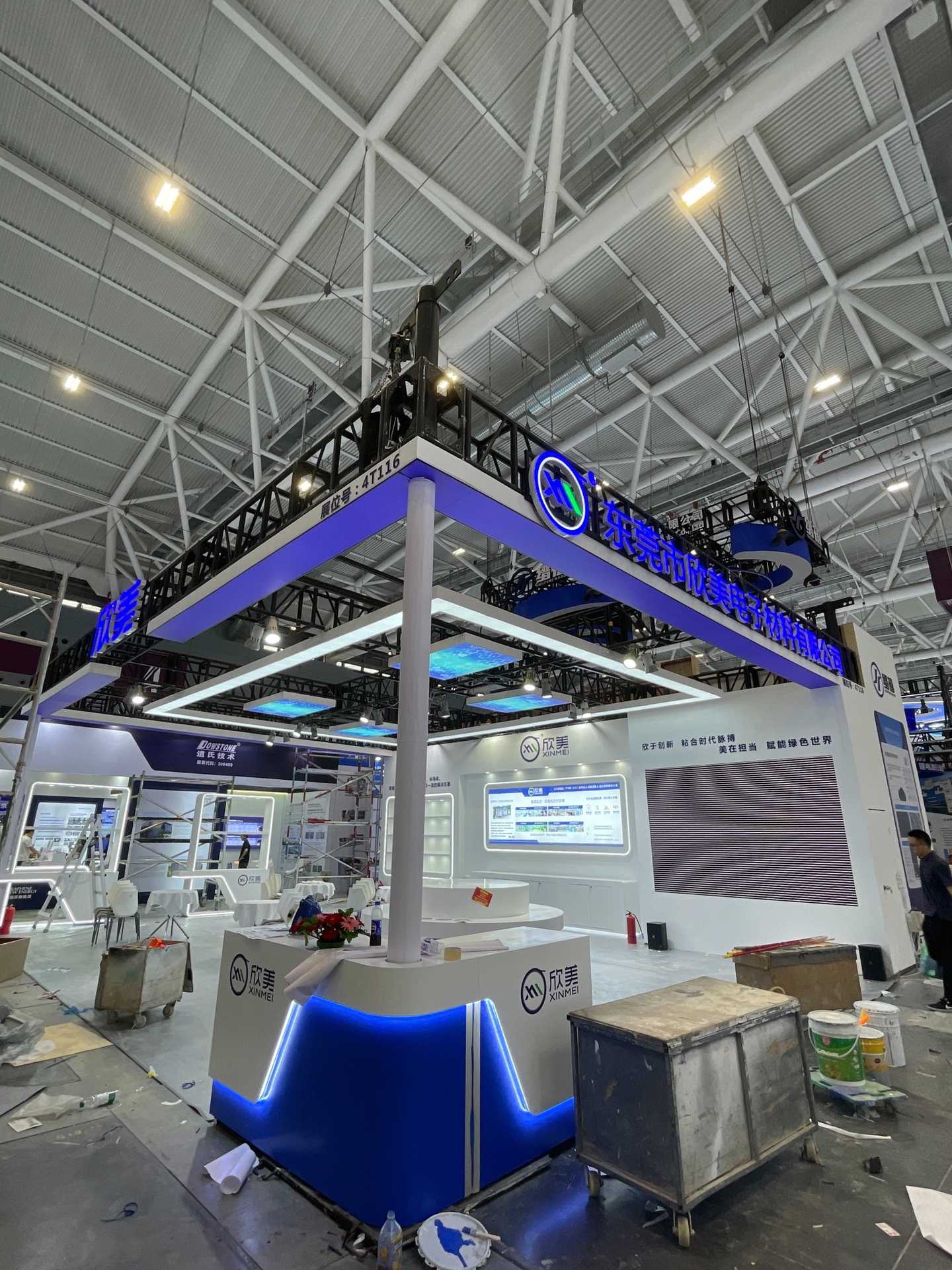
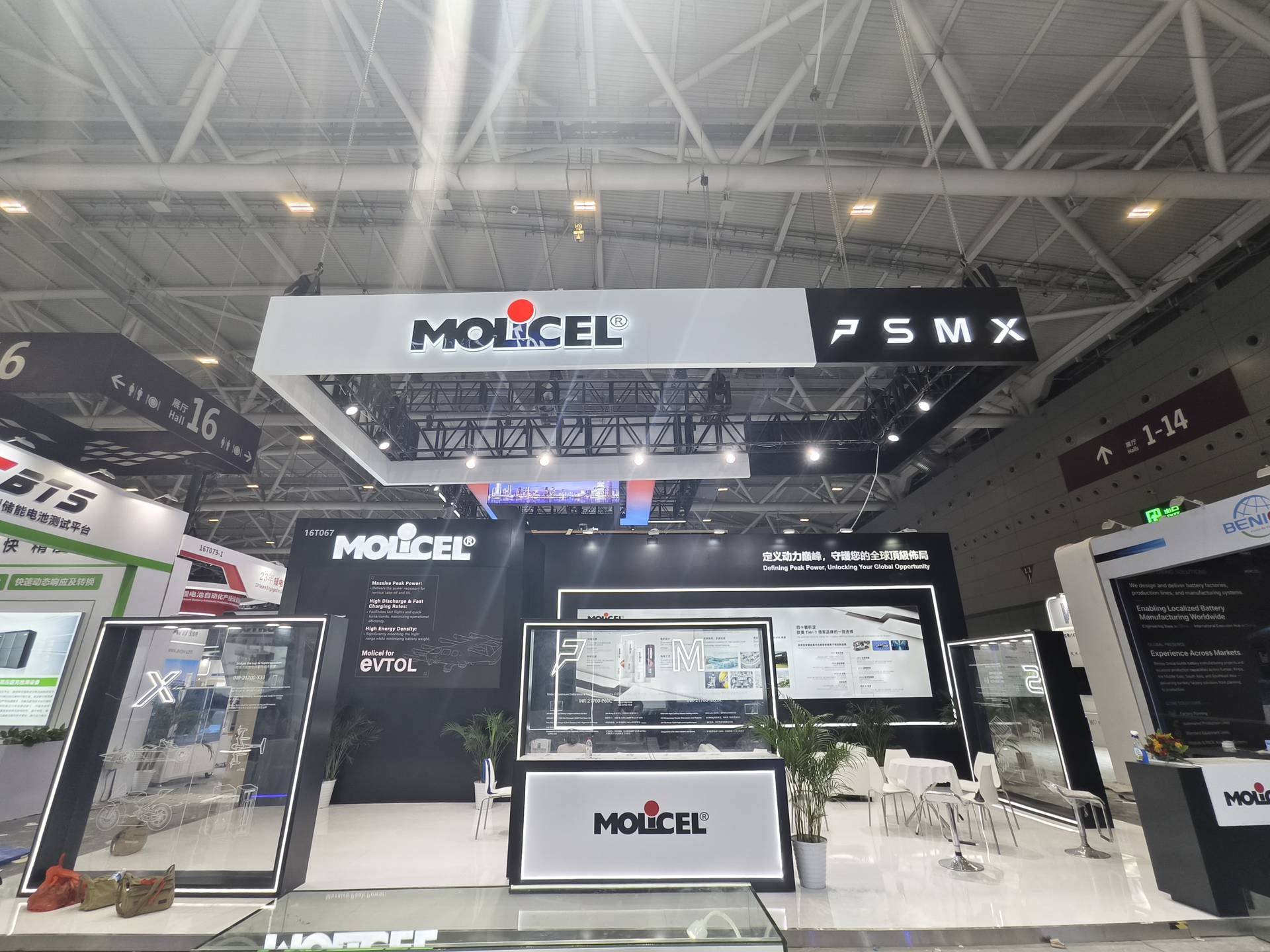
This is the workflow we run at New Power Exhibition (NeoBooths). Since 2009 our team has designed and fabricated booths in Shenzhen for delivery to more than 118 cities across 32 countries, with production, QC, and freight consolidation handled by our own facility and partner crews at the destination. The photo below shows a typical pre-open build: truss, rigging, and hanging signage going up under a fixed method statement before the aisle carpets go down.
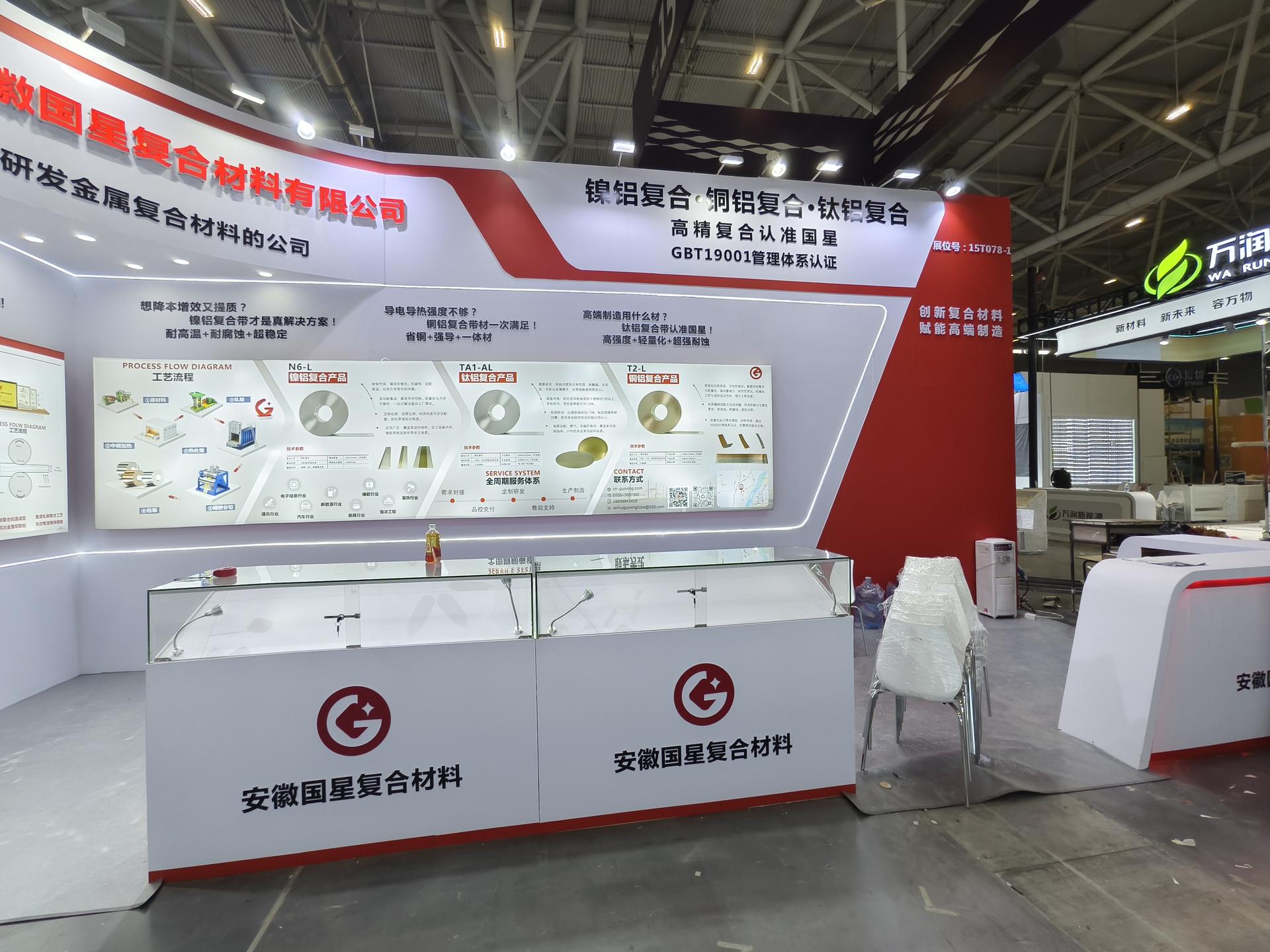
The same discipline applies at the finishing stage. Backlit walls, laminated graphics, and glass display counters are the details visitors notice first — and the ones cheapest to correct inside the workshop rather than on the show floor the night before opening.
From Workshop to Show Floor: Logistics and On-Site Delivery
A Shenzhen-built booth usually follows one of three routes. For shows inside China, it travels by truck, and the same crew that built it often installs it. For Asia-Pacific destinations, sea freight in consolidated containers keeps cost low and timelines predictable. For Europe, the US, or the Middle East, exhibitors typically combine sea freight for the structure with air freight for graphics and delicate AV elements. Your builder should handle the customs paperwork — commercial invoice, packing list, and, where applicable, temporary-admission procedures — and coordinate with the venue’s official contractor schedule for move-in and dismantling.
Plan the return leg as deliberately as the outbound one. Modular structures designed to be re-used two or three times effectively halve the per-show cost; storing a booth between events, whether at the fabricator’s warehouse or your own, is usually cheaper than rebuilding from scratch. After the show, ask for a dismantle report with photos so re-use decisions are based on facts rather than memory. You can see how we package this end-to-end on our solutions page.
Frequently Asked Questions
How much cheaper is booth fabrication in Shenzhen?
For comparable custom quality, our own published benchmarks put Shenzhen-fabricated builds roughly 25–35% below fully local sourcing in markets such as South Africa, with the saving driven mainly by labor-intensive carpentry and finishing. The gap narrows for small booths, rush air freight, or venues with expensive mandatory local labor rules.
How far in advance should I book a Shenzhen fabricator?
Allow 8–12 weeks from confirmation to on-site handover: 1–2 weeks for design and structural drawings, 3–4 weeks of production, then freight and installation. Major shows at Shenzhen World or CHTF-booked halls tighten workshop capacity, so earlier booking secures both a slot and freight space.
Can a Shenzhen builder handle shows outside China?
Yes, provided the builder runs compliant on-site crews or vetted local partners for rigging and electrical work at the destination venue. Confirm the local labor and safety requirements of your specific venue in writing before signing, and check that the quote includes install, dismantle, and venue-contractor coordination rather than only the structure itself.
What happens if something breaks during shipping?
Reputable fabricators pack with numbered crates, photograph every component before sealing, and ship spares of critical parts such as graphics panels and light fittings. Ask in advance who pays for freight-damaged replacements and how quickly a replacement part can be produced — a workshop that built the original can usually remake a component in days.
Thinking about sourcing your next booth in Shenzhen? Contact our team for a 3D concept and an itemized, no-obligation quote.